
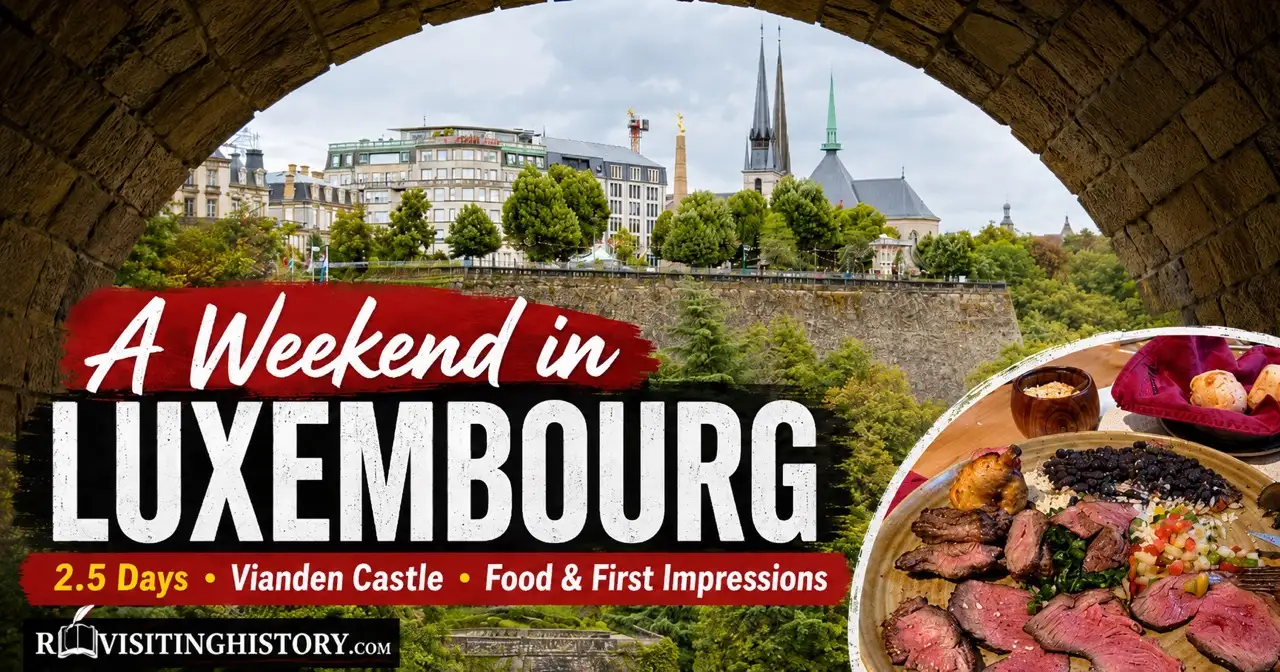
A Weekend in Luxembourg: My 2.5-Day Trip, Vianden Castle & First Impressions
I spent a weekend in Luxembourg without a long list of must-see attractions or a plan to tick off as many places as possible. I came for a short stay of around two and a half days, spent most of it in Luxembourg City, and made one proper trip outside the capital to Vianden Castle.
So this isn’t a “perfect two-day Luxembourg itinerary.” It’s a first-hand account of what I actually did: where I stayed, what I found simply by walking around, where I ate, how I got to Vianden, and the overall impression one of Europe’s smallest and wealthiest countries left on me. I was averaging roughly 25,000 steps a day, so although I definitely didn’t see all of Luxembourg, I covered a fair amount of the capital on foot.
Where I Stayed: Grand Hôtel Cravat in the Heart of Luxembourg City
I chose my hotel quite deliberately. While searching, I saw newer and sometimes cheaper options, including hotels with more modern rooms and better facilities. In the end, though, I picked Grand Hôtel Cravat because I wanted the location and the atmosphere.
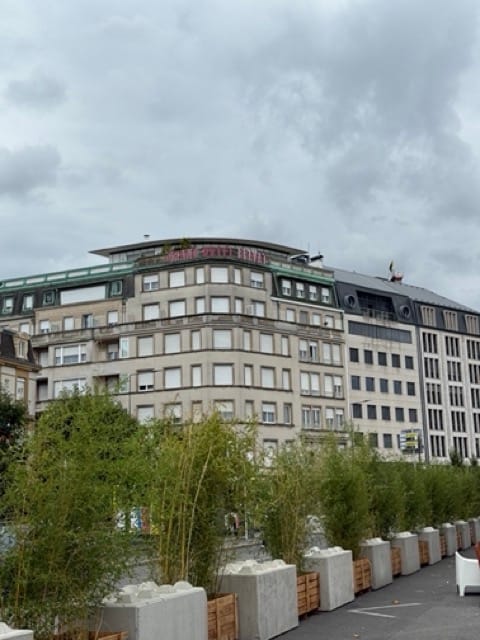
The hotel sits on Boulevard F.D. Roosevelt, almost beside Place de la Constitution, the Gëlle Fra monument and Adolphe Bridge. The moment you walk outside, you are already in one of the most scenic parts of central Luxembourg City. I paid around €330 for two nights including breakfast.
Cravat is not a modern hotel, and that can be either a positive or a negative depending on what you like. The Cravat family’s hospitality business dates back to 1895, and the present hotel developed in stages during the 20th century. Inside, the marble, woodwork, older furnishings and mid-century details make it feel very different from a generic contemporary chain hotel.
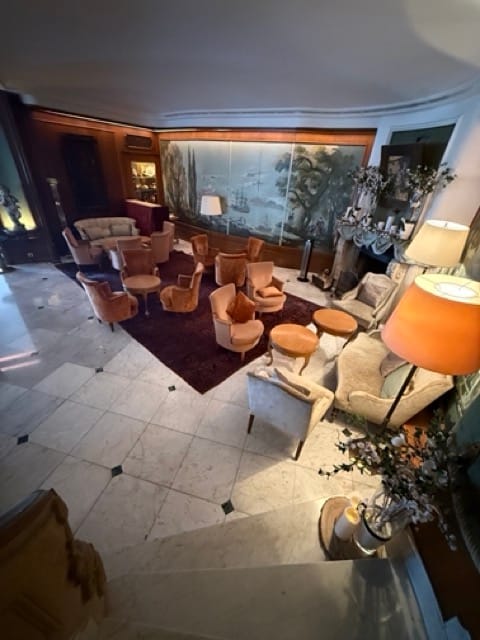
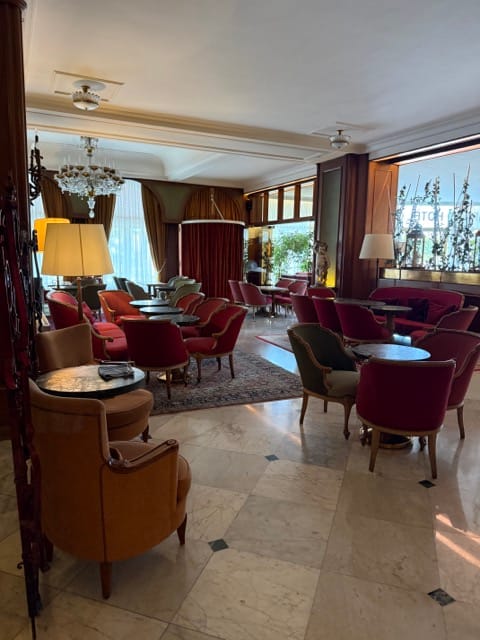
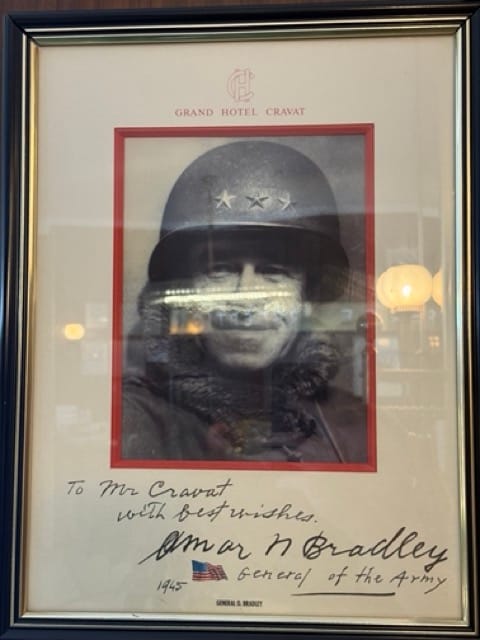
One detail I especially liked was a framed portrait of U.S. General of the Army Omar N. Bradley, personally inscribed, “To Mr Cravat with best wishes.” I haven’t found enough documentary evidence to say exactly what brought Bradley into contact with the Cravat family, but the dedication is a great reminder that this is a hotel that actually lived through much of Luxembourg’s 20th-century history.
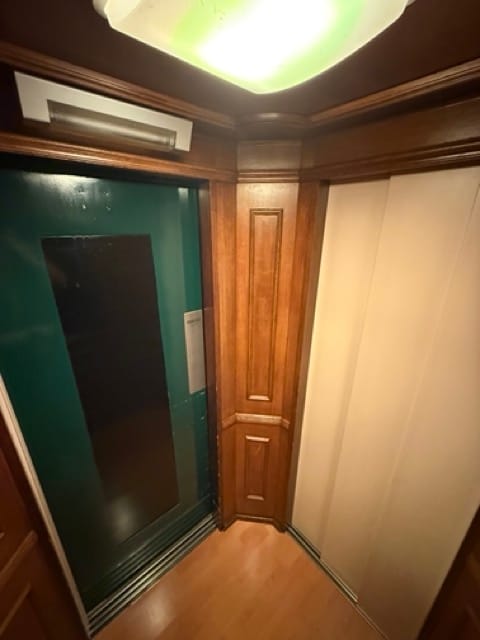
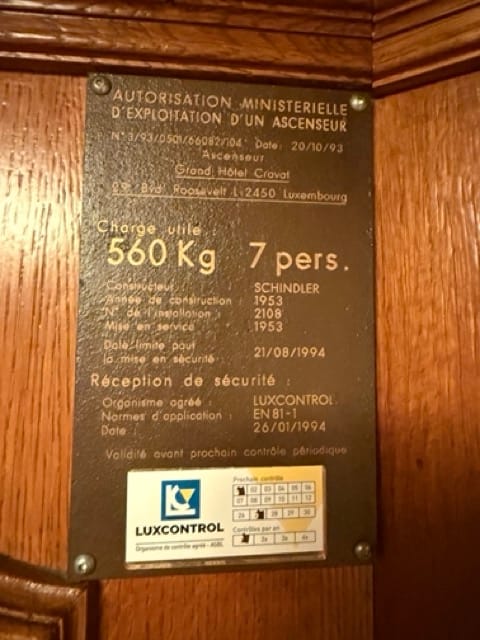
The hotel also says it has the oldest still-operating elevator in Luxembourg. It has been modernized for safety, but visually it still feels like a small museum piece. The old lift is one of those details that makes staying here feel like part of the experience rather than just somewhere to sleep.
Downstairs there is also the vintage Le Trianon bar, which fits the same old-school atmosphere. Would I call Cravat the best hotel in Luxembourg? Probably not. I’d personally rate it around 7/10. Some rooms and common areas feel dated, and I understand why someone might prefer a newer four-star hotel for a similar price. But for a short weekend, I liked the experience and the ability to walk straight into the historic center every morning.
Want to experience Grand Hôtel Cravat like I did? Check current rates and availability on Booking.com.
My First Walk Around Luxembourg City
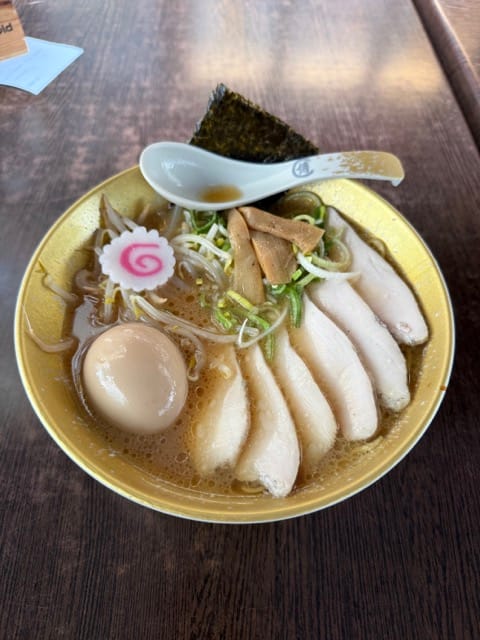
After checking in, the first thing I wanted was food. Not far from the hotel I found Ramen Samurai, where I ordered a large bowl with chashu, egg, nori and other toppings. It was very good and exactly what I needed after traveling.
After that, I simply started walking without much of a plan. I crossed Place de la Constitution, looked around Adolphe Bridge and explored the unusual pedestrian and cycling path suspended underneath the bridge. The lower walkway hangs below the road and tram level, so you can cross the Pétrusse Valley from a completely different perspective.
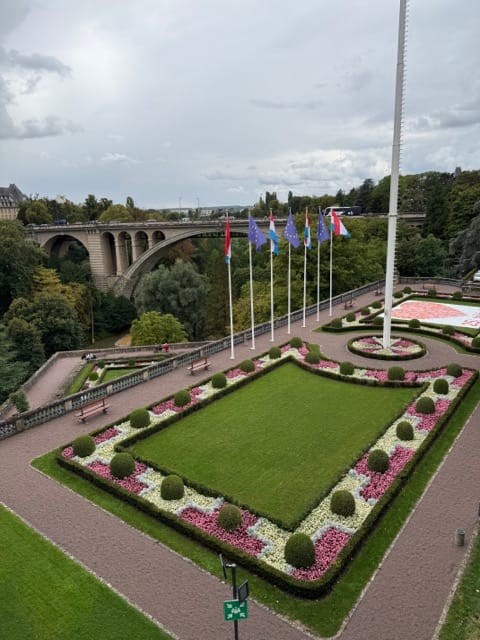
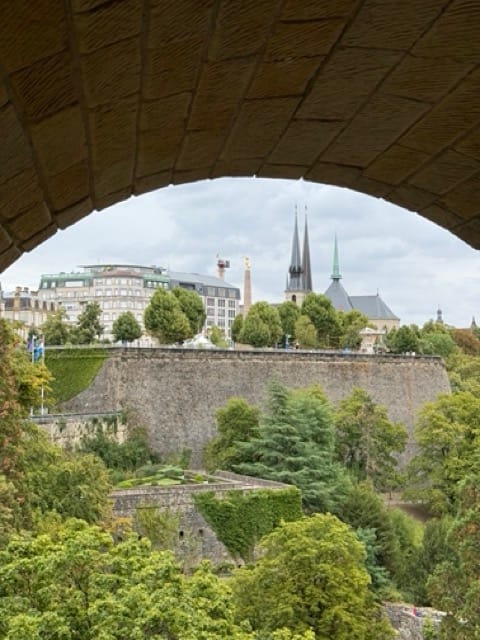
From there I continued past the monumental Spuerkeess building on Place de Metz and eventually walked almost all the way to Luxembourg Gare. I wasn’t trying to visit every attraction. I mostly wanted to understand the city: its architecture, squares, trams, people and overall atmosphere.
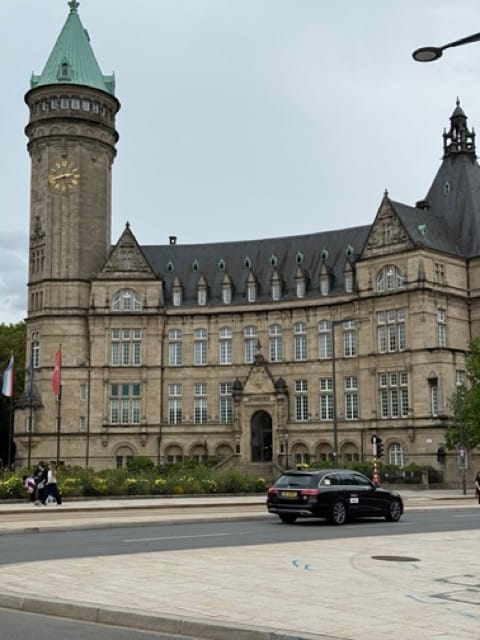
My Favorite Part of Luxembourg City Was Below Street Level
If I had to choose the part of Luxembourg City that left the strongest impression on me, it wouldn’t be the shopping streets or main squares. It would be the valleys below the Old Town, the old fortifications, viaducts, and the neighborhoods of Grund, Clausen and Pfaffenthal.
One morning I started at the Pfaffenthal Panoramic Elevator. It connects Ville Haute with Pfaffenthal below, and at the top there is a glass viewing platform projecting over the valley. From there you get a particularly good view toward the red Grand Duchess Charlotte Bridge.
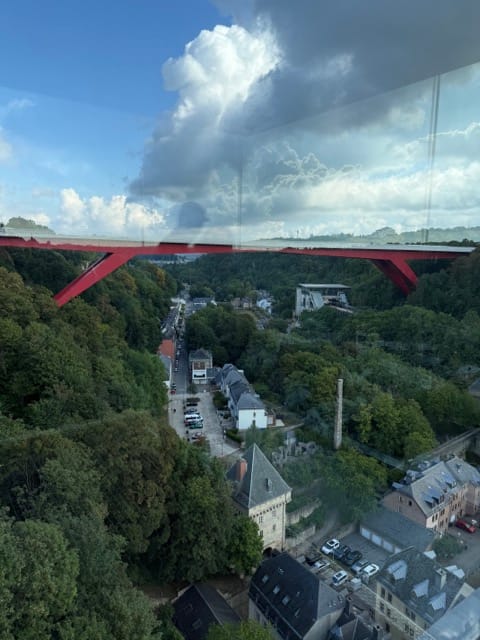
Once you reach the bottom, the feeling of the city changes completely. The modern city and enormous bridges remain above you, while down below you find the Alzette River, old houses, churches, stone viaducts and fortifications built into the cliffs.
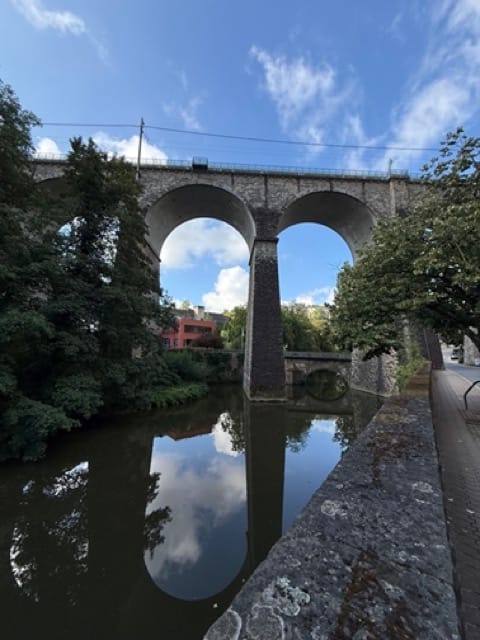
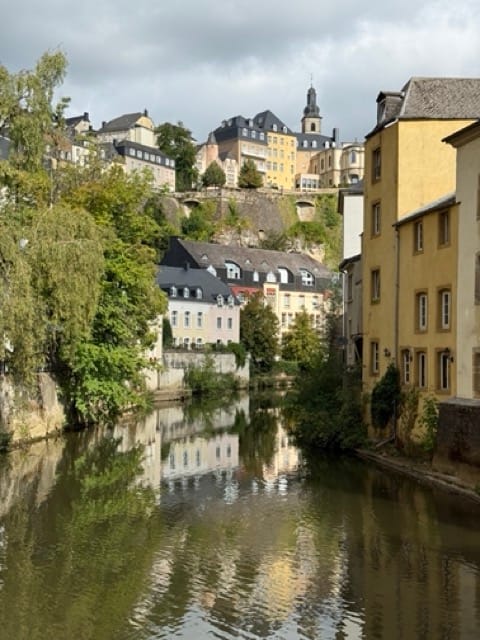
This was where I first really understood that Luxembourg had once been a fortress city. You look up and see thick stone walls sitting on top of huge natural rock formations. Luxembourg’s Old Quarters and Fortifications have been on the UNESCO World Heritage List since 1994, and the city’s deep river valleys made the location naturally defensible long before modern Luxembourg existed.
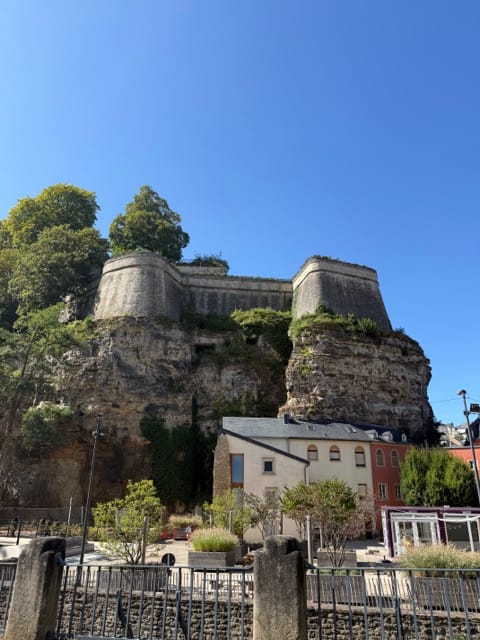
At first I even wondered whether the whole lower valley had once been a giant moat. That wasn’t exactly the case: the Alzette and Pétrusse rivers naturally carved the valleys. But Luxembourg’s defensive system was sophisticated enough that parts of the valleys could be intentionally flooded when required.
On my final day I returned to the lower city from the Pétrusse side. I walked through the park, past the skatepark and beneath the huge Passerelle viaduct. With sunshine instead of clouds, the whole area looked even better. Eventually I followed the paths back uphill and emerged almost beside my hotel and Adolphe Bridge again.
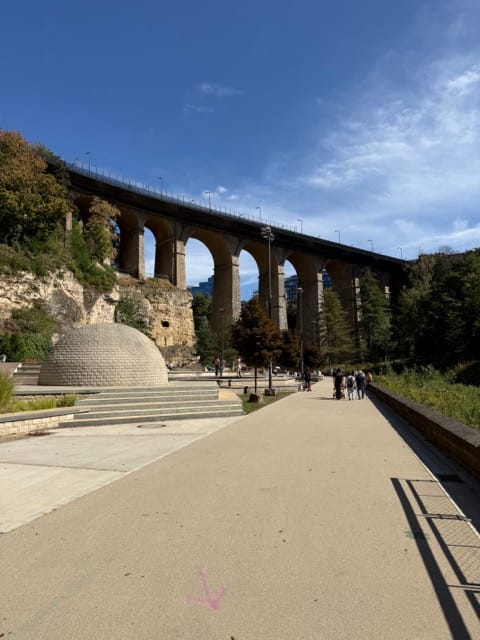
If I returned to Luxembourg City, these walks would be among the first things I’d do again. In my opinion, the valleys are where the geography and history of the city make the most sense.
Food Was One of the Highlights of My Weekend
Oberweis: Desserts Worth Trying
One morning I stopped at Oberweis Grand-Rue. This isn’t just another pastry shop. Maison Oberweis has been operating since 1964 and became an official supplier to Luxembourg’s Grand Ducal Court in 1999.
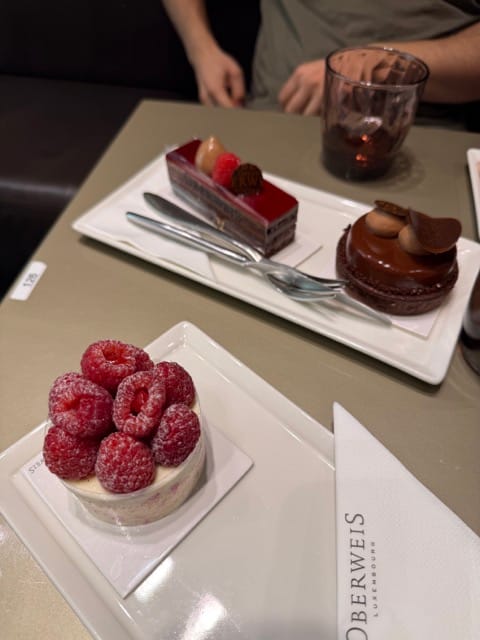
We ordered three different desserts and two cappuccinos. The total came to around €36. Not cheap, but the desserts were genuinely excellent: precise, light and clearly made to a very high pâtisserie standard. If you enjoy desserts, I would definitely stop here.
My Best Meal: Picanha Catering & Restaurant
The biggest food surprise of the trip was Picanha Catering & Restaurant in Hesperange. From the city center, it took roughly 20–25 minutes by tram and bus.
It is a Brazilian-style rodizio restaurant. Side dishes arrive at the table while staff walk around carrying large skewers of different meats and slice them directly onto your plate. When I visited, dinner cost around €50 per person, and I would strongly recommend booking ahead. The restaurant was completely full.
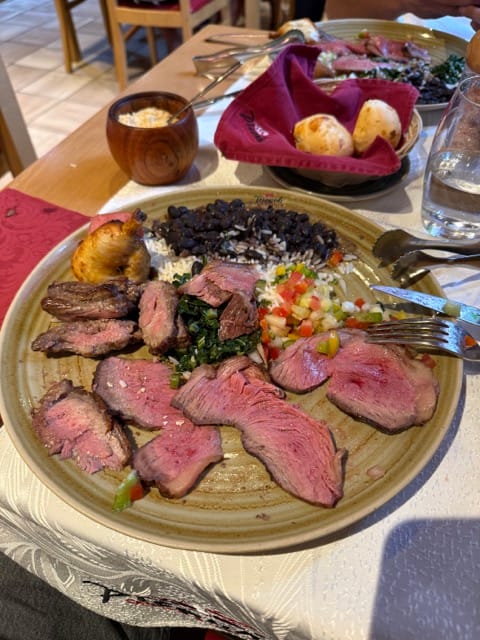
My main advice is simple: don’t eat too much rice, beans and other side dishes at the beginning. They bring several different meats, so it is very easy to fill yourself up before the main picanha arrives. You definitely want to leave room for it.
The picanha was so tender and flavorful that this became one of those rare meals where my stomach wasn’t even the main problem anymore — my brain simply couldn’t process how much pleasure it was getting from a piece of meat. At the end there was grilled pineapple with cinnamon, grilled bananas and other sweet sides. If I had to recommend just one restaurant from my trip, this would be it.
Azzurra Mia: Pizza for the Evening
Another good find was Azzurra Mia Pizzeria, practically beside Grand Hôtel Cravat. After a long day, we ordered a Capricciosa. One pizza was roughly €20–25 and was genuinely good. I wouldn’t fly to Luxembourg specifically for it, but it was a very solid dinner option in the center.
A Half-Day Trip to Vianden Castle
I wanted to leave the capital at least once, so I chose Vianden Castle. Getting there from Luxembourg City is theoretically simple: take a train to Ettelbruck and then continue by bus to Vianden.
In practice, my full journey took almost two hours because I had to wait for the bus. Google Maps initially showed bus 180, but that connection didn’t work from the stop I was using, so I eventually took bus 181 instead.
The train part of the trip was enjoyable. Once you leave the capital, you start seeing small towns, farms, fields, cattle and the hillier countryside of northern Luxembourg. Even the journey itself gave me at least a small glimpse of what the country looks like outside Luxembourg City.
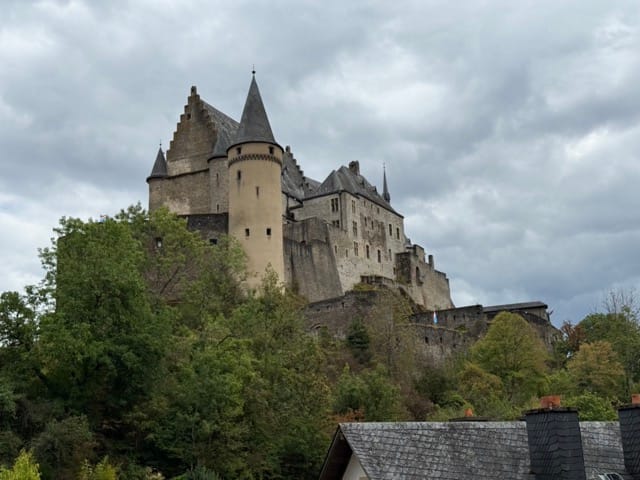
Vianden is a small town, while the castle sits high above it on a hill. From the bus stop, you need to walk uphill to the castle, but for a young or moderately fit person this isn’t a serious hike. It is roughly 10–15 minutes of straightforward climbing.
I spent around 1–1.5 hours inside the castle. Was Vianden Castle absolutely mind-blowing? For me, no. But I still enjoyed the trip and thought it was worthwhile, especially because it gave me a chance to see a different side of Luxembourg.
If you want more history, photos and practical information, you can find our detailed guide to Vianden Castle. We also have a broader guide to the best castles in Luxembourg if you want to build an entire day or several days around castles.
One Important Tip for Visiting Vianden
Before you start walking back down from the castle, check Google Maps to see when the next bus leaves. On the Saturday I visited, my 181 bus was running only around once per hour. I almost missed it and had to practically run downhill for the final part.
Missing the bus can easily turn a quick return journey into another hour in Vianden. That said, there are worse places to get stuck. The town has plenty of cafés, ice cream shops and restaurants, and I would have happily stayed longer if my schedule had allowed it.
If You Have More Time Than I Did
I only saw a small part of Luxembourg, so I definitely wouldn’t describe my weekend as a complete Luxembourg itinerary. If I had another full day and a car, I would look at Müllerthal, Echternach, the Moselle wine region or another castle.
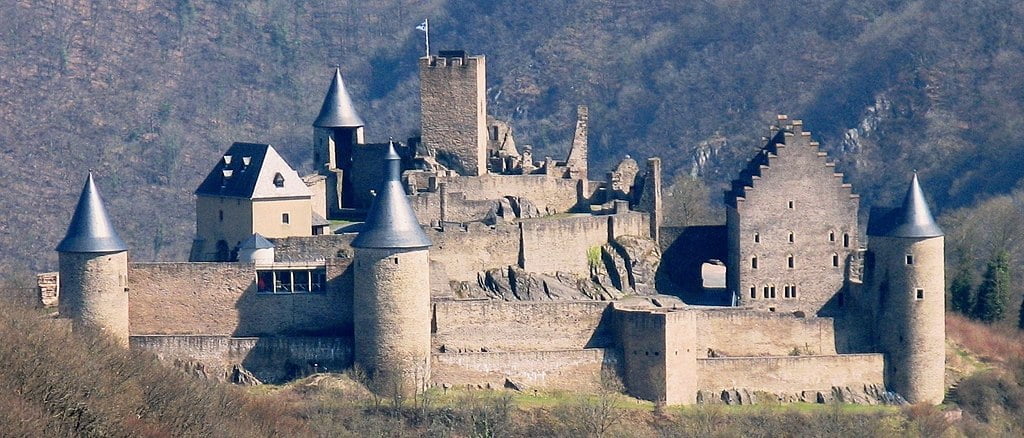
One castle we recommend considering in the north is Bourscheid Castle, another large medieval fortress standing high above the Sûre River valley. You can find our full Bourscheid Castle guide on Revisiting History, and the castle could be combined with Esch-sur-Sûre and Upper Sûre Lake for a full-day road trip.
I also noticed quite a lot of cyclists while traveling around the country. The hilly terrain, good roads and small towns looked well suited to several-hour or full-day cycling routes. It actually made me think Luxembourg could be an interesting destination for a cycling trip with friends.
Schueberfouer: A Nearly 700-Year-Old Tradition That Wasn’t Really My Thing
My trip happened to coincide with Schueberfouer, Luxembourg’s huge annual fair and amusement park at Champ du Glacis. The tradition dates back to 1340, when it began as a commercial fair. Today it looks much more like a large amusement park packed with rides, games and street food.
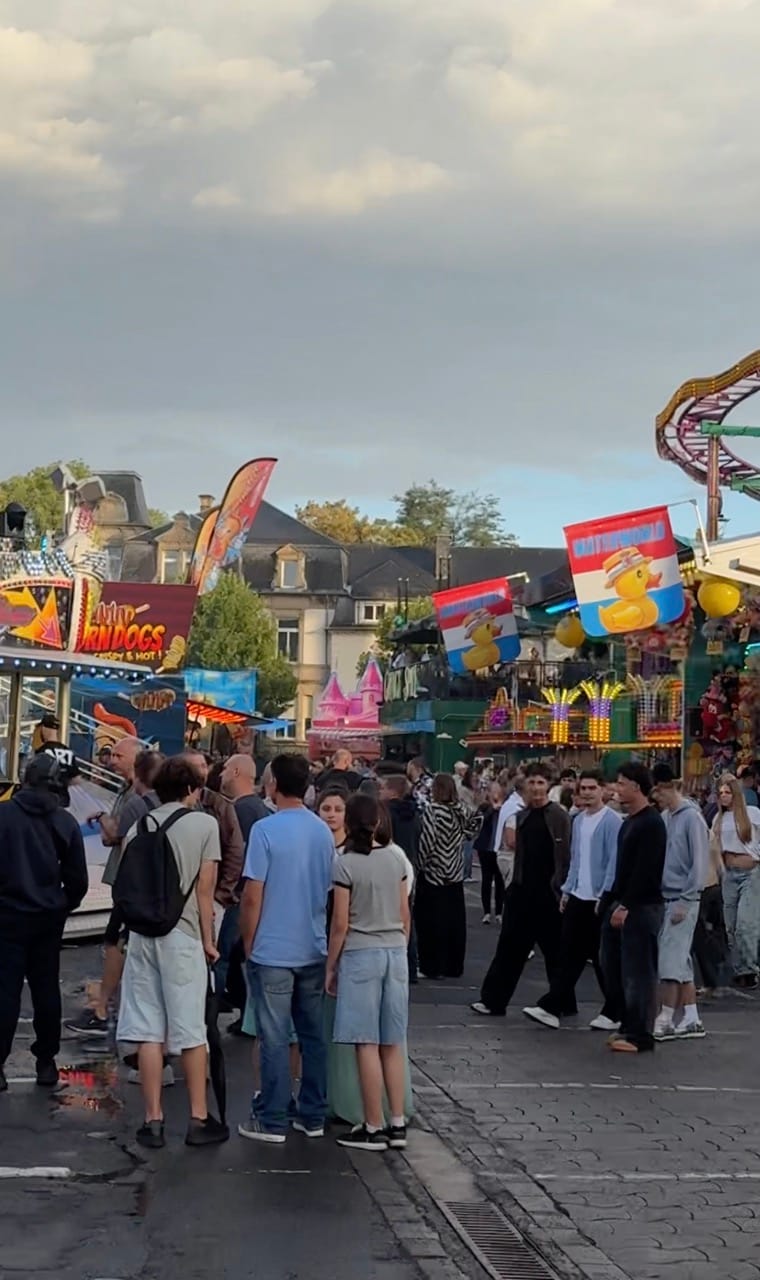
We went to have a look in the evening. The smell of fried food and grease was everywhere: bratwursts, burgers, gyros, Asian food, sweets and pretty much every kind of fairground food imaginable. There were lots of people, especially younger crowds.
The rides didn’t interest us at all, though, so after around 20 minutes we decided we had seen enough and walked back toward the city center. Historically the event is interesting; as an experience for me personally, it definitely wasn’t one of the highlights of the weekend.
Is Luxembourg City Safe? My Experience
My impression here was slightly different from what I expected before arriving. During my entire 2.5-day stay, I didn’t witness a single serious incident. I saw no fights, thefts, people being chased or police interventions.
At the same time, I never quite had the feeling that I could completely switch off my street awareness. Around different parts of the city, I occasionally encountered people or situations that instinctively made me pay a little more attention to my surroundings. This was most noticeable around Gare and the central train station, but in my experience it wasn’t limited only to that district.
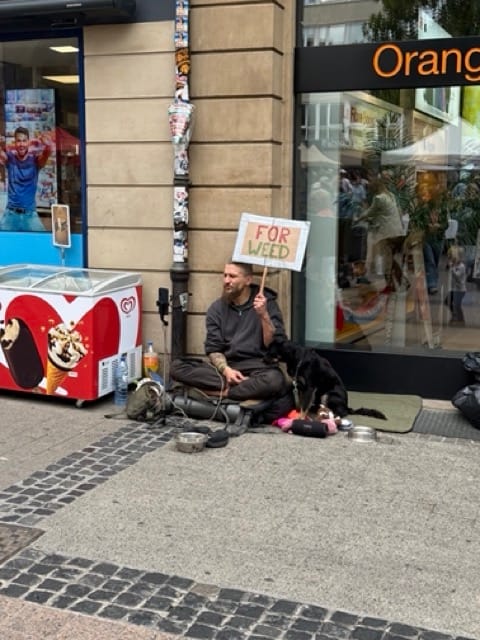
That surprised me slightly, because from such a wealthy, orderly and highly developed country I had expected an almost clinically safe atmosphere. Statistically, Luxembourg is still not a country I would describe as dangerous, and nothing actually happened to me during the trip. My conclusion is simple: there is no reason to be paranoid, but I also wouldn’t completely switch off normal city awareness.
Public Transport in Luxembourg Is One of the Best Things About the Country
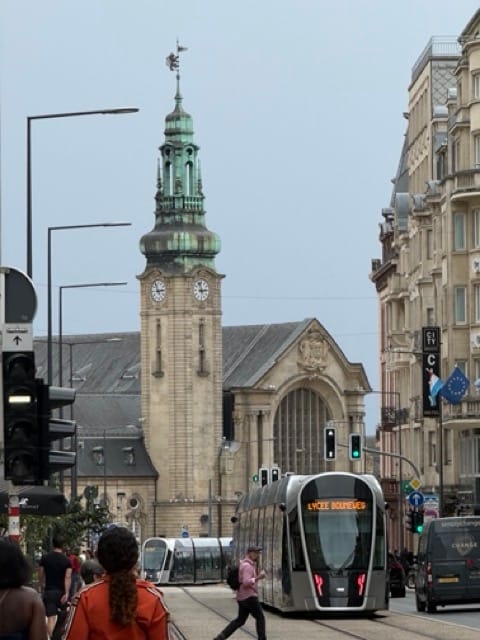
Luxembourg impressed me a lot in this department. Public transport throughout the country is free. Second-class trains, buses and trams have been free for both residents and visitors since 2020. You don’t need to buy a ticket, register in an app or think about whether another trip is worth the cost. You simply get on and travel.
In Luxembourg City, trams run very frequently, the bus network is extensive, and trains make it easy to reach other parts of the country. For planning journeys, I would still recommend using Google Maps. It shows current routes, transfers and travel times, which becomes especially useful somewhere like Vianden where buses can run much less frequently on weekends.
Getting From the City Center to Luxembourg Airport
Another very convenient feature is the direct T1 tram connection between the city and Luxembourg Airport. From the central area near my hotel, the trip took me around 20–25 minutes, with no transfers, and again the journey was completely free.
The airport itself is fairly compact. On the Sunday I flew out, security took me around 10–15 minutes, although that obviously varies depending on the day and flight schedule.
If You Want to Work Out While Traveling
On my final morning I had a few free hours and decided to go to the gym. I found a Basic-Fit near Gare. A single visit cost me around €12, and I bought access through the self-service screen.
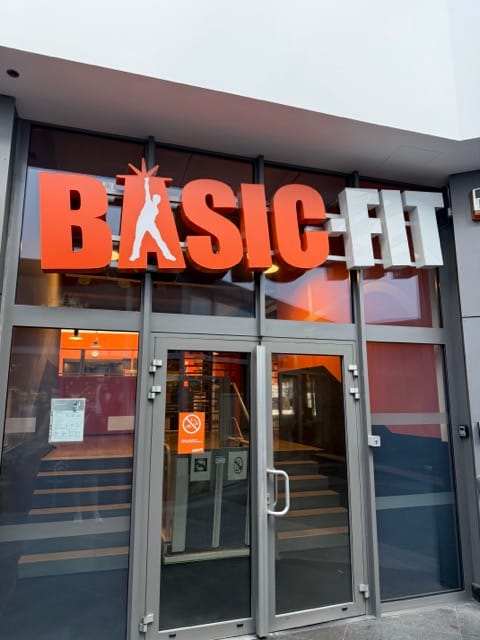
I’d personally rate that particular gym around 5.5/10. It felt somewhat dated and wasn’t especially clean, but for one workout while traveling it did the job. What surprised me most was how quickly it filled up after opening at 9 a.m. on a Sunday morning.
My Overall Impression of a Weekend in Luxembourg
After two and a half days, my opinion was fairly mixed. For a short trip, I liked Luxembourg City. It is easy to walk around, the architecture is attractive, the valleys and old fortifications are genuinely distinctive, public transport is probably among the most convenient I have used anywhere, and I had some excellent meals.
Vianden was also a good half-day escape and gave me at least a small glimpse of a different side of the country.
But if someone offered me the chance to live here for six months, I would probably decline. Luxembourg City felt a little too small and too quiet for me personally as a long-term place to live. Once you move beyond the historic center, you quite quickly enter residential and business districts where, as a visitor, there isn’t necessarily much reason to spend time.
The city is also extremely international, which creates a very cosmopolitan environment. During my short stay, though, it also made it harder for me to feel one particularly strong local cultural identity. I felt that the city lacked a little substance for me personally — that sense that I could stay for another week and keep discovering entirely new layers every day.
There is an important disclaimer, though. I did not visit Müllerthal, the Moselle region, Clervaux, Esch-sur-Sûre or most of the country’s castles and villages. Even within Luxembourg City, I deliberately skipped Kirchberg and the European institutions and financial district because they simply didn’t interest me much.
So this is not a verdict on the entire country. It is simply my first-hand impression after 2.5 days in Luxembourg. And as a short weekend trip? It was definitely worth it.