Dublin Castle – From Viking Settlement to State Centre
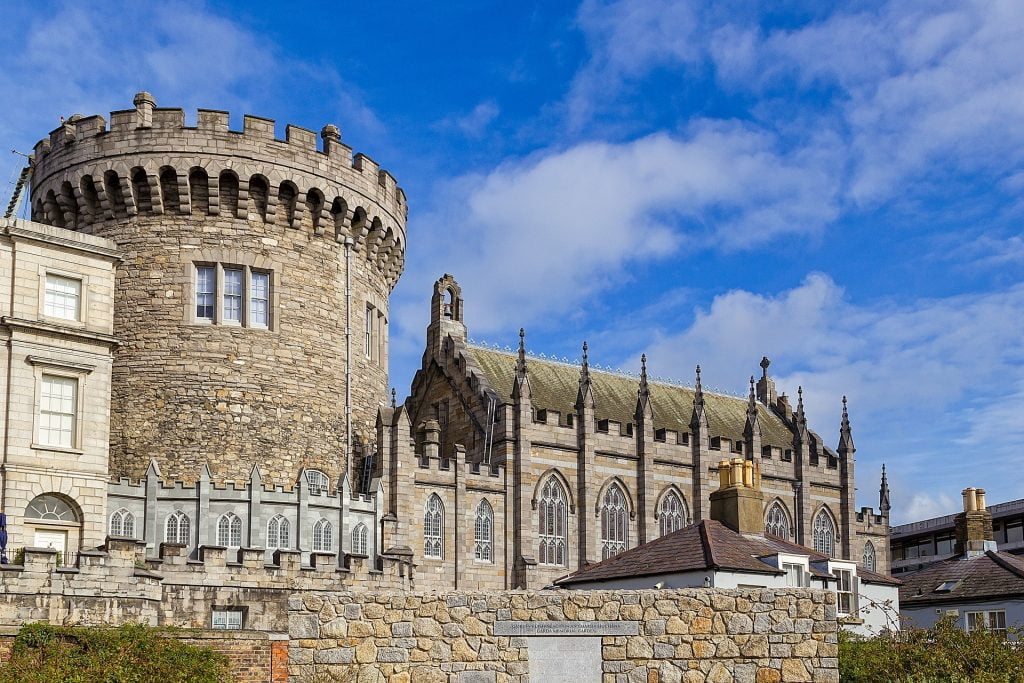
Dublin Castle stands in the historic centre of Ireland’s capital, on ground first occupied by a Viking settlement and later transformed into a royal fortress. Most of the medieval castle has disappeared, but the Record Tower, archaeological remains and the outline of the old courtyards preserve its earliest story.
From 1204 until 1922, the complex served as the centre of English and later British administration in Ireland. After the handover to Michael Collins and the new Irish government, it became an important state venue used for presidential inaugurations, official ceremonies and cultural events.
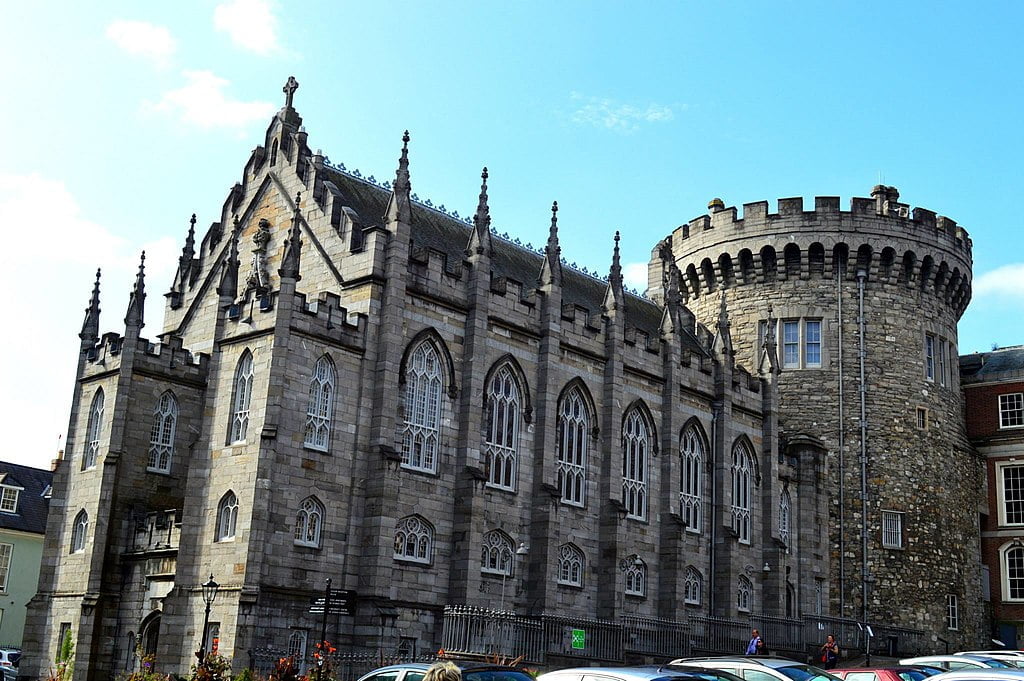
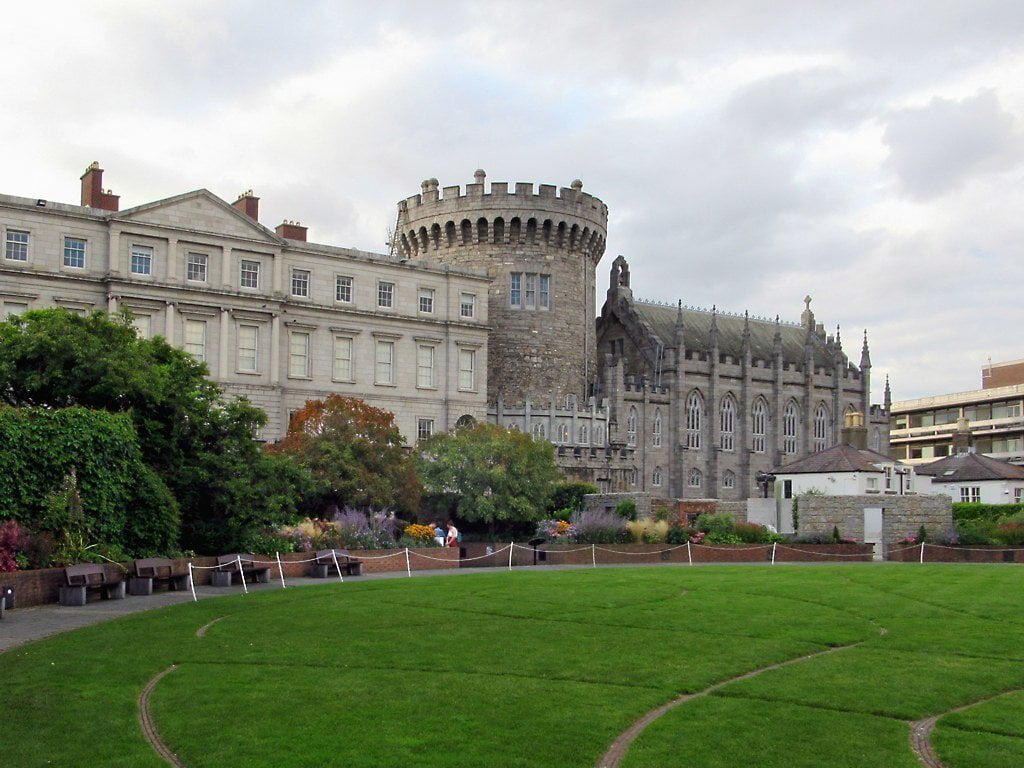
The present ensemble combines the surviving medieval tower with Georgian State Apartments, the Gothic Revival Chapel Royal and later government buildings. It is best understood as an evolving administrative and ceremonial complex rather than a single-period castle.
Dublin Castle evolved from a medieval fortress into the administrative centre of English and British rule, then became a ceremonial complex of the independent Irish state.
Frequently Asked Questions
Dublin Castle is on Dame Street in central Dublin, south of the River Liffey and close to Christ Church Cathedral, Temple Bar and Trinity College.
King John ordered a royal castle in 1204. The medieval fortress was largely complete by about 1230, but most buildings visitors see today date from rebuilding after the fire of 1684 and later additions.
It was the seat of English and later British administration in Ireland from 1204 to 1922. Today it is an Irish government complex and a major ceremonial and cultural venue.
Not at present. The official site says the campus is closed to the public until January 2027 while it hosts events for Ireland’s EU Council presidency.
FOR HISTORY | BEAUTIFUL IMAGES | INTERESTING FACTS | TRAVEL TIPS
History of Dublin Castle
Viking Dublin and the Black Pool
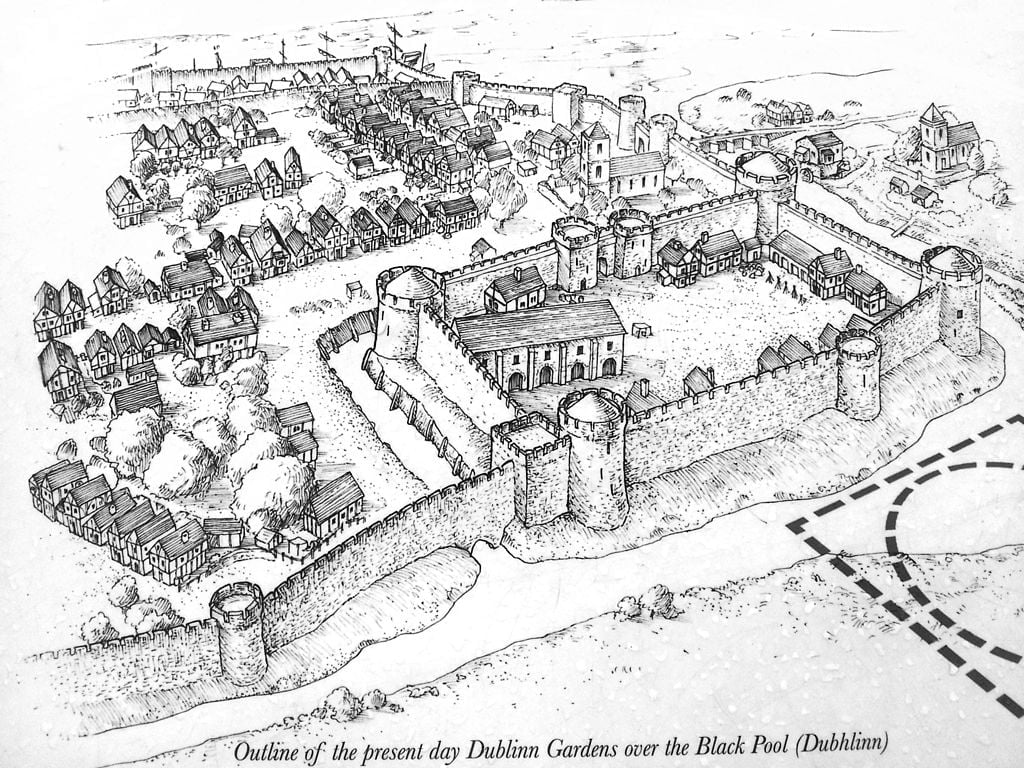
The castle site lies beside the former Dubh Linn, or “black pool,” from which Dublin takes its name. A Viking settlement occupied the area before the Anglo-Norman conquest, and excavated sections of defensive bank, city wall and the River Poddle survive below modern ground level.
King John’s Medieval Fortress
In 1204, King John of England ordered a castle for the defence of Dublin, the administration of justice and the protection of the royal treasury. Built on elevated ground within the city’s defences, the fortress had four corner towers linked by high curtain walls around a central enclosure.
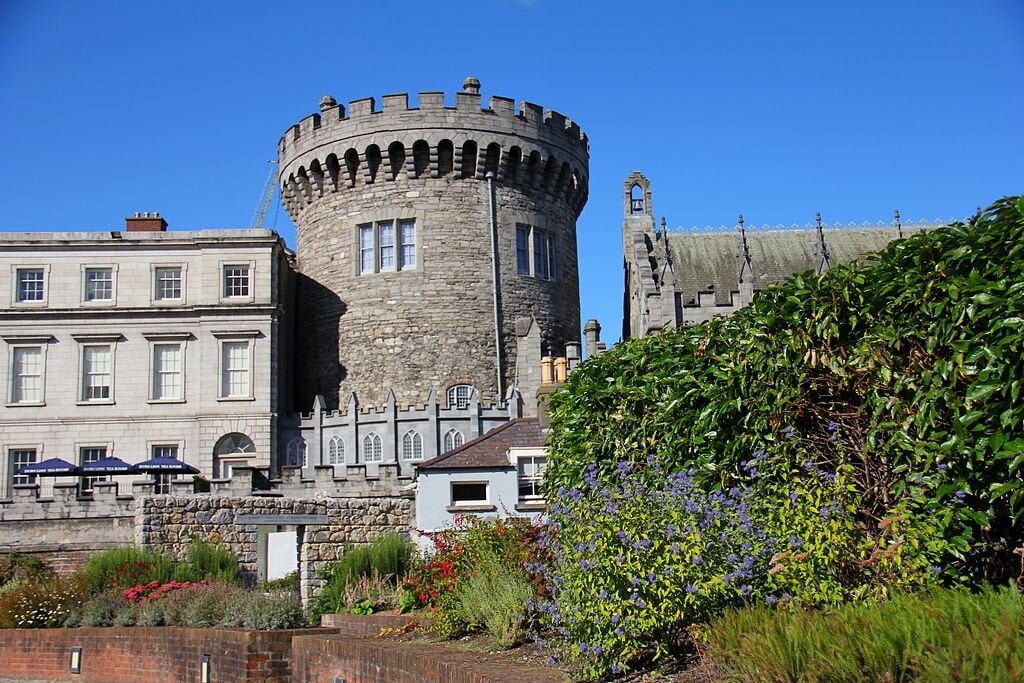
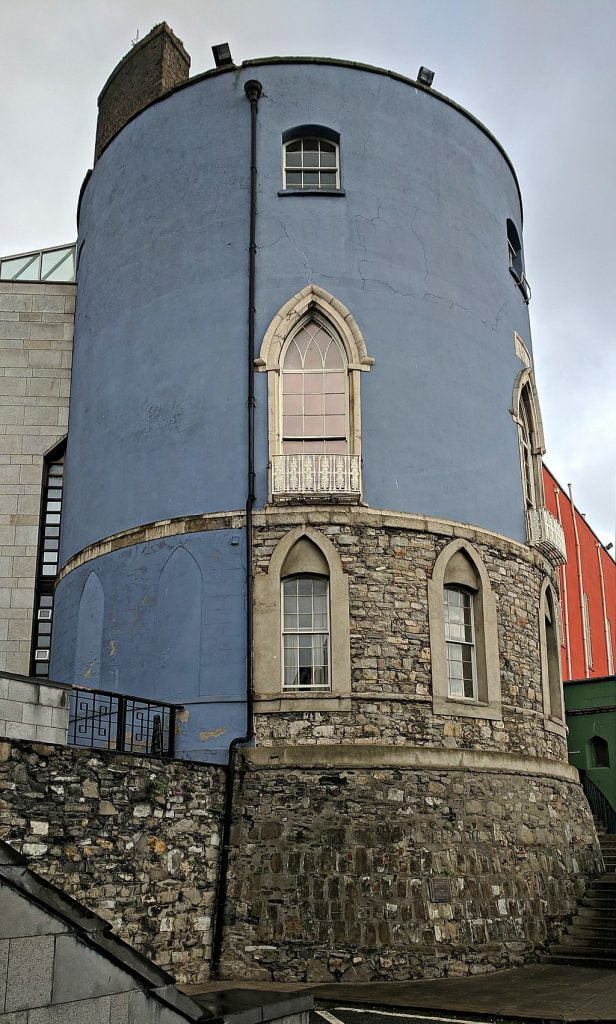
The surviving medieval tower dates from roughly 1204–1228 and is also known as the Wardrobe, Gunner’s or Record Tower. Its walls are up to 4.8 metres thick. In 1811 it was heightened and given new battlements, so its present skyline combines medieval masonry with Gothic Revival alteration.
The Fire of 1684 and the Georgian Palace
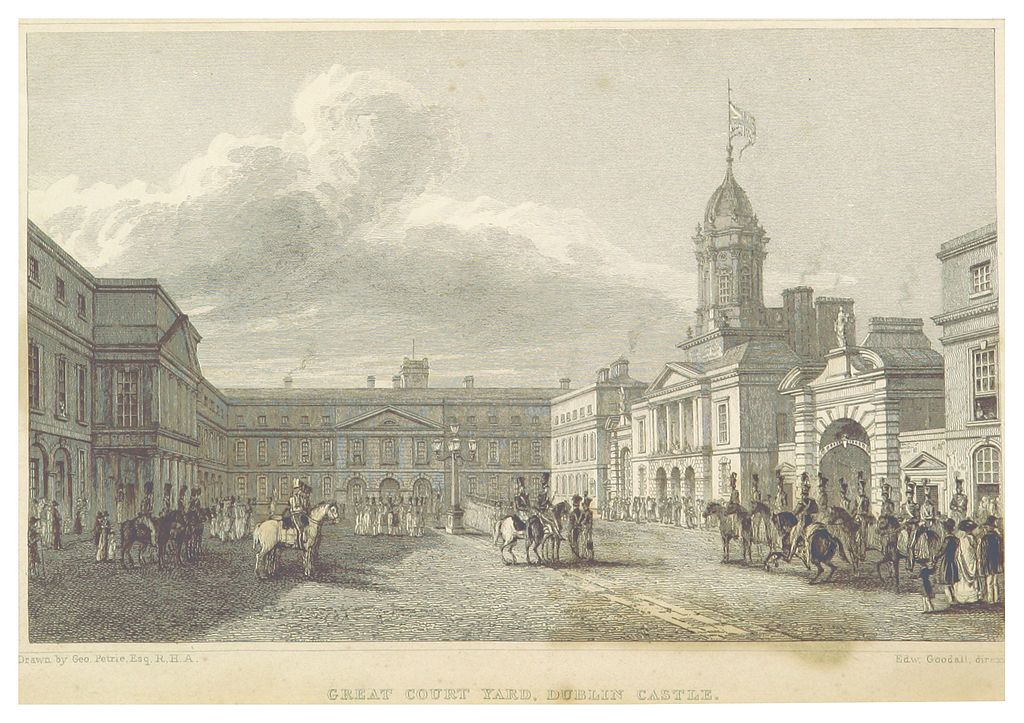
A major fire in April 1684 severely damaged the medieval complex. The rebuilding campaign of the late 17th and 18th centuries changed Dublin Castle from a defensive stronghold into a Georgian palace and administrative centre.
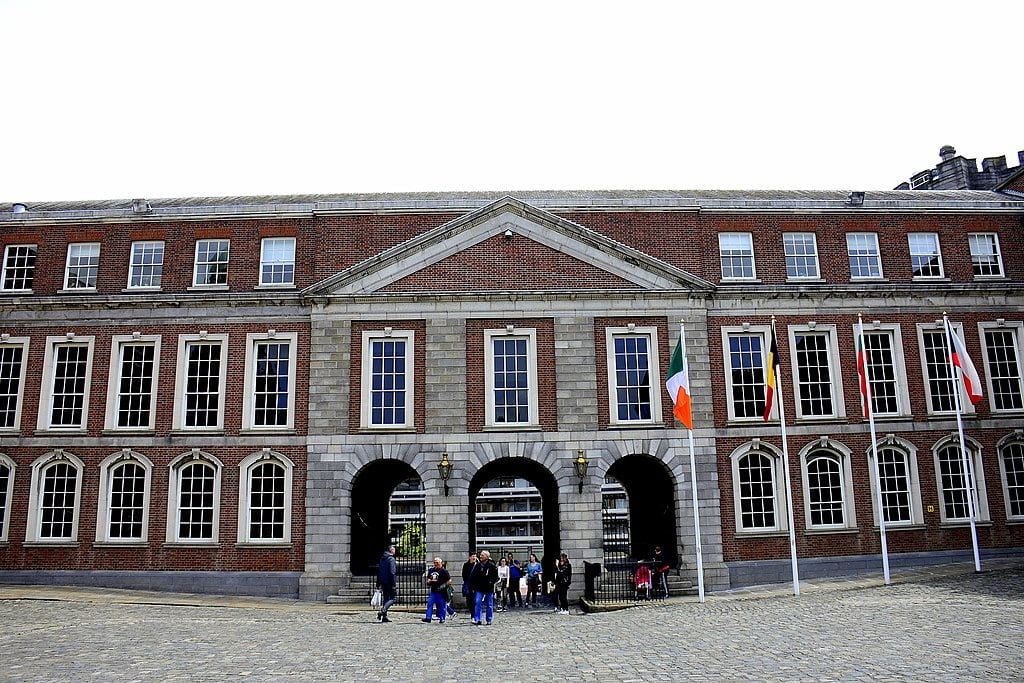
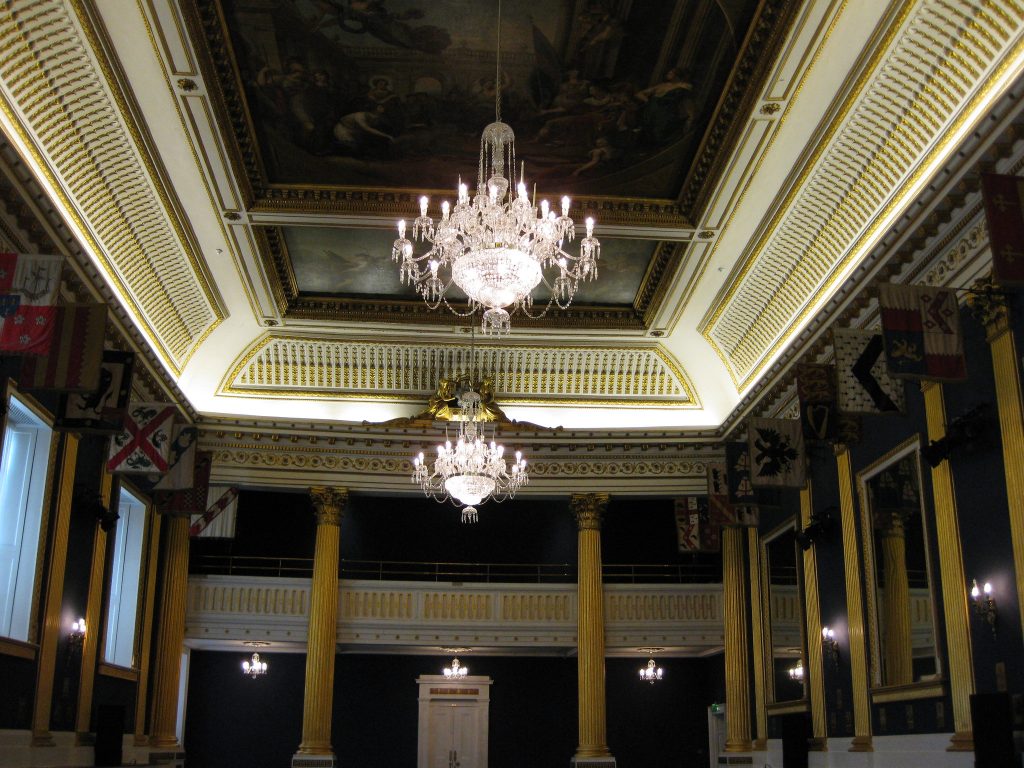
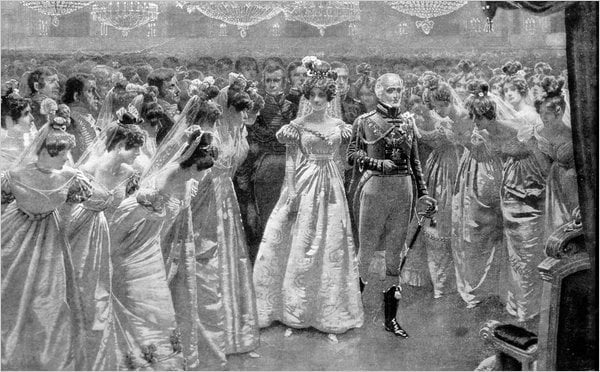
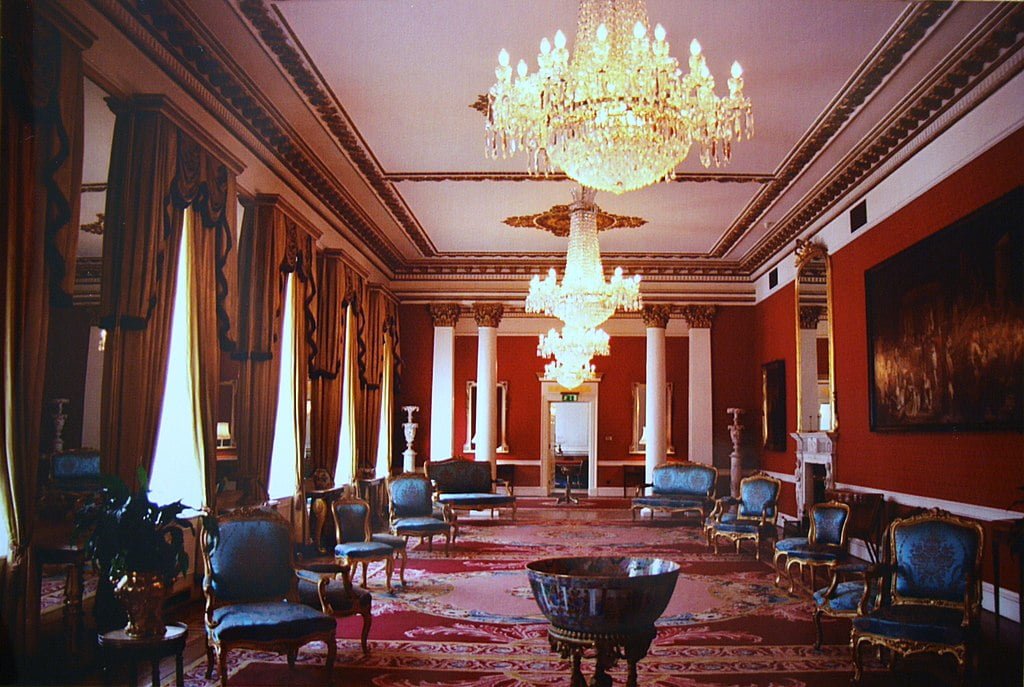
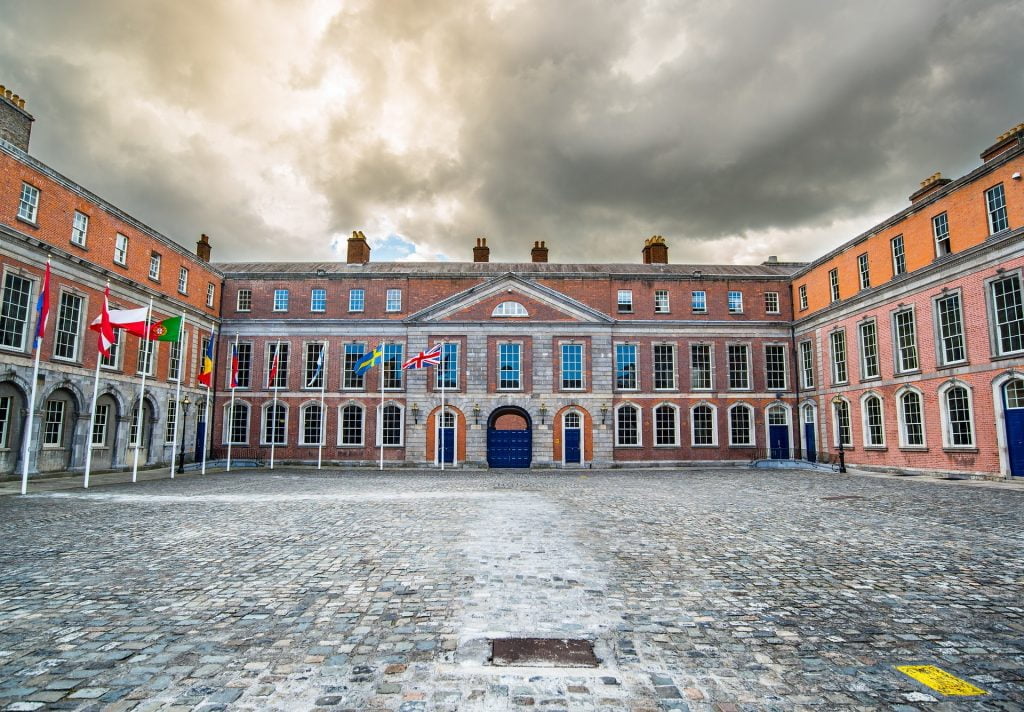
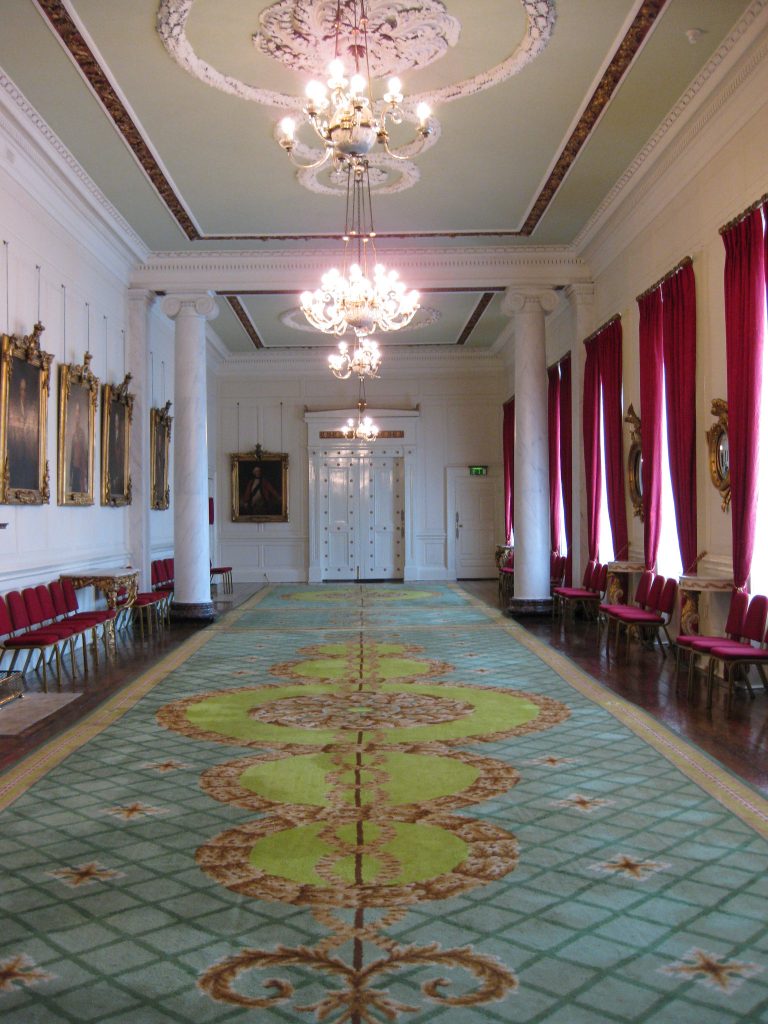
The State Apartments became the residence and ceremonial rooms of the Viceroy, the British monarch’s representative in Ireland. Balls, banquets and state occasions took place in rooms such as St Patrick’s Hall, the Throne Room and the State Drawing Room.
Towers, Chapel and Courtyards
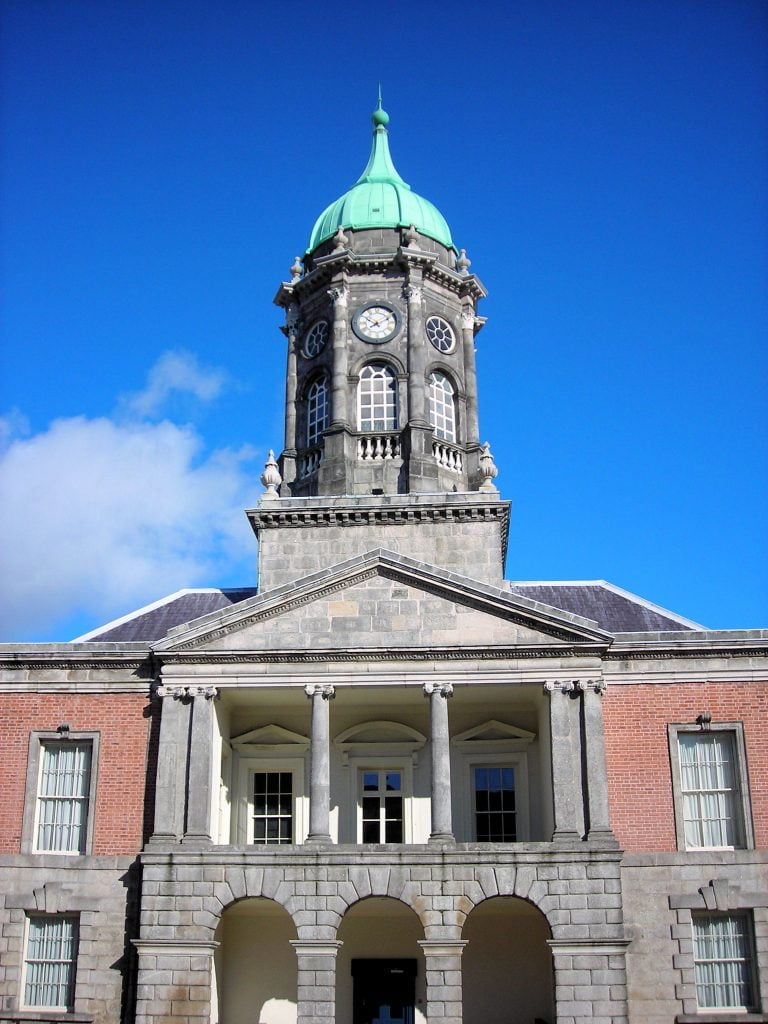
The Bedford Tower dominates the Upper Castle Yard and formed part of the post-fire rebuilding. Other historic structures preserve names inherited from the earlier castle, even where their visible fabric was substantially reconstructed.
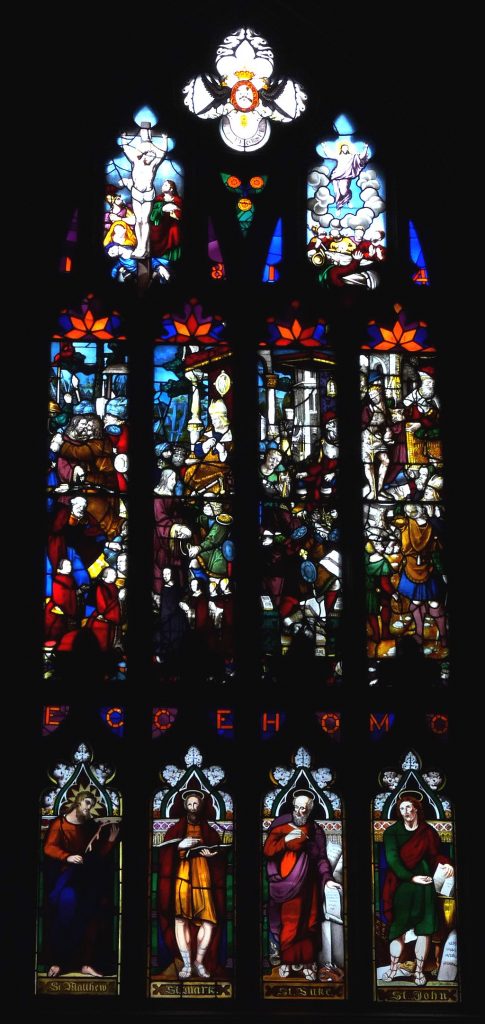
The Chapel Royal, completed in the early 19th century, is one of Dublin’s major Gothic Revival interiors. Its carved decoration and stained glass display the coats of arms associated with Ireland’s viceregal administration.
From British Rule to the Irish State
Dublin Castle remained the centre of British administration through the Easter Rising and the War of Independence. On 16 January 1922, the last Viceroy handed the complex to Michael Collins and the provisional government of the newly independent Irish state.
The castle was subsequently adapted for Irish government use. St Patrick’s Hall hosts presidential inaugurations, while other rooms are used for state receptions, official meetings, exhibitions and public ceremonies.
Revisit More Historic Places Below or Read Further
Dublin Castle Today
Dublin Castle is both a government complex and a historic attraction. The State Apartments contain ceremonial rooms and art collections; the Chapel Royal and medieval excavation reveal very different layers of the site’s history.
The courtyards and Dubh Linn Garden normally connect the castle to the surrounding city. In 2026, however, public access is suspended until January 2027 while the campus serves as a principal venue for Ireland’s Presidency of the Council of the European Union.
Interesting Dublin Castle Facts
- King John ordered the medieval castle in 1204.
- The Record Tower’s core dates from about 1204–1228, but its upper battlements were added in the early 19th century.
- The fire of 1684 prompted the transformation from medieval fortress to Georgian palace.
- Dublin Castle was the headquarters of English and British administration in Ireland until 1922.
- Michael Collins received the formal handover on 16 January 1922.
- St Patrick’s Hall is used for inaugurating presidents of Ireland.
- The Viking and medieval excavation is below modern street level and is normally accessible only by stairs.
- The Dublin Castle campus is temporarily closed to the public until January 2027.
Visiting Dublin Castle: Practical Information
Temporary closure: Dublin Castle’s official site currently states that the campus is closed to the public until January 2027 because it is serving as Ireland’s primary state venue during the country’s Presidency of the Council of the European Union.
Getting to Dublin Castle
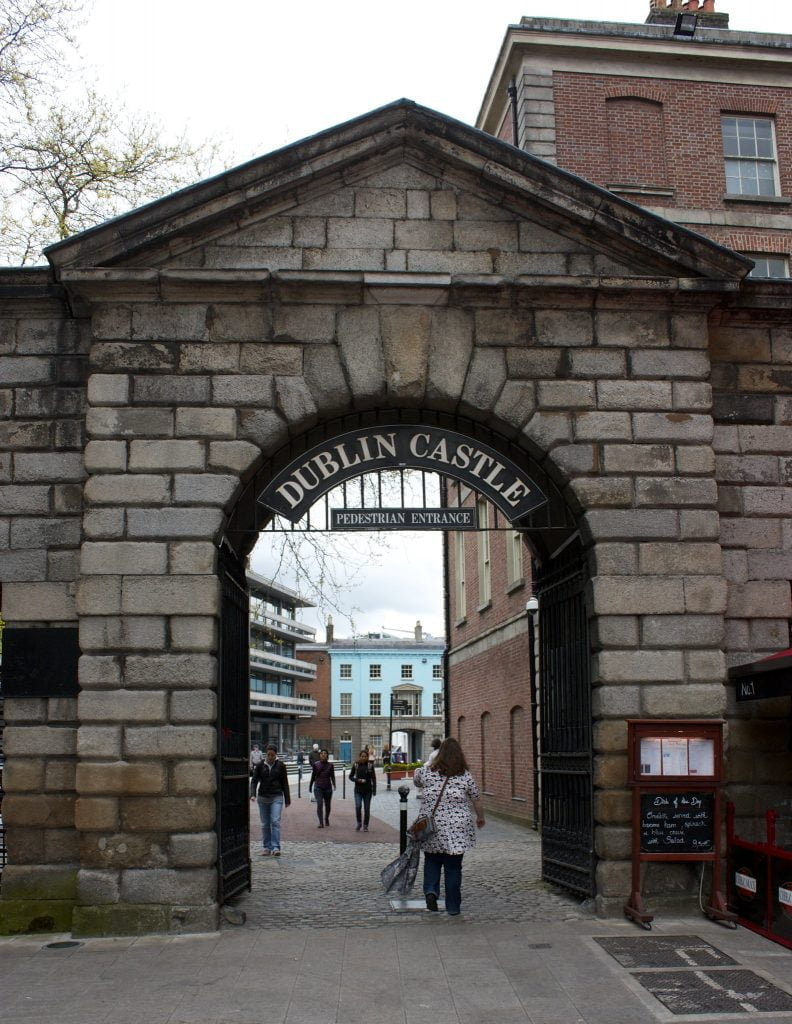
The castle occupies a central site on Dame Street, within walking distance of Christ Church Cathedral, Temple Bar, Trinity College and several city-centre bus stops. Connolly Station and Busáras are about a 20-minute walk away, depending on your route.
Tours, Hours and Tickets
Normal visitor information remains visible on the official site, but it is superseded by the current campus closure. Do not rely on the standard hours or ticket prices until the castle publishes its January 2027 reopening arrangements.
How Long Should You Spend?
After reopening, allow about one hour for a guided tour or 30–60 minutes for the State Apartments on a self-guided visit. Add time for the courtyards, Dubh Linn Garden and nearby attractions. The medieval excavation is reached by stairs, while the State Apartments and Chapel Royal are ordinarily accessible.
The Dublin Castle campus is currently closed to the public until January 2027 while it hosts events for Ireland’s Presidency of the Council of the European Union. Check the official Dublin Castle website before travelling and wait for the reopening schedule before booking a visit.
Practical Tips
- Check the official closure notice before setting out; the campus is not presently open for normal visits.
- When tours resume, book ahead because access can be affected by state events.
- Wear shoes suitable for the uneven paving in the Upper Castle Yard.
- Do not confuse the Record Tower’s 19th-century battlements with its medieval core.
- Combine the castle with Christ Church Cathedral and Dublinia when the campus reopens.
- For more sites around the country, see our guide to the best castles in Ireland.