Hochosterwitz Castle – Austria’s Medieval Legacy (History & Travel Tips)
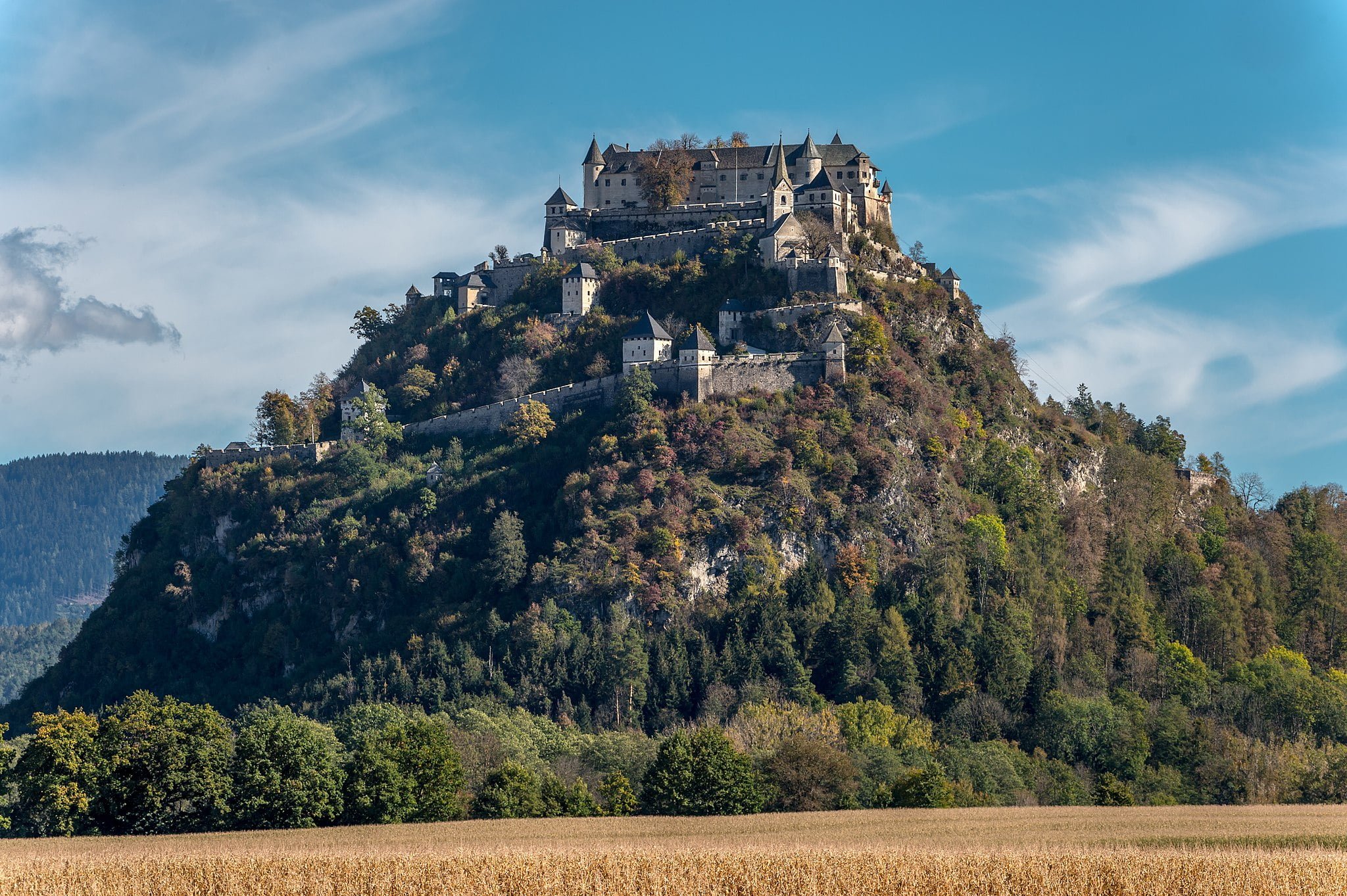
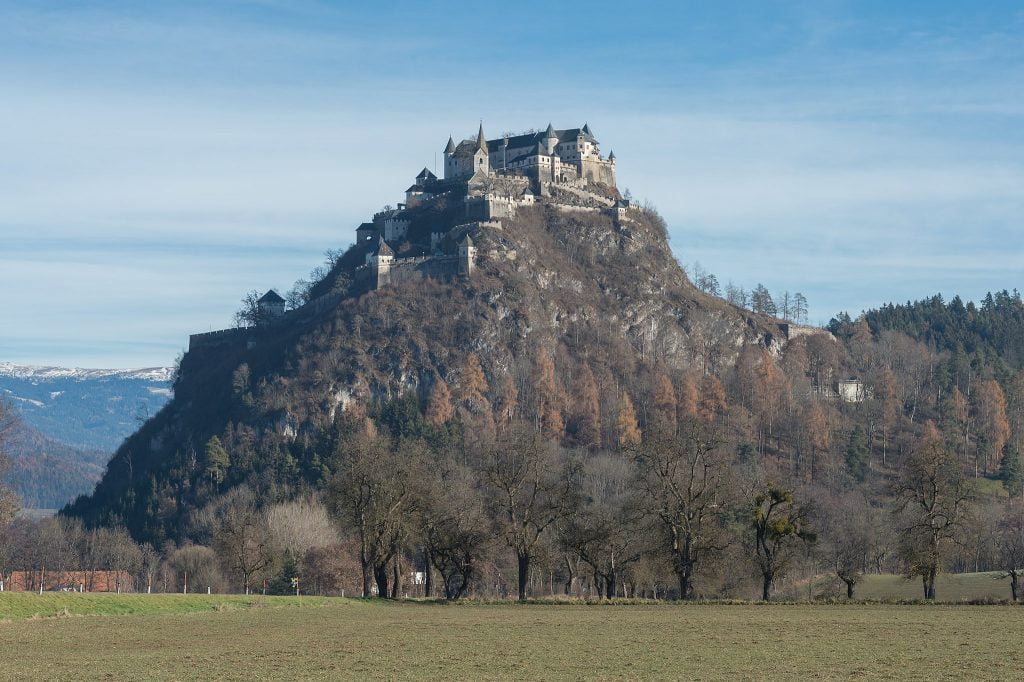
Hochosterwitz Castle is one of Austria’s most recognisable hilltop fortresses. It rises on a limestone rock about 150 metres above the Carinthian countryside near Sankt Georgen am Längsee, with a long approach road passing through 14 fortified gates before reaching the upper castle.
The site has an exceptionally long documented history, but one common claim needs clarification: the year 860 marks the first written mention of the place under the name Astarwiza, not a secure construction date for the castle visitors see today. The fortress evolved through the Middle Ages and was transformed into its famous defensive form by the Khevenhüller family in the 16th century.
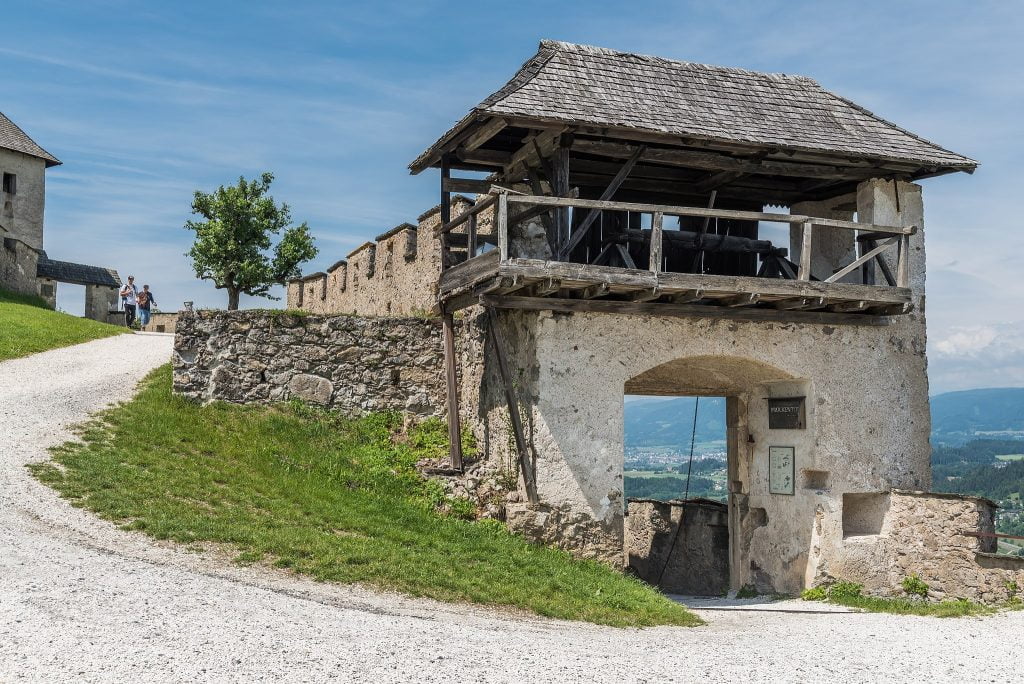
Hochosterwitz’s defining experience is the climb through fourteen individually designed defensive gates—the product of a major 16th-century rebuilding campaign against the threat of Ottoman warfare.
Frequently Asked Questions
FOR HISTORY | BEAUTIFUL IMAGES | INTERESTING FACTS | TRAVEL TIPS
Early History of Hochosterwitz
The rock on which Hochosterwitz stands was occupied long before the Middle Ages; archaeological finds indicate prehistoric and Roman-period activity. The documentary story begins in 860, when King Louis the German mentioned land called Astarwiza in a grant connected with Salzburg.
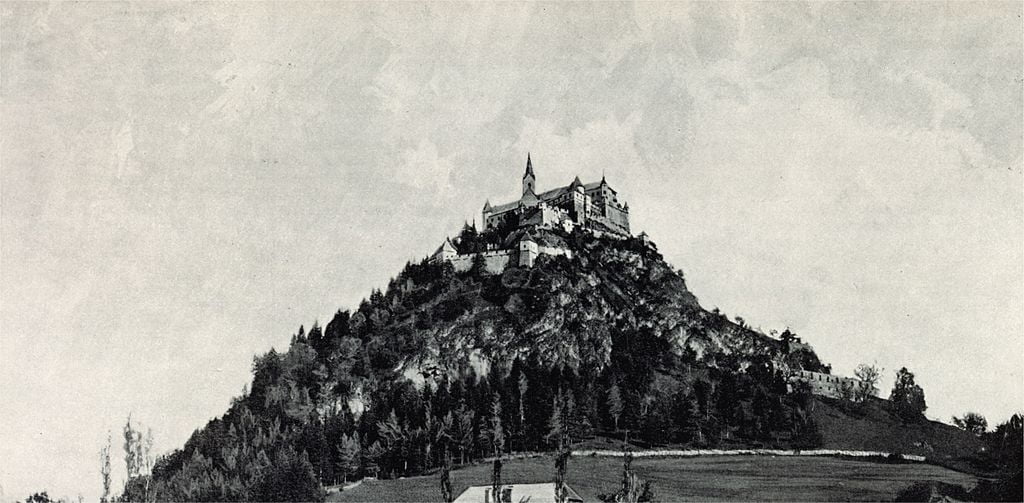
That early reference should not be confused with a surviving ninth-century castle. Architectural research by TU Wien notes that the fortress itself is explicitly mentioned around 1200. A late-14th-century description still presents a comparatively compact medieval complex consisting of a square tower, residential rooms, chapel and defensive walls.
The Maultasch Siege Legend
One of Hochosterwitz’s most famous stories concerns Margaret of Tyrol, known as Margarete Maultasch. According to a later legend, besiegers believed the garrison was close to starvation. The defenders supposedly slaughtered their last ox, filled it with grain and threw it over the wall, convincing the enemy that the castle still possessed abundant supplies.
It is a memorable story, but it should be treated as legend rather than established siege history. Similar “last animal” tales appear at other fortified sites in Central Europe.
The Khevenhüller Transformation
After the Osterwitz family line ended in the 15th century, the castle returned to Habsburg control. It was affected by the military pressures created by Ottoman expansion and underwent repair and modification under several holders.
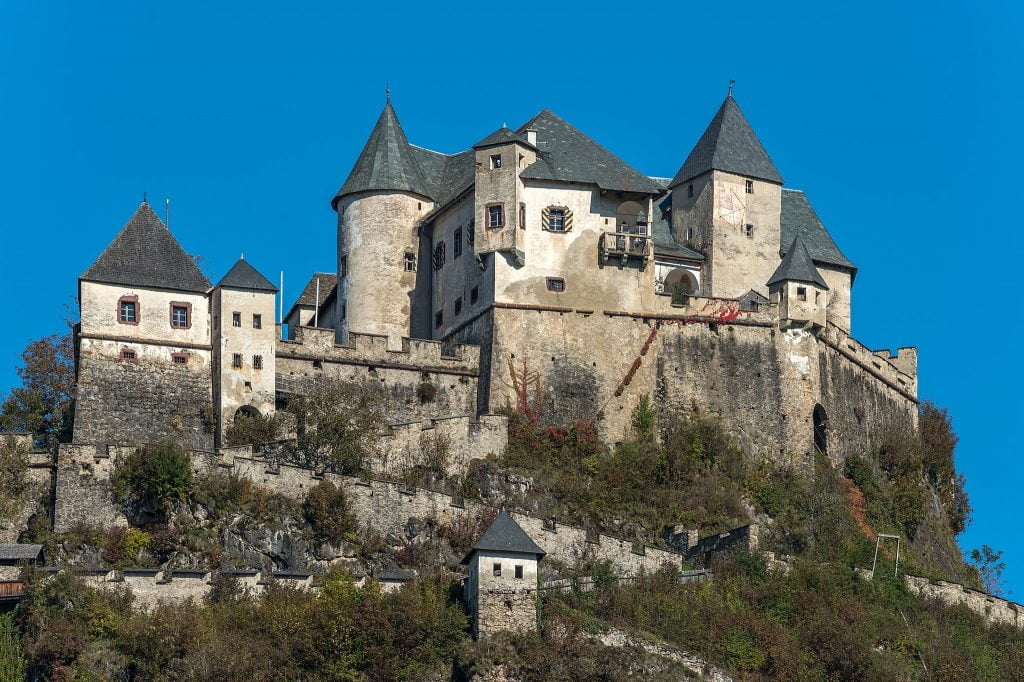
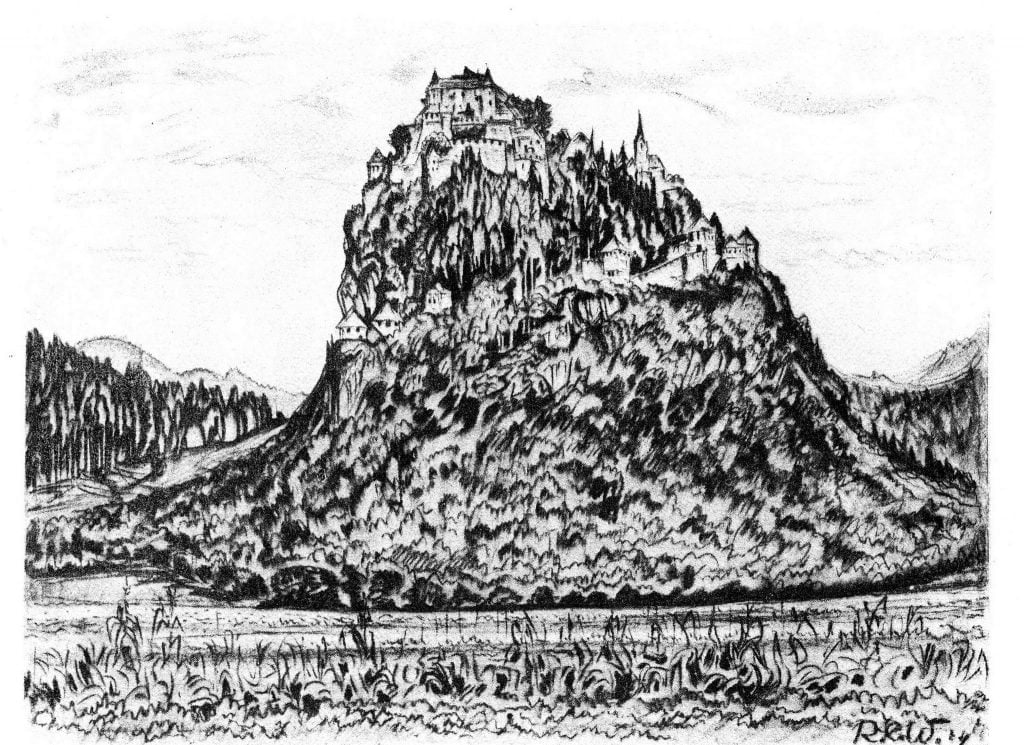
In 1541 Ferdinand I granted the castle in fief to Christoph Khevenhüller. Georg Khevenhüller later purchased Hochosterwitz in 1571 and invested heavily in transforming it into the extraordinary fortress seen today. The work added bastions, an arsenal and the succession of fourteen defensive gates that make the approach so unusual.
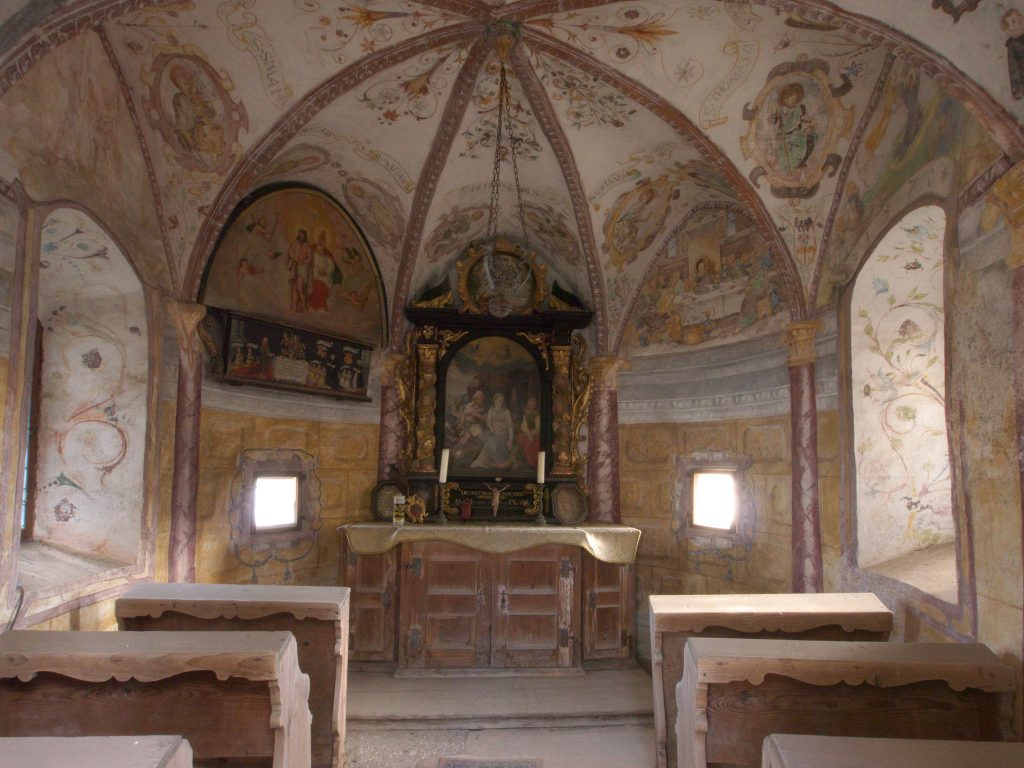
A marble tablet dated 1576 records Georg’s rebuilding and his wish that his descendants preserve the castle. The Khevenhüller family has maintained ownership across the generations since that period.
Revisit More Historic Places Below or Read Further
Hochosterwitz Castle Today
Hochosterwitz remains privately owned by the Khevenhüller family and functions as a museum and visitor attraction. The collections include an armoury and weapons, historical pictures, Renaissance material and objects connected with the castle’s long history.
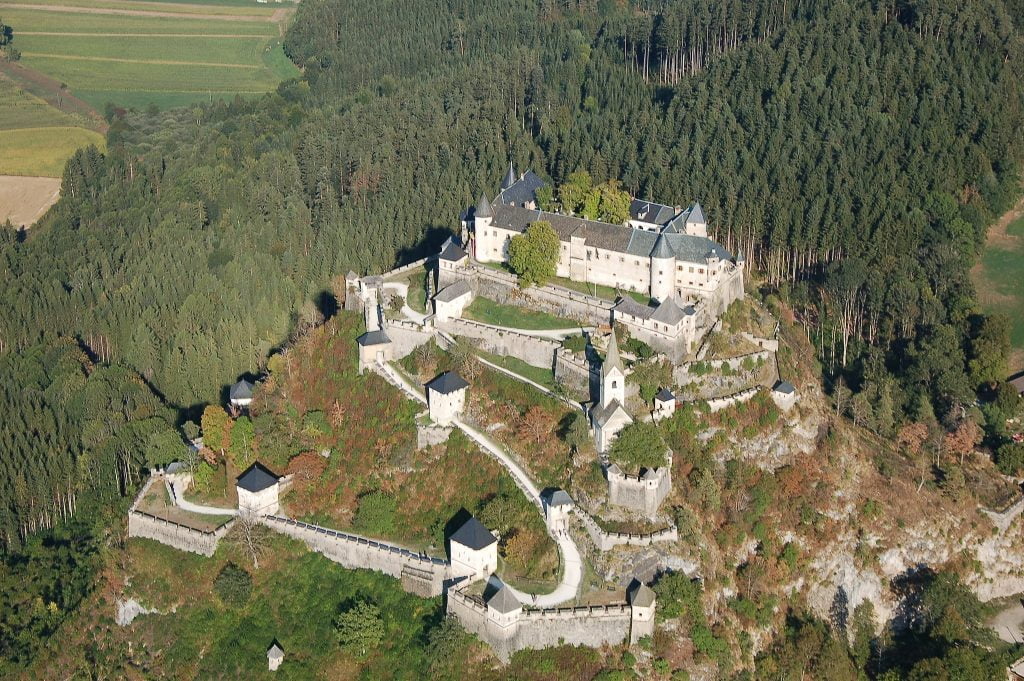
Visitors can walk the historic road through all fourteen gates or use the Fürst-Max-Bahn lift to reach the upper castle. The official site recommends allowing at least 1.5 hours, which is a sensible minimum if you want to explore the approach, courtyards and museum rather than simply reach the summit.
Interesting Hochosterwitz Castle Facts
- The castle stands on a limestone rock roughly 150 metres above the surrounding valley.
- The approach passes through fourteen defensive gates, each creating another obstacle for an attacker.
- The place name is documented in 860, while the castle itself is explicitly recorded much later.
- Georg Khevenhüller bought the castle in 1571 and was responsible for the major late-16th-century expansion.
- The Khevenhüller family has retained the castle across the generations since that period.
Visiting Hochosterwitz Castle – Tips and Practical Information
2026 Opening Hours
Reviewed August 2026: the castle’s official schedule varies by month. From 31 May through 31 August it is open daily from 9:00 am to 6:00 pm, with last admission at 4:30 pm. September runs Tuesday–Sunday 10:00 am–5:00 pm; October and early November have a more limited Wednesday–Sunday schedule with listed holiday exceptions. Spring hours also vary, so use the official page for the date of your visit.
2026 Ticket Prices
The published 2026 admission is €18 for adults/seniors and €11 for children aged 6–15. A family ticket for two adults and at least two children aged 6–15 is €47. Children under six enter free. The lift is an additional €12 per person, with a downhill-only ticket listed at €7. The castle notes that prices can change.
Walking Up or Taking the Lift
Walking is part of the historic experience because the road passes through all fourteen gates, but it is an uphill climb. The Fürst-Max-Bahn provides an alternative route to the upper castle. Parking is included in the castle admission price according to the official visitor information.
How Long to Allow
The castle itself recommends allowing at least 1.5 hours. If you plan to walk slowly through the gates, visit the museum and stop for the views or restaurant, two to three hours is more comfortable.