Arundel Castle – One of The Longest Inhabited Castles in The UK
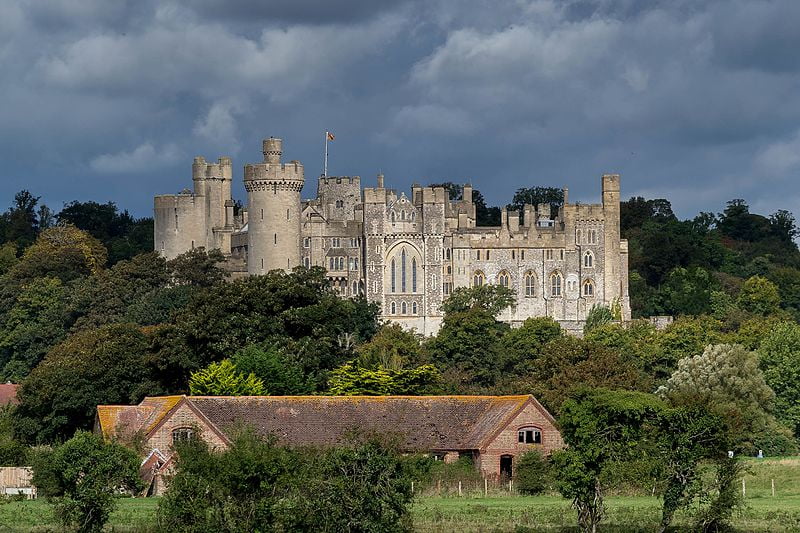
Arundel Castle rises above the River Arun in West Sussex and brings together nearly 1,000 years of English history. Its story begins with a Norman motte-and-bailey stronghold established by Roger de Montgomery in the late 11th century, but much of the dramatic castle visitors see today reflects centuries of rebuilding, particularly the major Victorian restoration completed around 1900.
The castle has descended through the d’Albini, FitzAlan and Howard families and has been the seat of the Dukes of Norfolk and their ancestors for more than 850 years. It remains an occupied family seat as well as one of the most important historic castles to visit in England.
Arundel Castle has descended through the same broad family line since 1138, making its architecture a record of Norman, medieval, Civil War and Victorian England in one place.
Frequently Asked Questions
FOR HISTORY | BEAUTIFUL IMAGES | INTERESTING FACTS | TRAVEL TIPS
Early History: From Norman Motte to Stone Castle
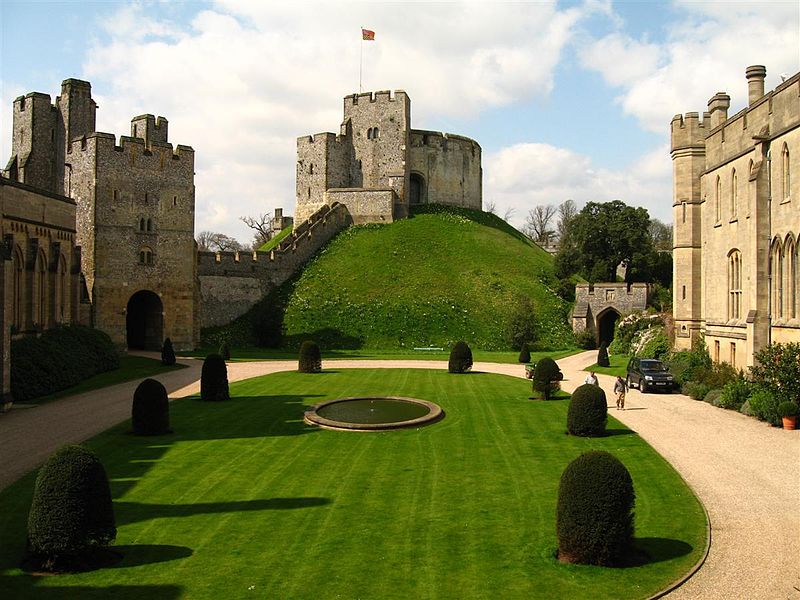
Roger de Montgomery, one of William the Conqueror’s most important followers, established Arundel Castle soon after the Norman Conquest. The oldest surviving feature is the great artificial motte, rising more than 100 feet above the dry moat. Arundel’s official history dates this earthwork to 1068 and the gatehouse to 1070.
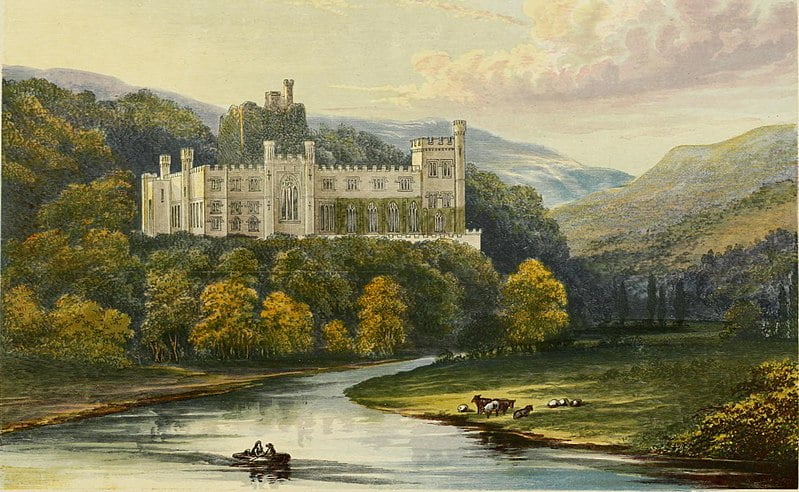
After Roger’s heirs lost the estate, Arundel reverted to the Crown. Henry I settled the castle and lands on his second wife, Adeliza of Louvain. She later married William d’Albini II, who constructed the stone shell keep on the Norman motte. Henry II subsequently invested heavily in Arundel and confirmed William as Earl of Arundel in 1155.
From the d’Albinis to the FitzAlans and Howards
One of Arundel’s most remarkable features is the continuity of its ownership. Apart from occasional returns to the Crown, the castle has descended from 1138 to the present through heiresses: from the d’Albinis to the FitzAlans in the 13th century, and from the FitzAlans to the Howards in the 16th century.
The Howard family became one of the most influential noble dynasties in England. Their history intersected with the Wars of the Roses, the Tudor court, the Spanish Armada and religious conflict. Thomas Howard, 4th Duke of Norfolk, was executed in 1572 for involvement in the Ridolfi Plot against Elizabeth I.
Arundel Castle in the English Civil War
Arundel suffered heavily during the English Civil War. Royalist forces took the castle in December 1643, but a Parliamentarian army led by Sir William Waller soon besieged it. The garrison surrendered on 6 January 1644 after a siege lasting several weeks. The castle’s official history describes it as having been badly damaged during two Civil War sieges.
Repairs were limited for decades. Thomas Howard, 8th Duke of Norfolk, undertook work in the early 18th century, followed by further restoration under Charles Howard, 11th Duke.
The Victorian Castle We See Today
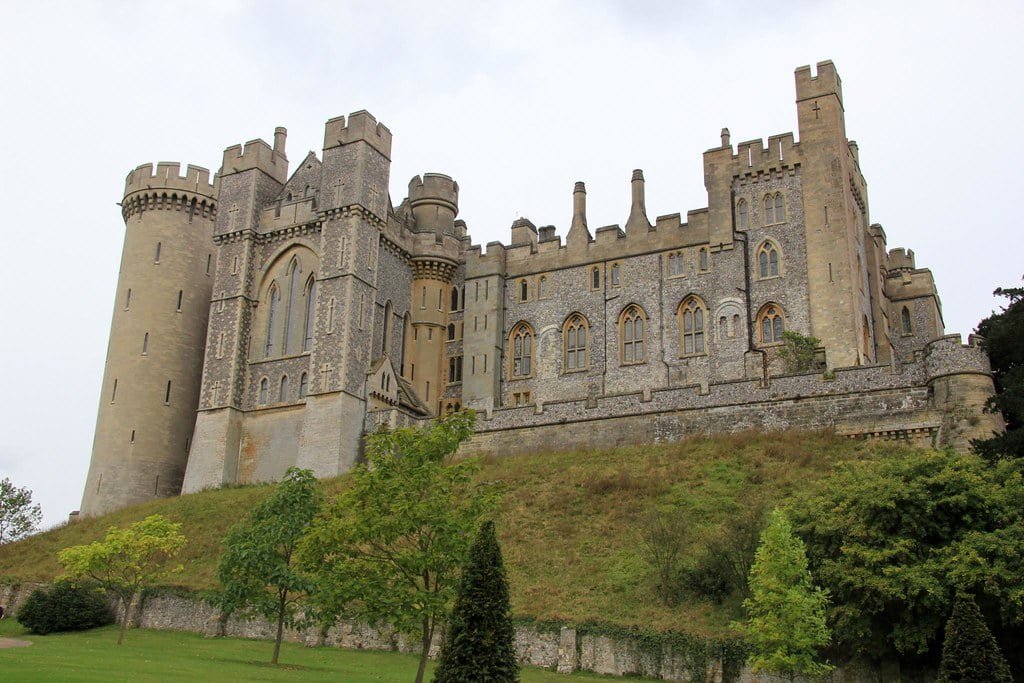
The present appearance of Arundel Castle owes much to the 19th century. Queen Victoria and Prince Albert stayed here for three days in 1846, and furniture for their visit survives in the castle. The most transformative rebuilding came later under Henry, 15th Duke of Norfolk. Historic England dates the major remodelling campaign to 1877–1904, while Arundel’s own history says the principal restoration was completed in 1900.
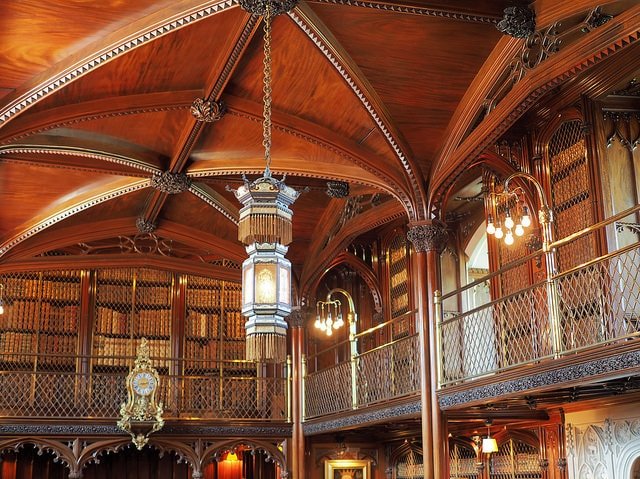
The rebuilt castle was technologically ambitious for its time. According to the castle’s official history, it was among the first English country houses equipped with electric lighting, integral firefighting equipment, service lifts and central heating.
Revisit More Historic Places Below or Read Further
Arundel Castle Today
Arundel remains the seat of Edward Fitzalan-Howard, 18th Duke of Norfolk and Earl Marshal of England. The Earl Marshal has an important ceremonial role in state occasions; the current Duke was responsible for major elements of Queen Elizabeth II’s state funeral in 2022 and the coronation of King Charles III in 2023.
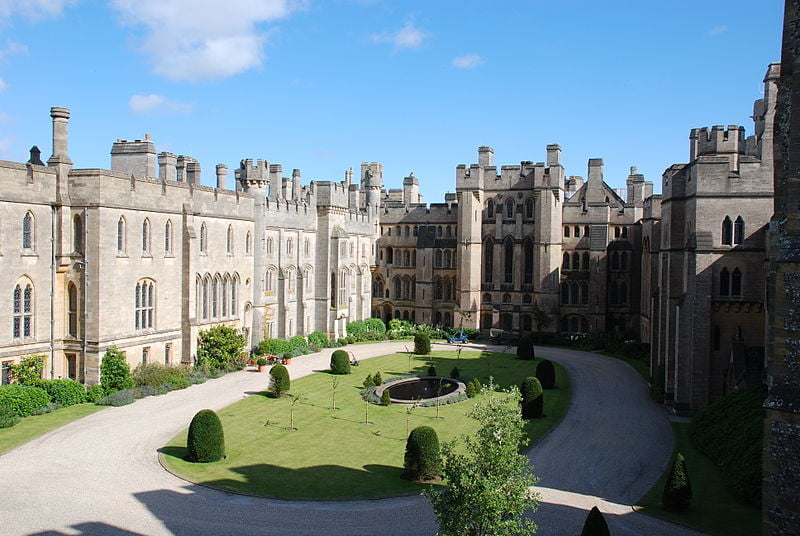
The castle collections include furniture, tapestries, clocks and portraits by artists including Van Dyck, Gainsborough, Reynolds and Canaletto, as well as objects connected with Mary, Queen of Scots and the Howard family. Arundel has also appeared on screen; productions associated with the site include The Young Victoria and Wonder Woman.
Interesting Facts About Arundel Castle
- The castle’s Norman motte dates to 1068 and rises more than 100 feet above the dry moat.
- Arundel has been the seat of the Dukes of Norfolk and their ancestors for more than 850 years.
- Queen Victoria and Prince Albert stayed at the castle for three days in 1846.
- The Fitzalan Chapel remains closely associated with the Howard/Fitzalan family and contains family tombs.
- The Keep is reached by more than 100 steep stone steps and spiral staircases.
Visiting Arundel Castle – Tips and Practical Information
Getting to Arundel Castle
Arundel is served by regular trains from London Victoria, and the castle is approximately a ten-minute walk from Arundel railway station. Drivers can use the Mill Road pay-and-display car park directly opposite the main entrance; the castle lists BN18 9PA for sat-nav directions.
2026 Opening Season and Hours
Reviewed August 2026: Arundel Castle’s official visitor page lists the 2026 season from 1 April to 1 November. The gardens and Fitzalan Chapel are generally open 10:00 am–5:00 pm, the Keep 10:00 am–4:30 pm, and the main castle rooms noon–5:00 pm. Last admission is 4:00 pm. The site is normally closed on Mondays except bank holidays and Mondays in August. Because ticket categories, event access and prices can change, check the official site before travelling.
Accessibility
Much of the castle can be visited with mobility assistance, but this is a historic complex with unavoidable limitations. The main castle has lift access and accessible toilets, and accompanying carers can receive free entry. The gardens have wheelchair-width gravel paths with moderate slopes. However, the Fitzalan Chapel is reached by steep stone steps, while the Gatehouse and Keep involve steep and spiral stairs; the Keep requires more than 100 steps. The castle also has a motorised buggy and a limited number of wheelchairs available for loan.
How Long Should You Allow?
There is enough to see across the gardens, Keep, State Rooms and exhibitions to justify several hours. If you want to explore the castle and gardens without rushing, plan for at least half a day and allow extra time on major event days.