Eltz Castle – 900 Years of Family History
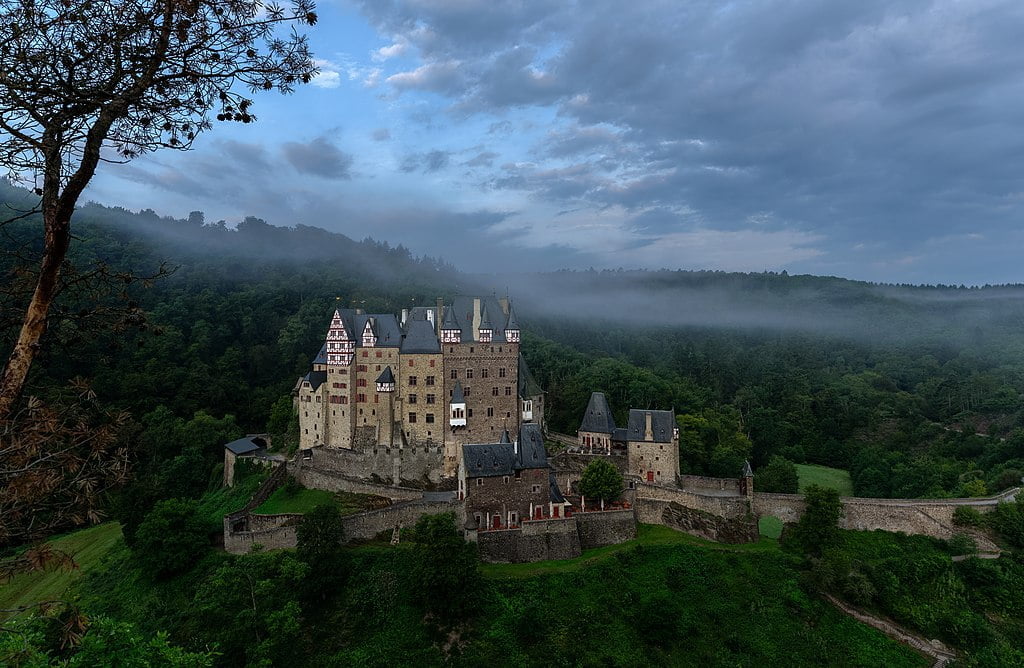
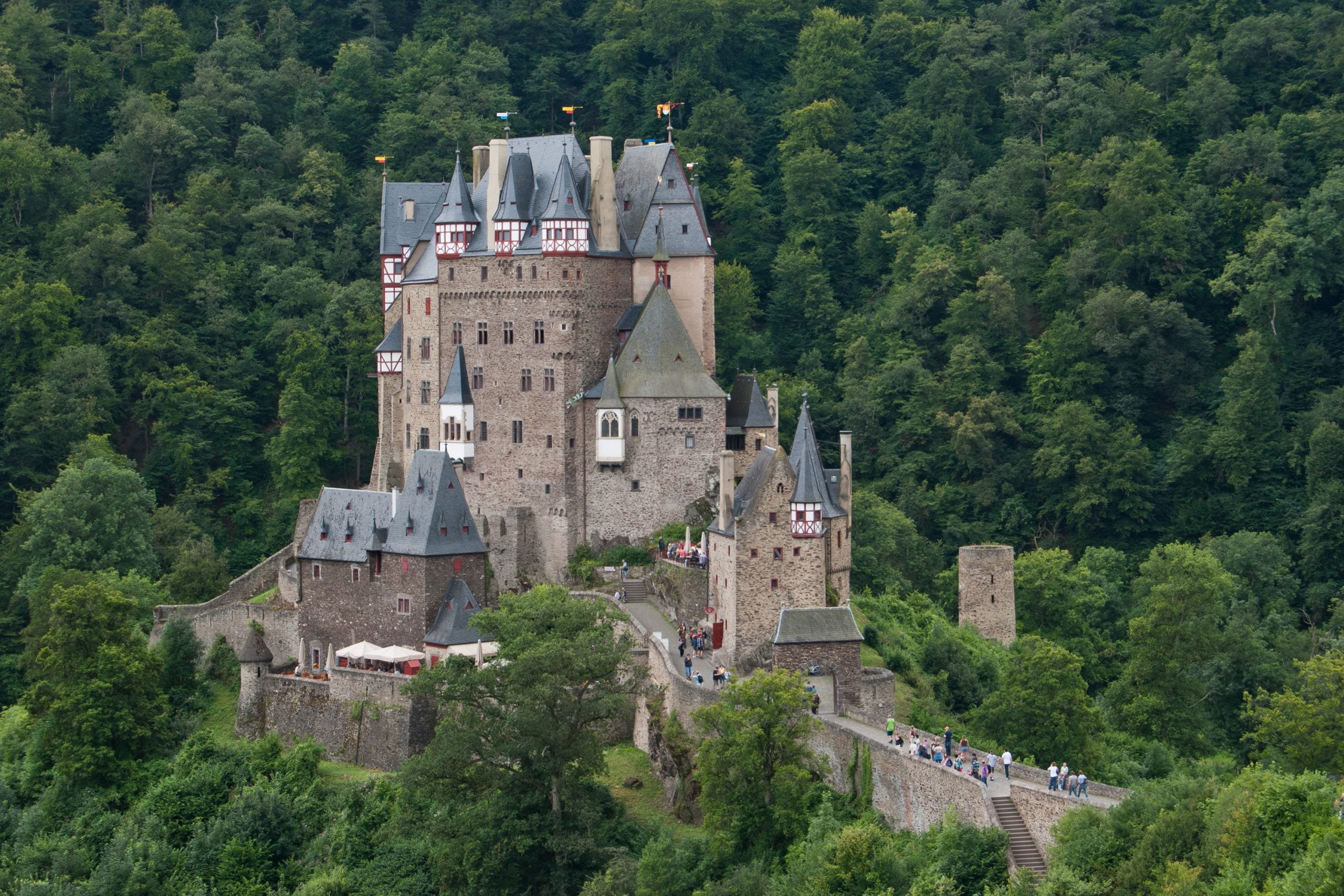
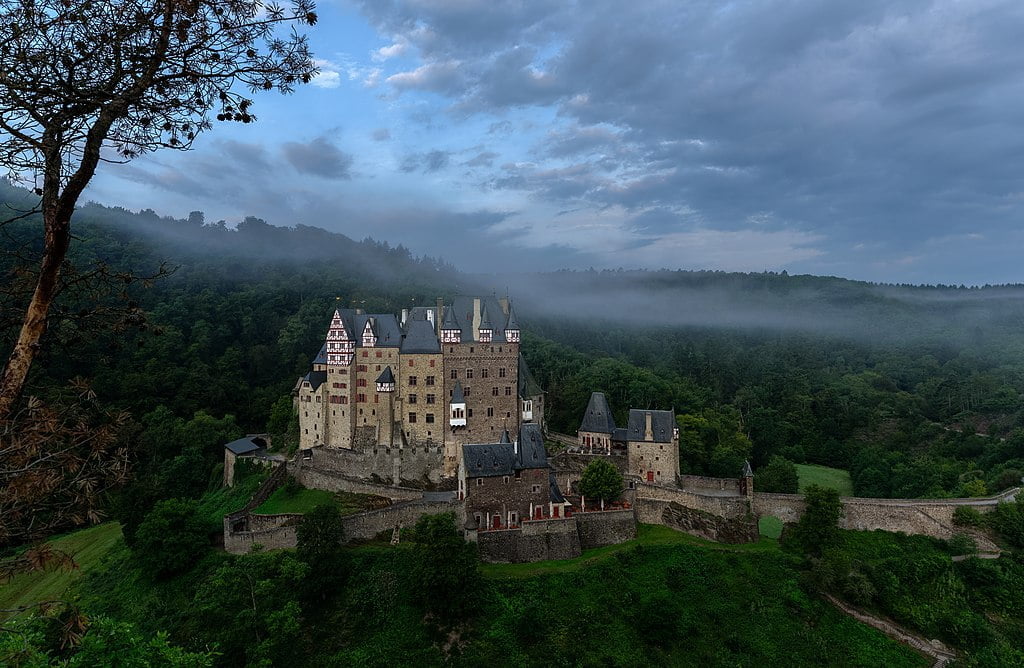
Eltz Castle (Burg Eltz) is one of Germany’s most recognisable medieval castles, hidden in a forested valley above the Elzbach stream. First documented in 1157, it grew from a Romanesque stronghold into a dense complex of towers and family houses built between the 12th and 17th centuries.
Unlike many castles in the Rhine region, Eltz was never destroyed. It has remained in the ownership of the same family for roughly 900 years, and many interiors, furnishings, weapons and artworks survived in place.
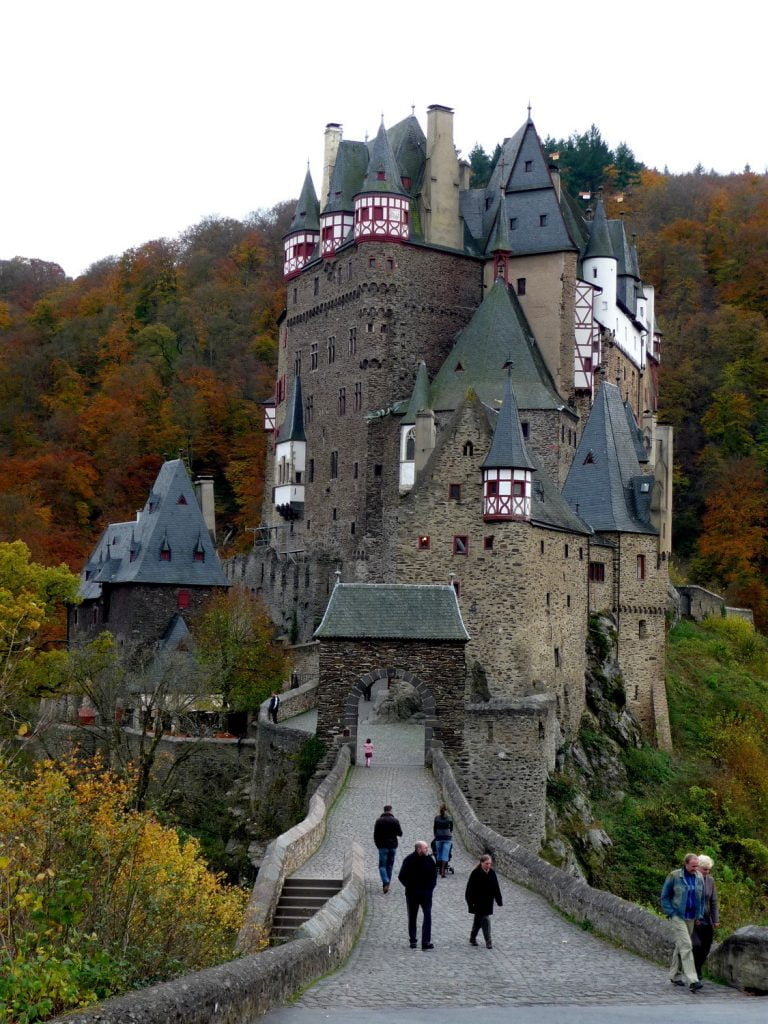
Its mixture of Romanesque, Gothic and early Baroque construction makes it a useful real-world example of how castle design and architecture evolved over centuries.
Eltz Castle grew upward over five centuries, yet it remained in the same family and survived the wars that destroyed many other Rhine castles.
Frequently Asked Questions
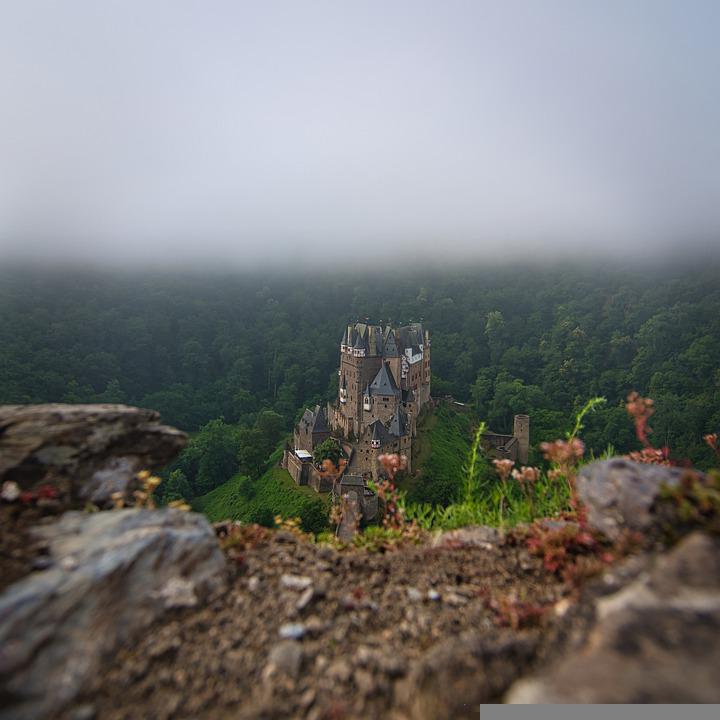
Eltz Castle stands in the Eltz Forest near Wierschem, between the Moselle, Eifel and Rhine regions of Rhineland-Palatinate, Germany. The Elzbach stream surrounds its rock on three sides.
The castle was first documented in 1157. Its oldest Romanesque structures date from the 12th century, while successive Eltz family branches expanded the complex over roughly 500 years, into the 17th century.
Yes. Eltz Castle has remained in the family that took its name from the site. In 2018 Jakob Eltz, representing the 34th generation, assumed responsibility for the family castle.
Yes, during its seasonal opening period. Admission includes the guided castle tour, inner courtyard and Treasury. Dates, hours and restoration work can change, so check the official website before visiting.
FOR HISTORY | BEAUTIFUL IMAGES | INTERESTING FACTS | TRAVEL TIPS
History of Eltz Castle
The First Documented Castle
The earliest secure written reference dates to 1157, when Rudolf von Eltz witnessed a charter issued by Emperor Frederick I Barbarossa. Parts of the Romanesque keep known as Platt-Eltz and the early residential range survive from this period. The position protected a route linking the Moselle with the Eifel and the fertile Maifeld.
Three Family Branches Under One Roof
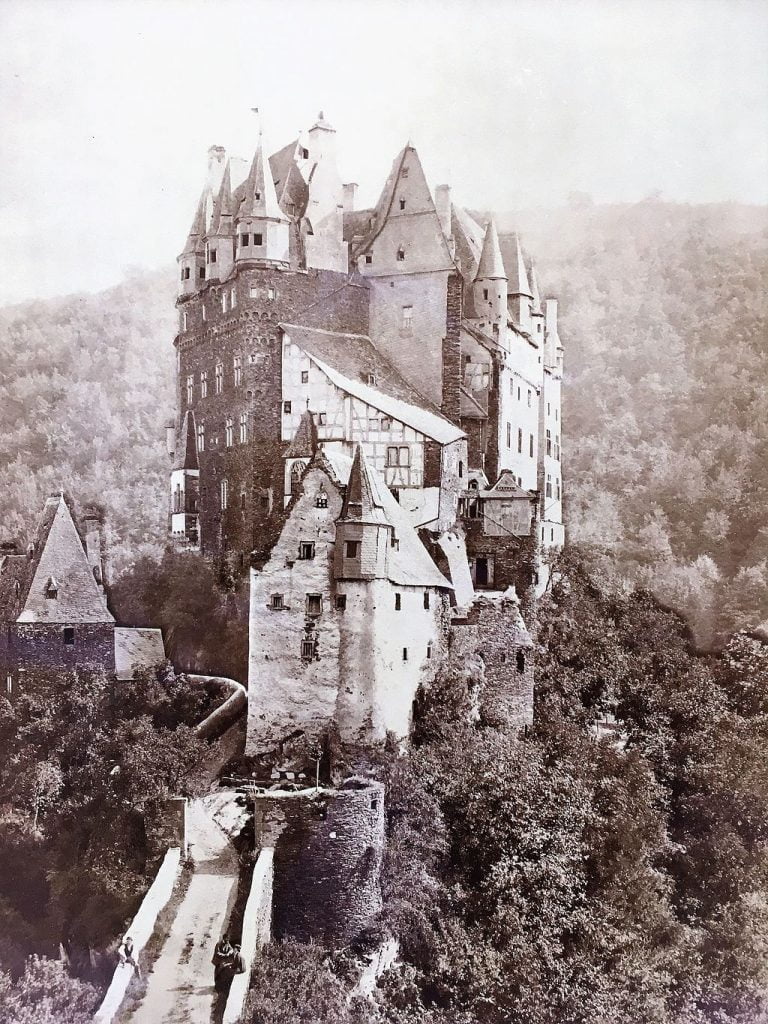
In 1268, the descendants of Rudolf divided the castle and estate among three principal family lines. Rather than abandoning the site, the joint heirs built separate residences around the same courtyard. This arrangement created the compact vertical skyline that defines Eltz today.
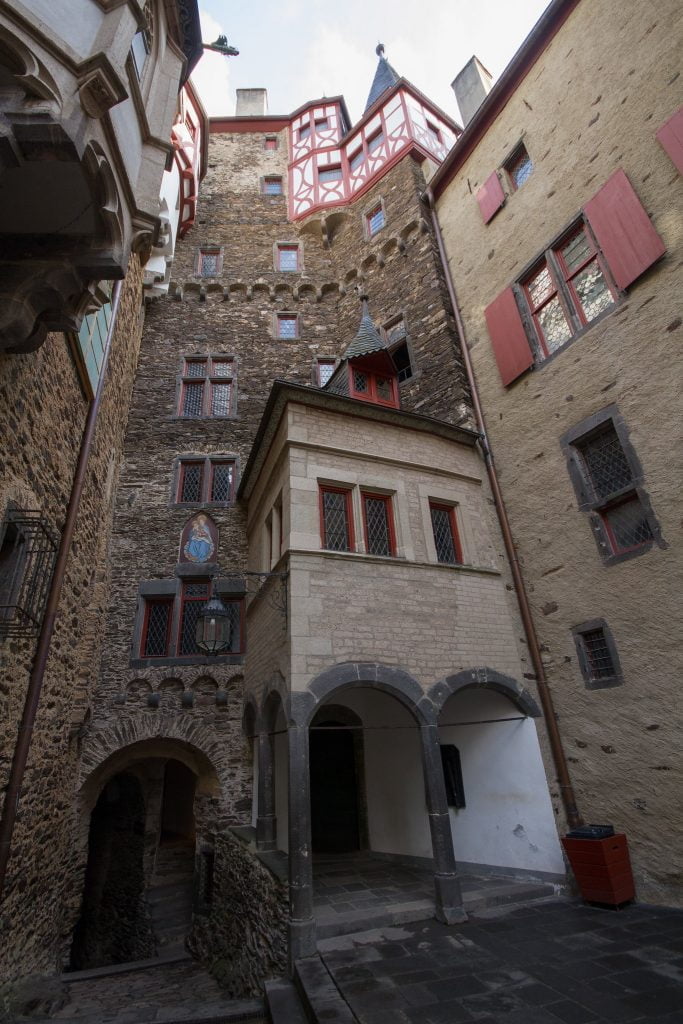
The Rübenach, Rodendorf and Kempenich houses were added and expanded over several centuries. Because the rock offered little room, builders worked upward, producing eight high residential towers and more than 100 rooms.
The Eltz Feud
From 1331 to 1336, the lords of Eltz and neighbouring knights resisted Archbishop Balduin of Trier. Balduin built the siege castle Trutzeltz above Eltz and used catapults and early cannon fire against the defenders. The Eltz lords ultimately submitted, and much of the outer fortification was dismantled, but the residential castle survived.
After the feud, diplomacy and family connections helped keep Eltz out of later destructive wars. In 1689, Hans Anton zu Eltz-Üttingen used his position in French service to help prevent the castle’s destruction during the War of the Palatine Succession.
Restoration and Modern Ownership
The three-way ownership ended in 1815 when the Eltz-Kempenich line acquired the remaining share. Major restoration between 1848 and 1890 stabilised the complex while respecting much of its historic fabric. The castle became a museum in 1945, and conservation work has continued into the 21st century.
Revisit More Historic Places Below or Read Further
Eltz Castle Today
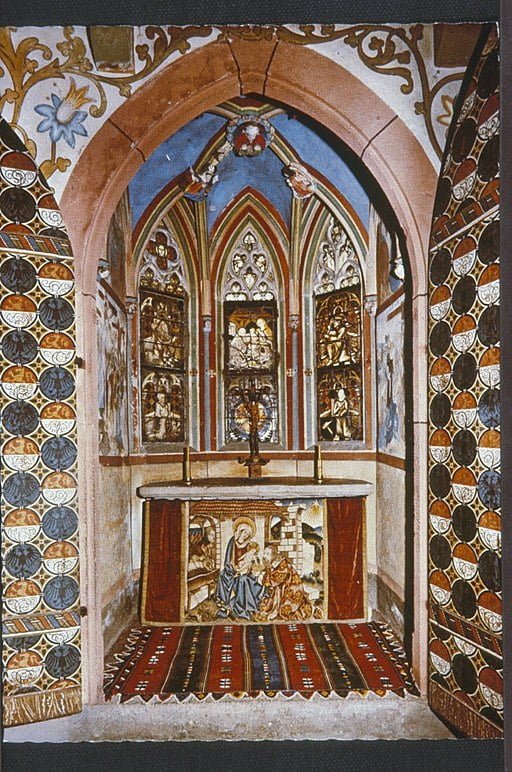
Eltz Castle remains privately owned by the Eltz family. The official family history identifies Jakob Eltz, who took responsibility in 2018, as the 34th generation. Visitors see selected historic rooms on a guided tour, while the Treasury displays gold and silver work, jewellery, arms, glass and porcelain from more than eight centuries.
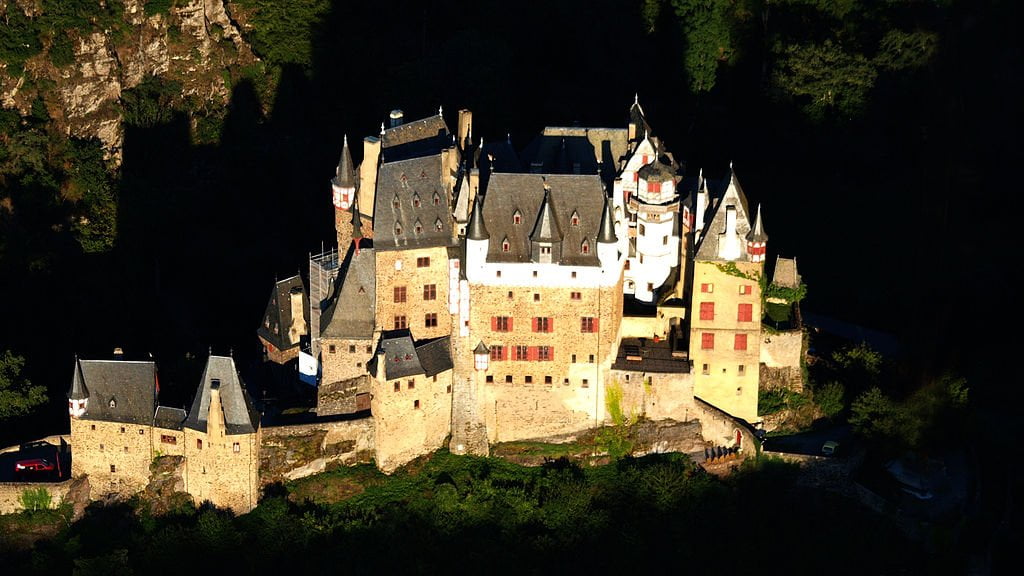
The castle’s setting is as important as its architecture. It stands on a rock enclosed on three sides by the Elzbach, deep inside the protected Eltz Forest. The combination of an intact family residence, original furnishings and an undeveloped valley explains why Eltz looks unusually complete compared with many reconstructed medieval sites.
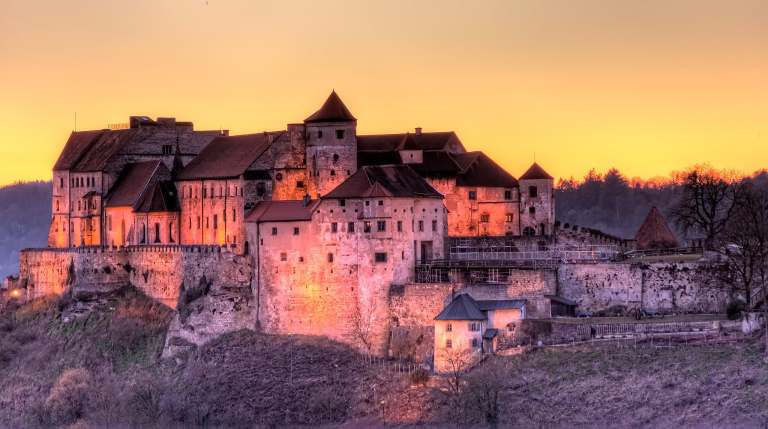
For more German strongholds, compare Eltz with Burghausen Castle or browse the best castles to visit in Germany.
Interesting Eltz Castle Facts
- Rudolf von Eltz appears in a document issued by Emperor Frederick I Barbarossa in 1157.
- The family divided the castle among three lines in 1268, creating a joint-heirs’ castle known as a Ganerbenburg.
- The buildings rose over roughly 500 years because space on the castle rock was limited.
- The eight residential towers reach up to about 35 metres.
- The Treasury contains more than 500 exhibits spanning nine centuries.
- Eltz Castle appeared on the West German 500 Deutsche Mark banknote from 1961 to 1995.
- The castle served as an exterior location in the 1980 film The Ninth Configuration.
Visiting Eltz Castle: Practical Information
Getting to Eltz Castle
Drivers should navigate to “Burg Eltz, Wierschem,” which leads to the castle car parks. From there, visitors can walk past the viewing platform or use the seasonal shuttle. By public transport, the official site recommends the train to Hatzenport and bus 365 to the Eltz Castle car park during the visitor season.
Hikers can approach from Moselkern on a roughly 2.5 km trail, while the longer Eltzer Burgpanorama route makes the forest setting a larger part of the day.
Opening Times, Tickets and Tours
The official 2026 season runs from 29 March to 1 November, with daily opening from 09:30. Admission includes a guided interior tour, the courtyard and the Treasury. The guided tour lasts about 35–40 minutes; the Treasury can be explored independently.
How Long Should You Spend at Eltz Castle?
Allow about two hours for the castle tour, Treasury, courtyard and viewpoints. Add at least another 90 minutes if you are walking to and from Moselkern, and longer for one of the full forest hikes.
For 2026, the castle lists seasonal opening from 29 March to 1 November and ongoing restoration work that may leave parts of the inner courtyard scaffolded. Confirm dates, admission and access on the official opening-times and tickets page.
Practical Tips
- Arrive early if you want quieter exterior photographs and shorter tour waits.
- Bring cash for parking and the shuttle, as the official site specifies cash payment for these services.
- Interior photography is restricted; drones are prohibited.
- Animals are not permitted inside the castle buildings.
- Check the official site for current restoration scaffolding before travelling.
Quick Video Tour of Eltz Castle