Miramare Castle – Abode of Tragic Love (History & Travel Tips)
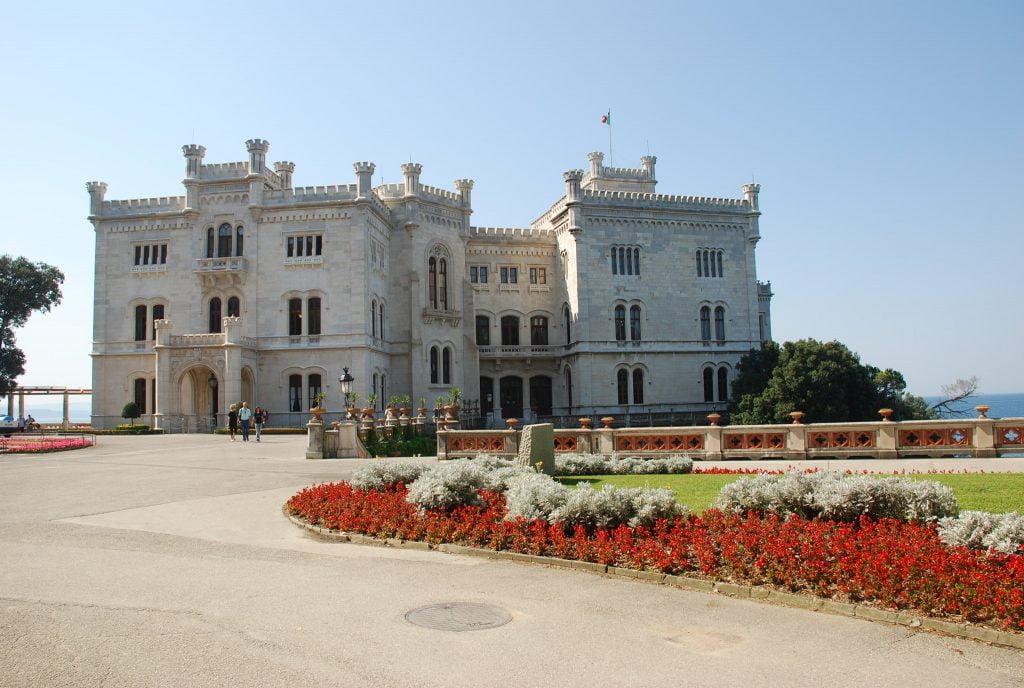
Miramare Castle is an ivory-white Habsburg residence overlooking the Gulf of Trieste in northeastern Italy. Designed for Archduke Ferdinand Maximilian of Austria and his wife, Charlotte of Belgium, it combines an intimate royal residence with a dramatic seaside park. Today, the state museum preserves many of the couple’s rooms and collections, making Miramare one of the most distinctive castles in Italy.
Miramare’s beauty is inseparable from its tragic history: a carefully designed home that Maximilian and Charlotte occupied only briefly before their Mexican venture ended in disaster.
Frequently Asked Questions
FOR HISTORY | BEAUTIFUL IMAGES | INTERESTING FACTS | TRAVEL TIPS
Early History
A Seaside Residence for Maximilian and Charlotte
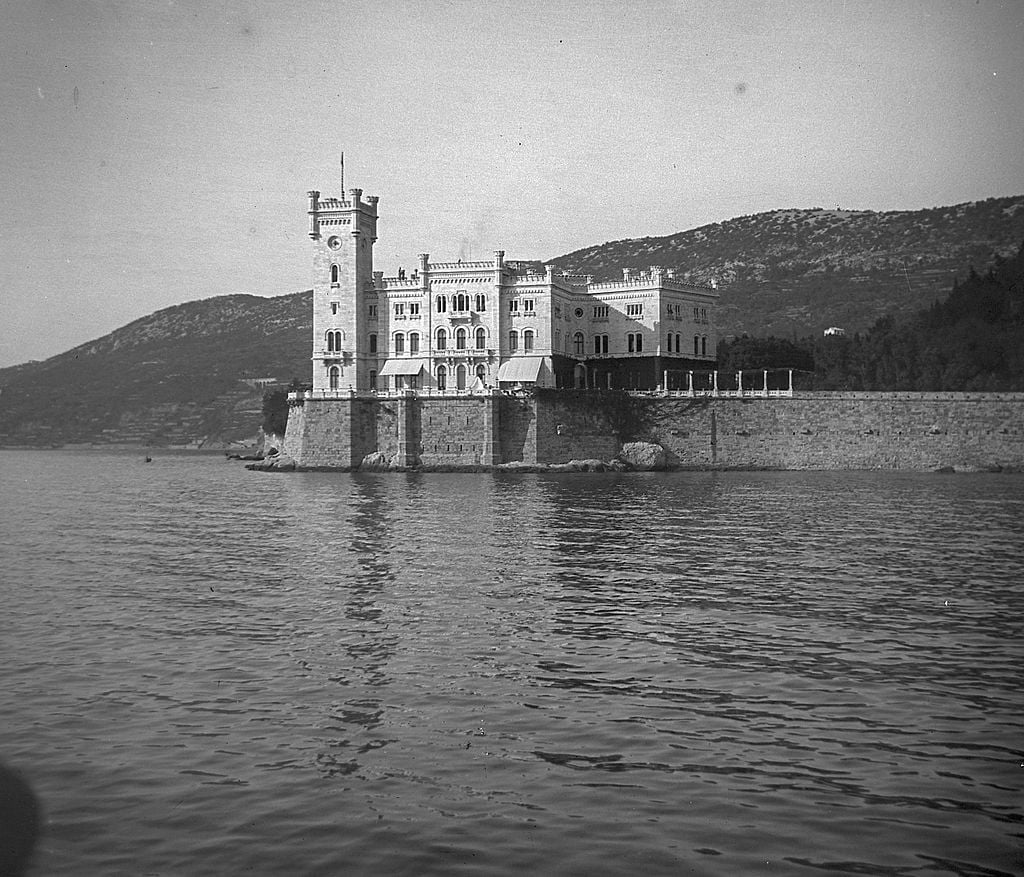
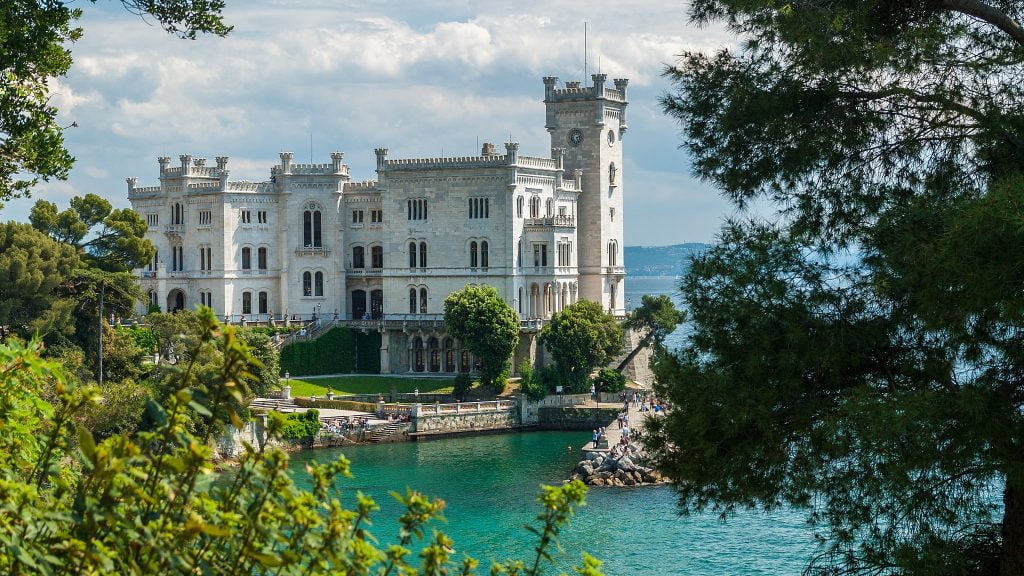
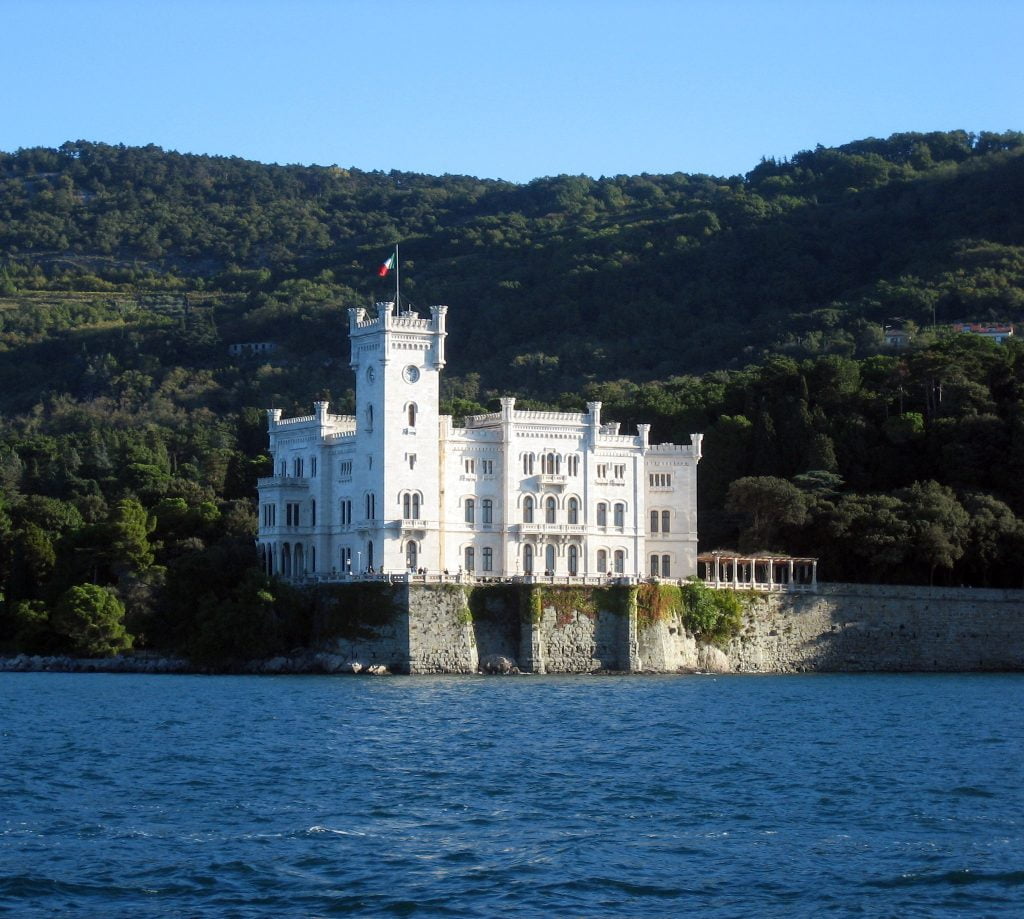
Archduke Ferdinand Maximilian, the younger brother of Emperor Franz Joseph I, selected the rocky Grignano promontory for a private residence overlooking the Adriatic. Carl Junker designed the castle in an eclectic style, faced with pale Istrian stone and shaped by medieval and Renaissance influences. Work began in 1856, the same year Maximilian married Charlotte of Belgium.
The project extended beyond the castle itself. Maximilian directed the transformation of the once-barren karst landscape into a large park planted with Mediterranean and imported species. The couple initially lived in the nearby Castelletto and moved into the castle’s completed first floor in December 1860.
Mexico and the End of the Miramare Story
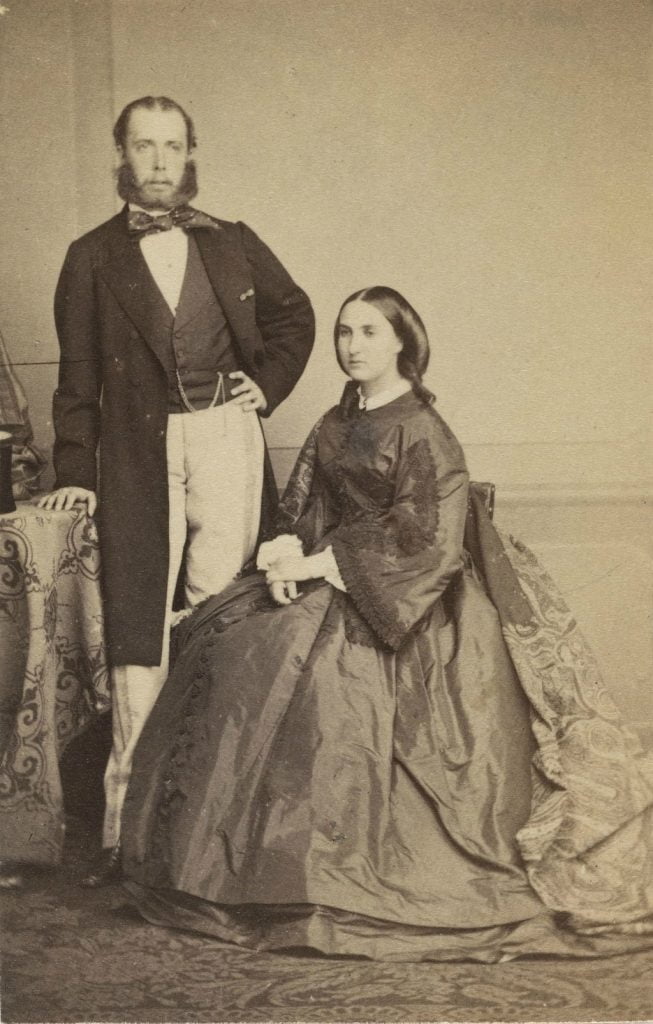
In 1864, Maximilian accepted the Mexican crown with the backing of Napoleon III and conservative Mexican monarchists. He and Charlotte left Miramare for Mexico, where the new empire remained dependent on French military support. When France withdrew its forces, Maximilian’s position collapsed. Republican troops captured him at Querétaro, and he was executed on June 19, 1867.
Charlotte had returned to Europe in 1866 to seek support and never went back to Mexico. Her mental health deteriorated during this crisis, and she spent the rest of her long life in Belgium under family care, dying in 1927. The popular “Miramare curse”—the claim that anyone who sleeps in the castle will die violently in a foreign land—is folklore rather than documented history.
Revisit More Historic Places Below or Read Further

Miramare Castle After Maximilian
After Maximilian’s death, members of the Habsburg family used Miramare for occasional stays. Empress Elisabeth of Austria—better known as Sisi—visited several times, and Archduke Franz Ferdinand hosted German Emperor Wilhelm II there shortly before the outbreak of the First World War.
The castle’s furnishings were removed to Vienna during the First World War and returned under agreements between Austria and Italy in the 1920s. Miramare opened as a museum in 1929, later served as the residence of Duke Amedeo of Savoy-Aosta, and housed German, New Zealand, British and American forces during and after the Second World War. The restored state museum reopened in 1955.
Today, visitors follow a set route through rooms associated with Maximilian and Charlotte. Nautical details reflect Maximilian’s naval career, while the preserved furniture, paintings and decorative schemes make the interiors unusually coherent for a 19th-century royal residence. The balconies and terraces overlook the Gulf of Trieste—not “Triste Bay,” as the older article incorrectly stated.
Interesting Miramare Castle Facts
- The castle stands approximately 8 km northwest of central Trieste on the Grignano promontory.
- Maximilian and Charlotte moved into the first floor on Christmas Eve 1860, even though the interior decoration was not yet complete.
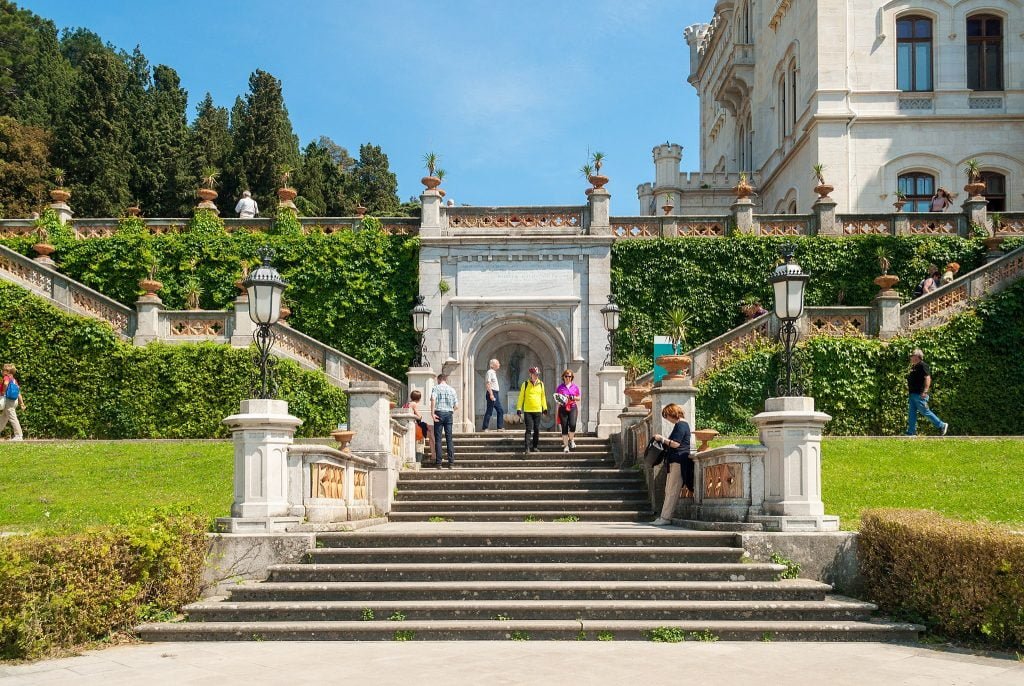
- The park covers roughly 22 hectares and combines formal gardens, woodland and species gathered from different parts of the world.
- The castle became a public museum in 1929 and reopened in its modern form in 1955 after postwar restoration.
- The Castelletto, historic kitchens, stables, greenhouses and small harbor expand the visit beyond the main castle.
Visiting Miramare Castle – Tips and Practical Information
Getting to Miramare Castle
Miramare is about 8 km northwest of central Trieste. Regional visitor information lists Trieste Trasporti bus line 6, Miramare railway station and seasonal boat services as public-transport options. Parking near the castle is limited, so the museum itself encourages visitors to arrive by bus, train or boat when possible. Check current schedules for the day of travel rather than relying on old fixed fares or journey times.
Tickets and Opening Hours
Reviewed September 2026: the castle museum is open daily from 9:00 am to 7:00 pm, with the ticket office closing at 6:30 pm. The official ticket page currently lists a €17 combined museum-and-temporary-exhibition ticket and a €2 reduced ticket for eligible visitors aged 18–25. Admission rules and exhibition packages change, so confirm the exact ticket for your date before visiting.
The park is free throughout the year. It opens at 8:00 am and closes between 4:00 pm and 7:00 pm depending on the month. Individual castle visitors do not normally require reservations, while groups and guided tours must book. The museum’s audio guide takes approximately 60 minutes; allow two to three hours if you also want to explore the park and waterfront.
Practical Tips
- Visit the park early if you want quieter paths and softer light on the waterfront façade.
- The park is extensive and includes slopes, so comfortable walking shoes are useful.
- Check whether the Castelletto, historic kitchens or temporary exhibitions require a separate ticket or timed visit.