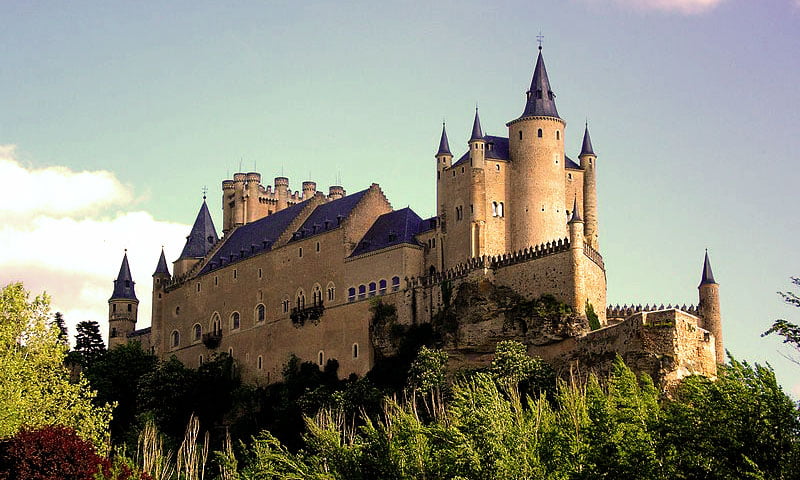
The Alcazar of Segovia – The Castle Which Inspired Walt Disney (HQ Images & History)
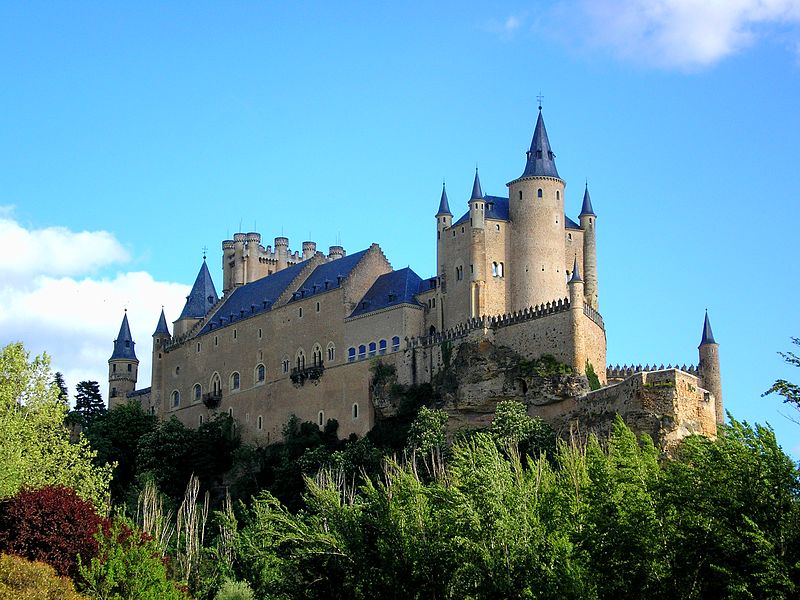
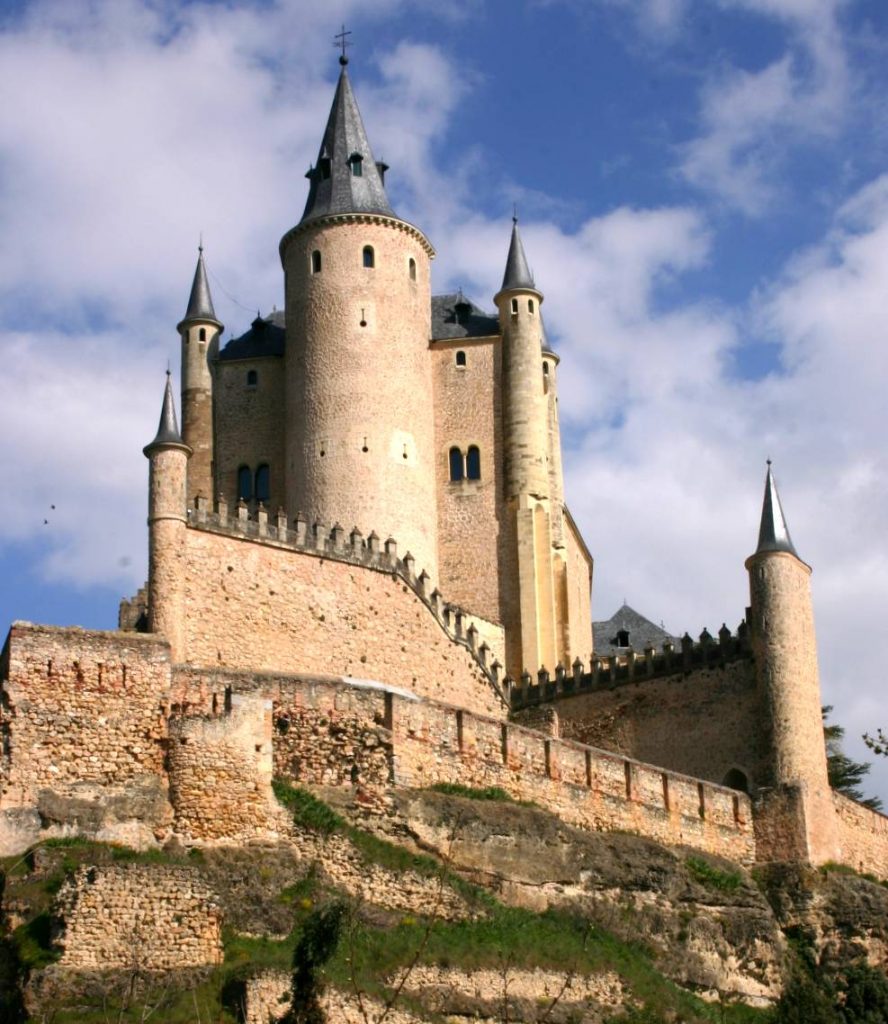
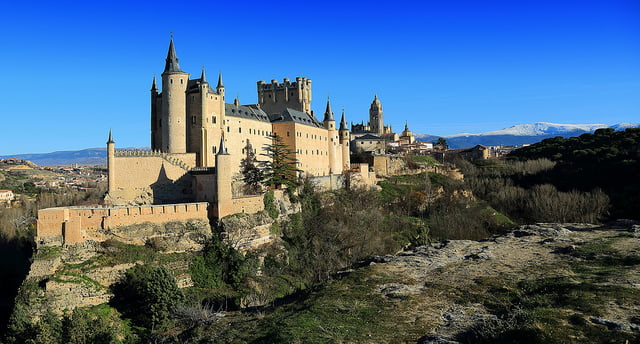
The Alcázar of Segovia is a fortified royal palace rising above the old city of Segovia, Spain, on a rocky promontory between the Eresma and Clamores valleys. Documented from the early 12th century, it became one of the favored residences of the kings of Castile and is especially recognizable for its ship-like profile and slate spires.
Its position on exposed rock gave the site obvious defensive value, but the Alcázar was much more than a fortress. Across its long history it served as a royal residence, state prison, artillery college and military archive. The Spanish word alcázar derives from Arabic and is commonly used for a fortified palace. Today it is among the best-known palace-castles in Spain, famous for its distinctive ship-shaped profile.
The Alcázar’s Disney connection is no longer just a popular legend: Disney has confirmed that the Segovia landmark served as a model for the castle in its 1937 animated film Snow White and the Seven Dwarfs.
Frequently Asked Questions
FOR HISTORY | BEAUTIFUL IMAGES | INTERESTING FACTS | TRAVEL TIPS
Early History of Segovia Palace
The exact origins of the Alcázar are not fully documented. Rather than presenting it as a known wooden Arab fort built over Roman foundations, the safer historical starting point is the surviving documentary record: the site is attested in the early 12th century and was progressively transformed into a royal fortress and palace. Its development continued for centuries under the monarchs of Castile. For broader context, see our guide to castles in Spain and our overview of medieval castle design and architecture.
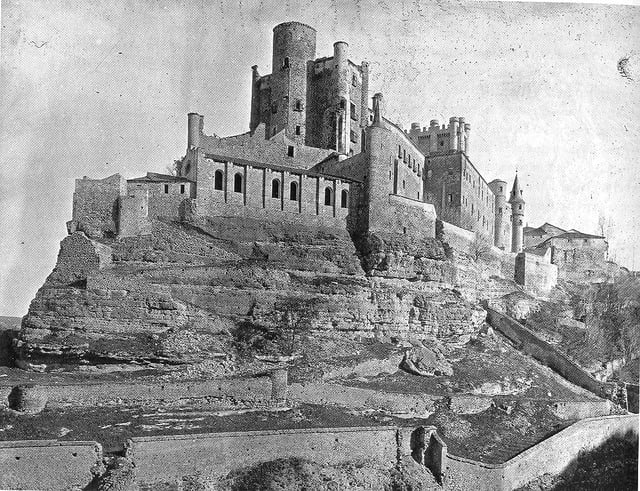
Over the years the palace became the seat of the royals of the Castile Kingdom and the Transtamara dynasty. In the 13th century, additions were made by Spanish architects working for Henry IV and John II to give it a Gothic air.
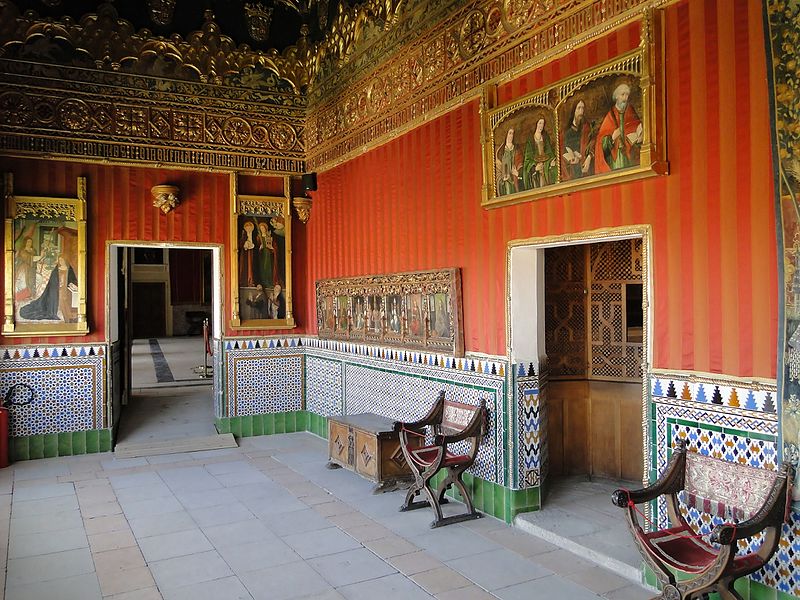
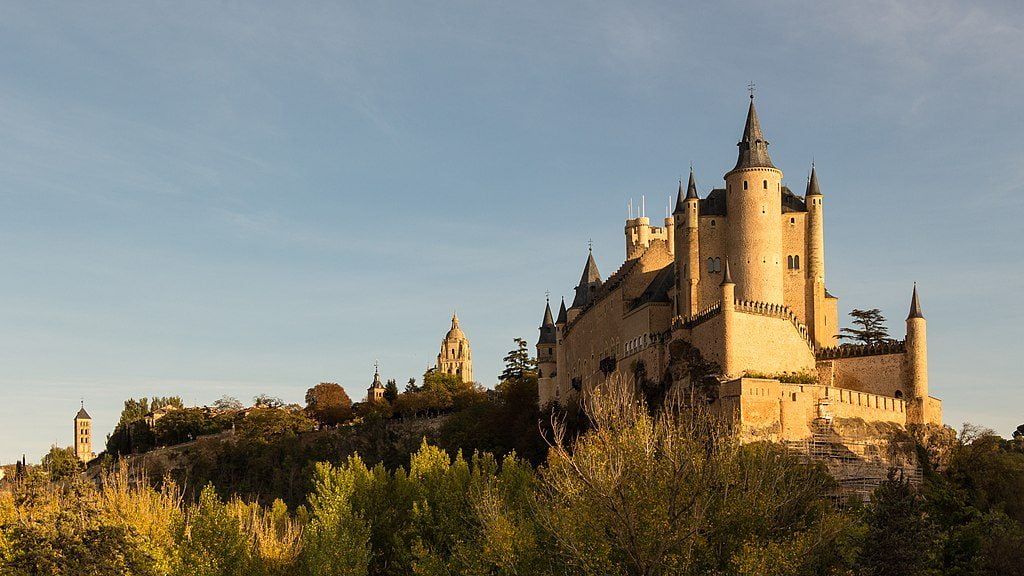
A major transformation came under Philip II in the 16th century. The steep slate roofs and pointed spires that give the Alcázar much of its Central European appearance are associated with his renovations. These later additions are an important reason the building looks so different from many other Castilian fortresses.
Revisit More Historic Places Below or Read Further
Alcazar of Segovia in Current Times
On March 6, 1862, a devastating fire swept through the Alcázar while it was being used by the Artillery College, destroying its roofs and much of its timber framework. Restoration did not begin until 1882, twenty years after the fire, under a project by architects Bermejo and Odriozola. The restored monument later continued its military and archival roles while becoming one of Segovia’s principal historic attractions.
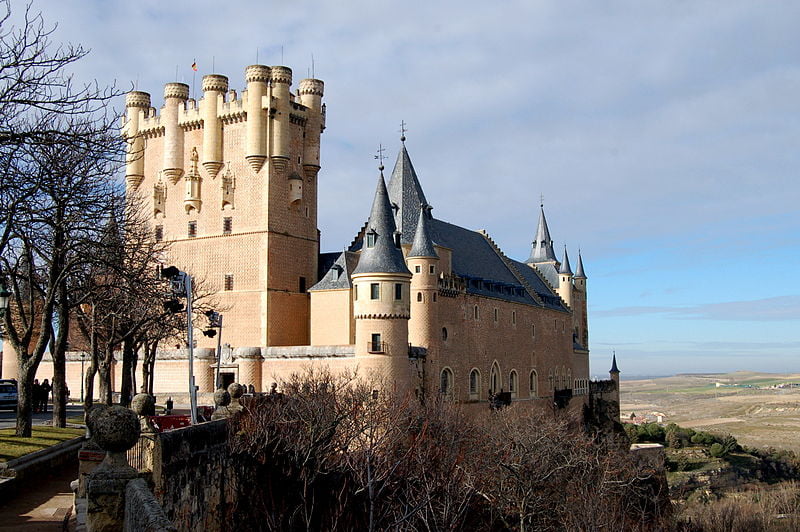
The Patronato del Alcázar de Segovia, created in 1951, is responsible for the monument’s conservation, protection and public use. The Alcázar today combines its historic military associations with its role as a museum and major visitor attraction.
Today the Castle of Segovia is one of the most famous monuments in the city of Segovia as well as the whole of Spain.
Interesting Facts About Alcazar de Segovia
- Disney has confirmed that the Alcázar of Segovia served as a model for the castle in the 1937 animated Snow White and the Seven Dwarfs.
- The Alcázar’s dramatic position above the Eresma and Clamores valleys was a major defensive advantage and helped shape its distinctive ship-like silhouette.
- On December 13, 1474, Isabella left the Alcázar and was proclaimed Queen of Castile at Segovia’s former Church of San Miguel. The proclamation took place in the city, not inside the castle.
- A fire destroyed part of it in 1862.
- It is built on top of granite rock.
Visiting Alzacar de Segovia – Tips and Tricks
Planning to visit this monument? We have gathered helpful information that will make your planning and journey easier! Read it below to make sure you’re ready for the best experience instead of unexpected setbacks.
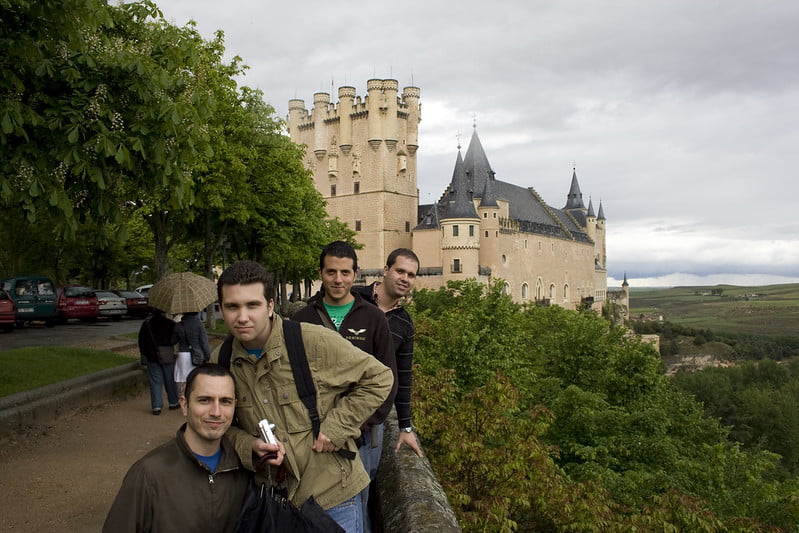
How to get to Alcazar of Segovia?
Fortunately, it is located very conveniently, only about 60 miles (100 kilometers) from Madrid, the capital of Spain, and is easily accessible by multiple means of transportation.
Visiting by Vehicle
If you are renting a car during your visit in Spain, it’s a no brainer to use it for the trip, especially if you want to visit other nearby places while having full flexibility of your time. It will take you around 1 hour and a half to reach the fortress by vehicle from Madrid.
Travelling by Train
If you don’t have a car, traveling by train is most probably your best bet. It is very fast and it only takes around 30 minutes to reach the city of Segovia. You can depart from Madrid’s Chamartín train station and arrive at Guiomar AVE station, from which you will need to take a bus or a guided tour to reach the actual castle since the train station is located outside the city of Segovia.
- AVE Trains run every hour seven days a week from Madrid to Segovia
- Train fares vary by departure and booking date; check the rail operator or booking service for current prices.
- Approximate journey time: half an hour.
Visiting by Bus
Bus is another practical option from Madrid and generally takes longer than the high-speed train. Services traditionally depart from the Moncloa transport interchange; check the current operator timetable and departure point before travelling, as schedules and fares can change.
- Multiple buses run seven days a week from early morning.
- Bus fares can change; confirm the current fare and timetable before travelling.
- Approximate journey time: 1 hr 30 mins.
Moncloa Bus Station on a map:
Ticket Prices, Visiting Hours & Travel Tips
Visitor information reviewed in August 2026. Opening hours, ticket types and prices can change, so confirm them on the official Alcázar website before travelling.
Admission is sold in several ticket types, with access to the Tower of Juan II handled separately from basic palace admission. Because capacity, ticket categories and prices can change, check the official Real Alcázar de Segovia website for current options and advance booking. The official site recommends purchasing online in advance because the number of tickets is limited.
Summer season hours (from April 1st to October 31) of operation are from 10 am to 8 pm, and in the winter (from November 1st to March 31) the hours are from 10 am to 6 pm.
Typically, you should allow at least 1 to 2 hours to explore the palace in full and visit the main areas: the rooms, the Artillery Museum, and the Tower of Juan II, if of course, you are capable of walking up the spiral staircase. It would be wise to buy a guided tour around the fortress which lasts around 45 minutes and costs 50 euros ($61 USD) at the time of writing or at least grab a pair of headphones and order an audio guide for a mere 3.50 euros ($4 USD).
Planning to Explore Spain Further?
We have compiled the list of The Best 20 Castles to Visit While in Spain! Most of these are a must-see – take a look!
Some words of advice and tips:
- Make sure your footwear is comfortable as you will have to cover quite some steps on the trip day, especially, if you are looking to explore the city of Segovia and not only the palace.
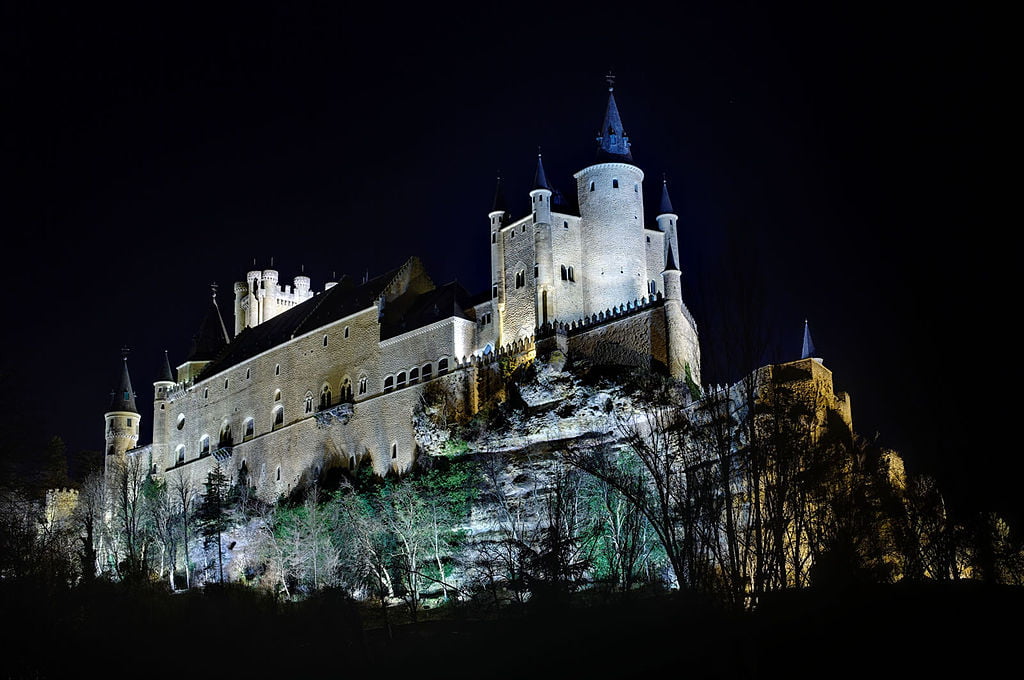
- One reviewer on Tripadvisors suggests visiting the castle two times – one in a day time and the second one at night. If the weather is good, the night scenery of the castle is simply majestic.
- Instead of aiming only for the Alzacar de Segovia, plan further and add other monuments to your list. The city of Segovia has a lot to offer besides the fortress. We suggest taking a look at some full-day sightseeing tours of Segovia on Tripadvisor.