Castillo de Colomares – A Modern Monument to Columbus
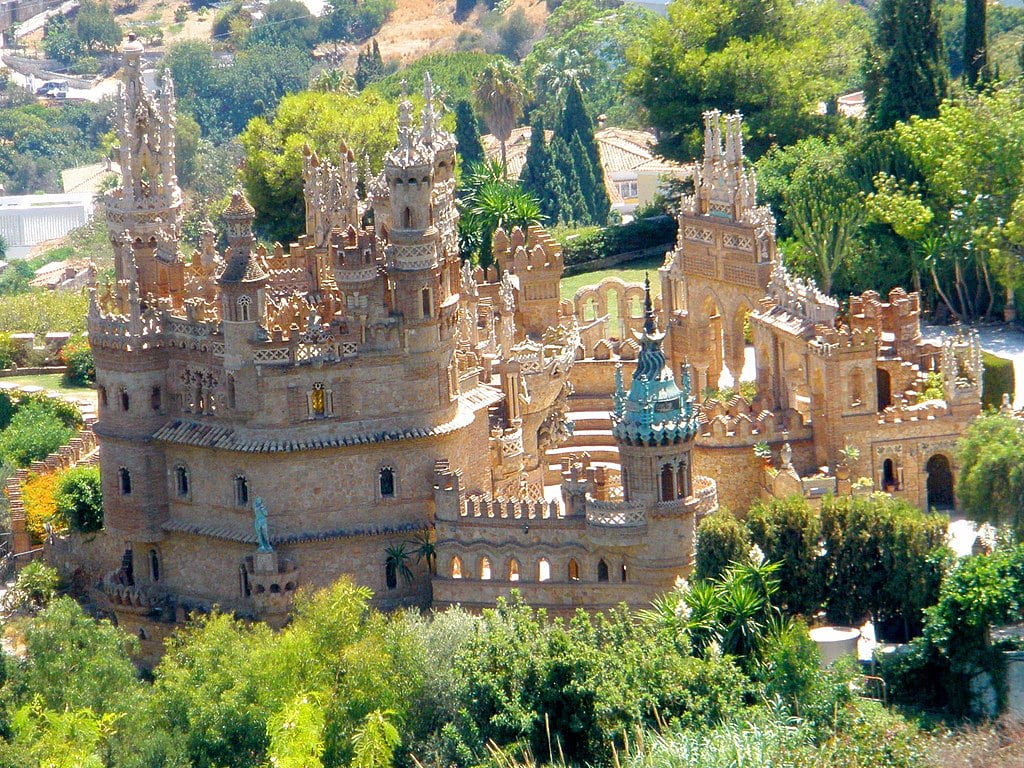
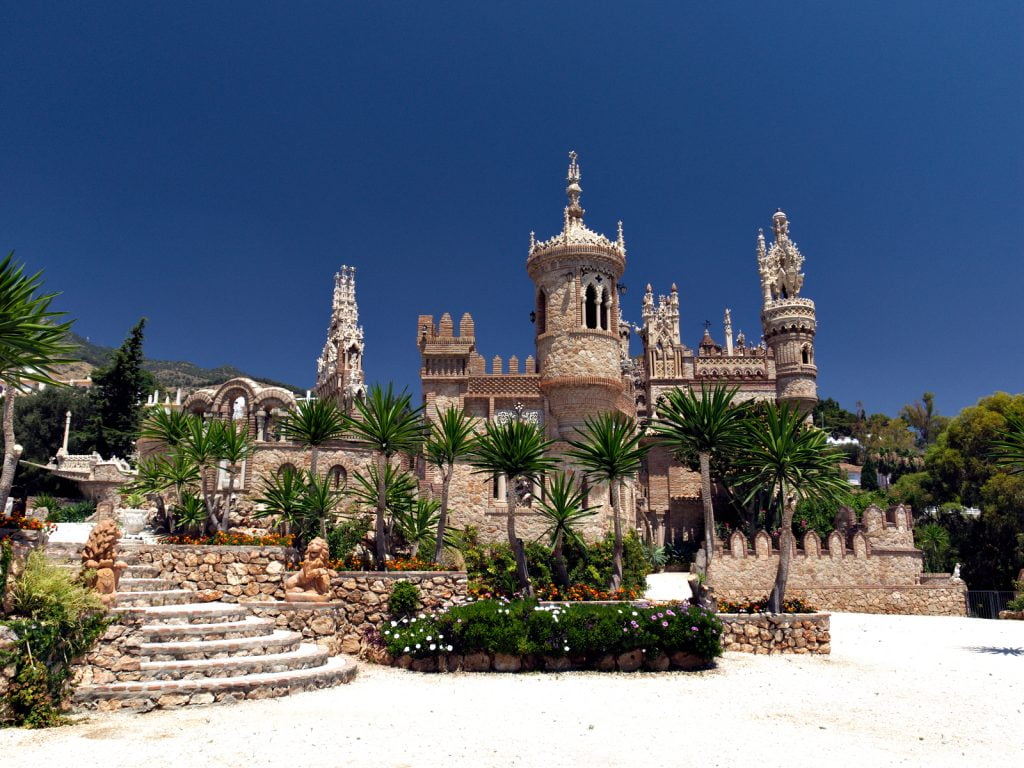
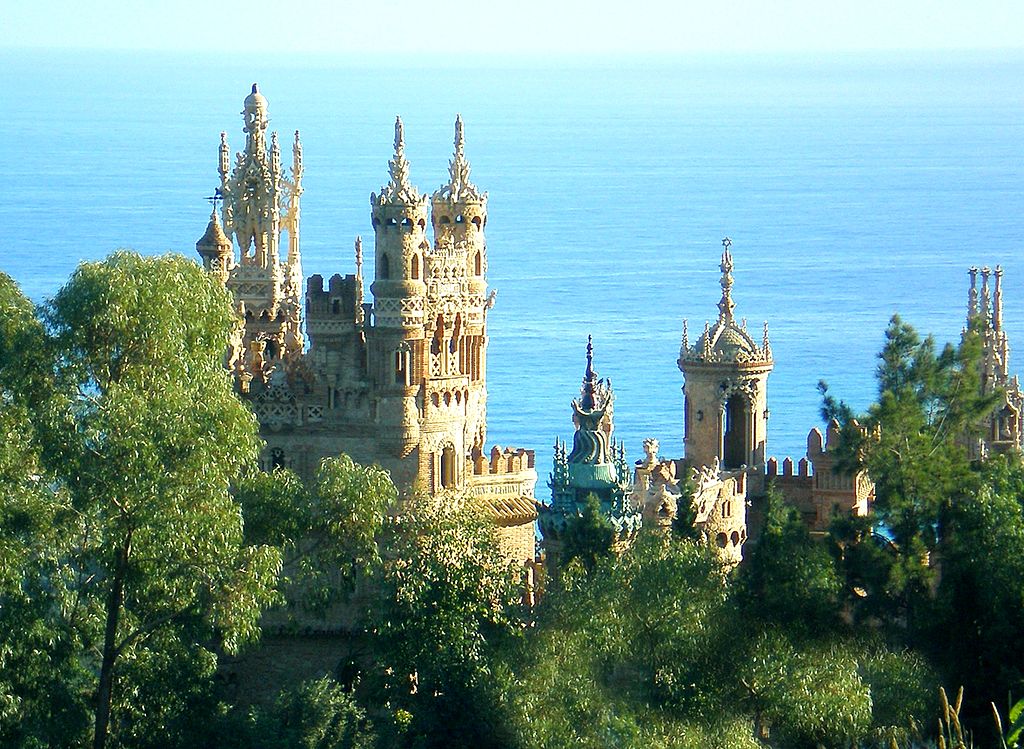
Castillo de Colomares rises above Benalmádena like an elaborate medieval fantasy, but its true story is much newer. It is a modern castle-shaped monument dedicated to Christopher Columbus, the Catholic Monarchs and the Atlantic voyage of 1492.
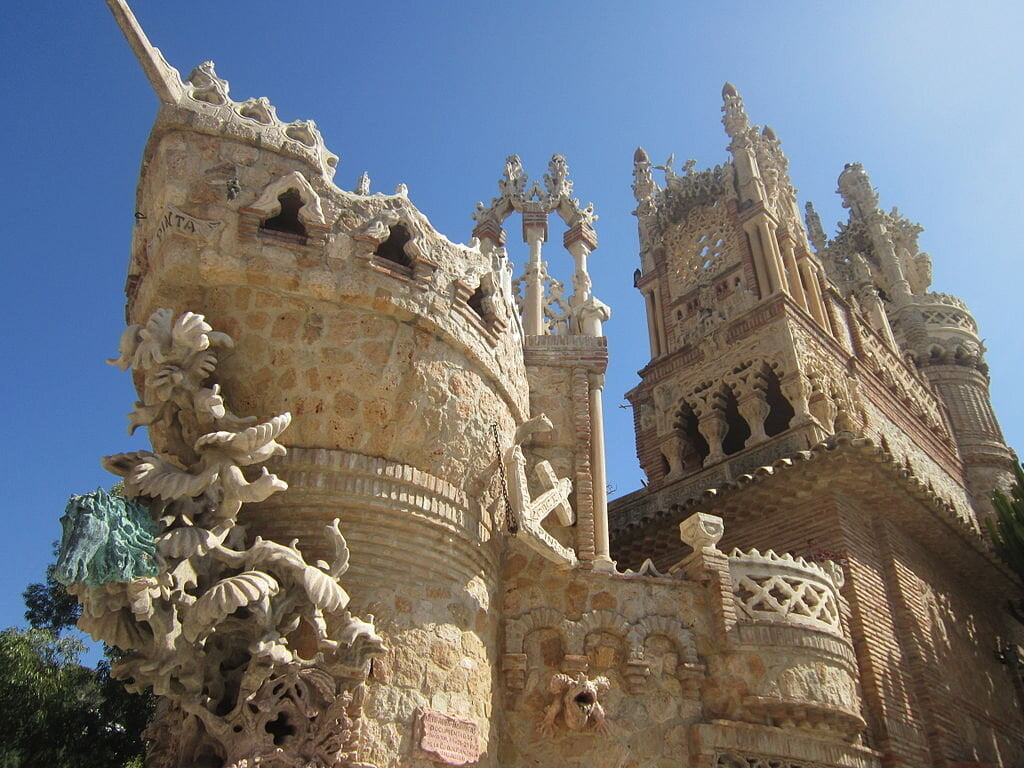
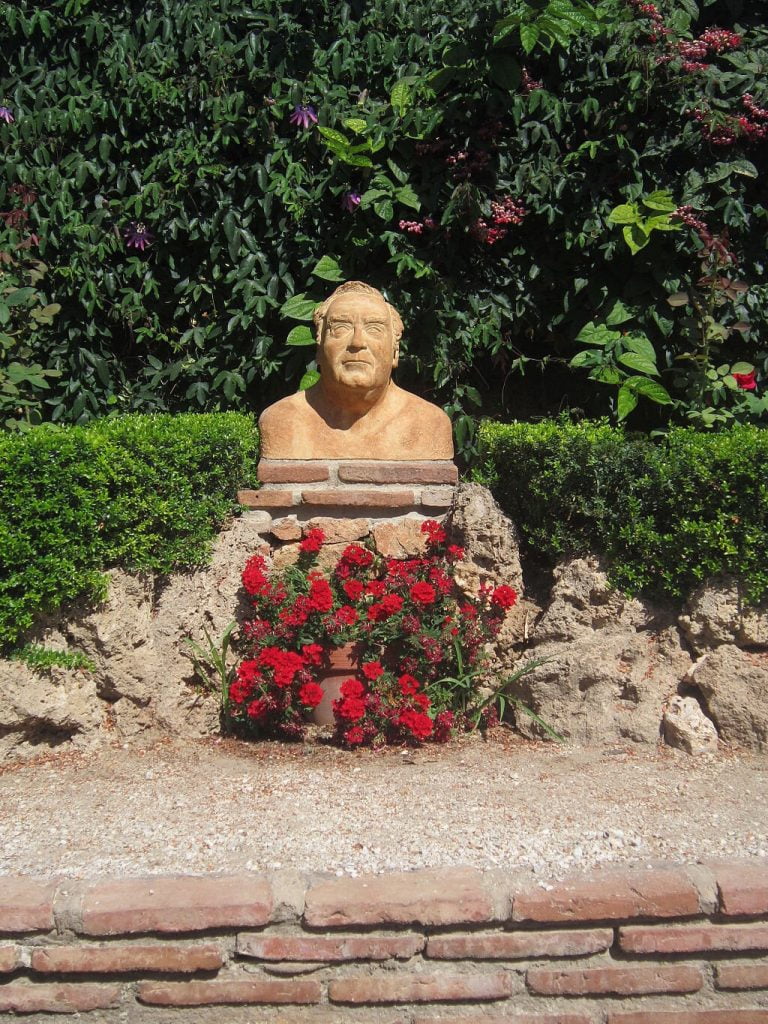
Dr Esteban Martín Martín began the project in 1987 and worked with only two local masons. Over seven years, the small team shaped brick, stone and cement into towers, arches, ships and heraldic details covering roughly 1,500 square metres.
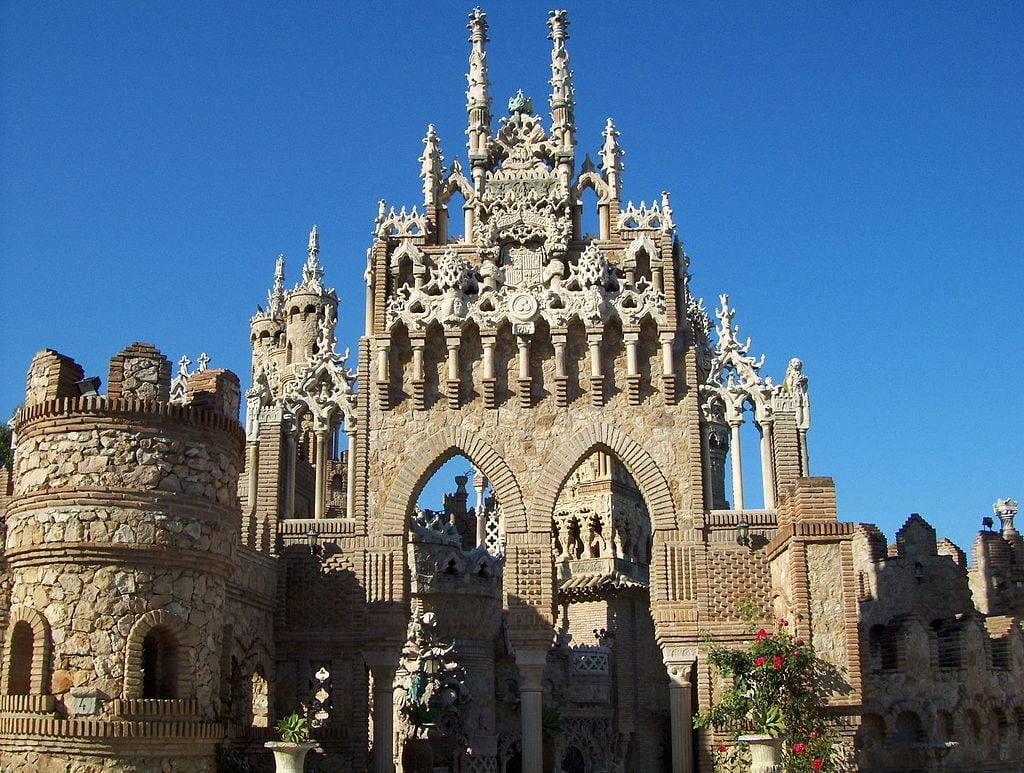
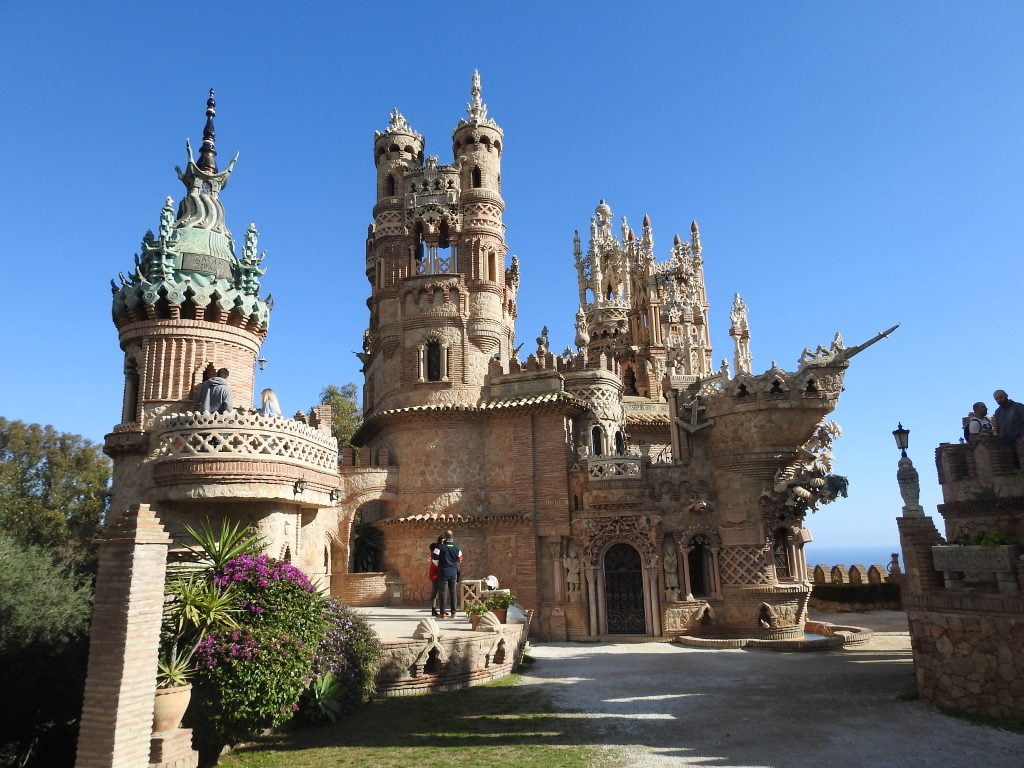
The monument is best understood as architecture that tells a story. Romanesque, Gothic, Byzantine and Mudéjar-inspired elements are combined for symbolism and spectacle rather than as evidence of a single historic period.
Colomares looks like a fantasy castle, but it is a modern monument whose architecture tells a carefully staged story of the 1492 voyage.
Frequently Asked Questions
FOR HISTORY | BEAUTIFUL IMAGES | INTERESTING FACTS | TRAVEL TIPS
History of Castillo de Colomares
A Seven-Year Handcrafted Project
The official monument history dates the start of construction to 1987. Dr Martín, a physician with a strong interest in art, history and architecture, directed the work himself. Assisted by two masons, he improvised and sculpted much of the building by hand until its completion in 1994.
That origin matters because Colomares was never intended to defend Benalmádena or house a medieval court. Its turrets and battlements are part of a late-20th-century commemorative design.
An Eclectic Architectural Language
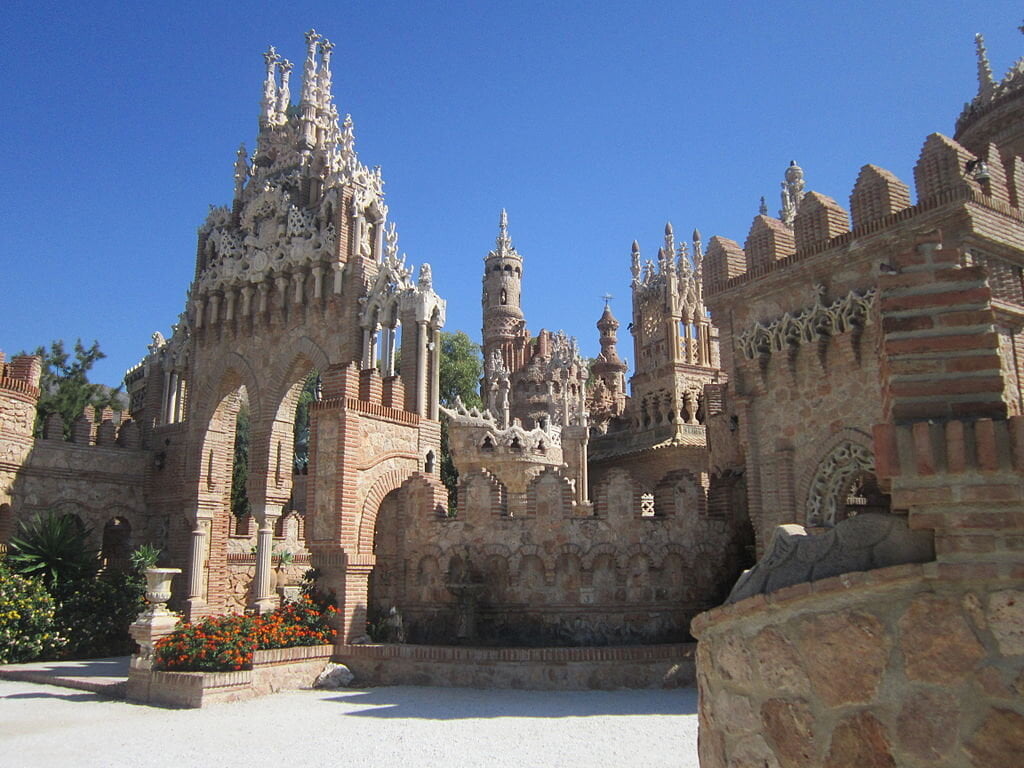
Colomares deliberately mixes architectural vocabularies. Rounded Romanesque forms, pointed Gothic openings, Byzantine-inspired details and Mudéjar arches appear side by side. The result is theatrical, but the combination supports the monument’s central idea: a visual account of late-15th-century Spain and the voyage that linked Europe and the Americas.
The Ships and the Story of 1492
The monument represents the three vessels associated with Columbus’s first voyage: the Niña, the Pinta and the Santa María. Their forms are built into different parts of the exterior, turning the visitor’s walk into a sequence of scenes.
Heraldic and religious motifs refer to Ferdinand of Aragon and Isabella of Castile, the port of Palos, the monastery of La Rábida and the voyage’s wider context. These details express Dr Martín’s interpretation of the event; they are not surviving artefacts from 1492.
Oratory, Mausoleum and Symbolism
A very small oratory is dedicated to Christ the Saviour, echoing the name San Salvador given by Columbus to the first island recorded in his voyage account. It is often promoted as the world’s smallest church, but it is safer to describe it as a symbolic chapel within the monument.
A Gothic-style mausoleum represents Columbus’s final journey and the unresolved historical disputes surrounding his remains. It is commemorative: Columbus is not buried at Colomares.
Revisit More Historic Places Below or Read Further

Castillo de Colomares Today
Today, Colomares is a cultural attraction and event venue rather than a conventional castle museum. Visitors explore the exterior, gardens and viewpoints, reading the building’s historical references through its sculptures and façades.
Its strongest appeal comes from the contrast between appearance and purpose. The monument borrows from centuries of Spanish architecture but belongs firmly to the late 20th century.
Interesting Facts About Castillo de Colomares
- Colomares was built between 1987 and 1994 by Dr Esteban Martín Martín and two local masons.
- It is a monument rather than a medieval castle or defensive stronghold.
- The design combines Romanesque, Gothic, Byzantine and Mudéjar-inspired forms.
- Brick, stone and cement were shaped by hand to create the highly detailed exterior.
- Representations of the Niña, Pinta and Santa María form part of the architectural narrative.
- A symbolic mausoleum reflects the long-running debate over the location of Columbus’s remains.
- The small oratory is part of the monument’s religious symbolism; record-size claims about it should be treated cautiously.
Visiting Castillo de Colomares: Practical Information
Getting to Castillo de Colomares
The monument is near Benalmádena Pueblo, inland from the Costa del Sol. Málaga Airport is the nearest major airport. From the coast, local buses and taxis serve the hill town, while drivers can follow signs toward Finca La Carraca.
From Madrid, the practical options remain high-speed rail via Málaga, a long-distance coach, a flight to Málaga or driving. Journey times and fares vary substantially by departure date, so compare live operator prices rather than relying on fixed long-distance fares.
Opening Times and Tickets
Information was checked & updated on September 7, 2026.
The official timetable lists summer opening from Tuesday to Sunday, 10:00–14:00 and 17:00–21:00. Spring hours are 10:00–20:00; autumn and winter hours are Tuesday to Sunday, 10:00–18:00. The monument is closed on Mondays.
Tickets are sold at the entrance and cost €3.50 (approximately $4.10 USD) for adults and €2.50 (approximately $2.90 USD) for children and pensioners. Groups of at least 25 people pay €2.00 (approximately $2.30 USD) per person; a pre-arranged guided talk adds €0.50 (approximately $0.60 USD) per person. Ordinary visits cover the exterior only.
How Long Should You Spend Here?
Allow about 45 to 75 minutes to walk around the monument, examine its symbolic details and enjoy the viewpoints. Enthusiastic photographers may want longer.
Practical Tips
- Check the seasonal timetable before travelling; the split summer schedule includes a midday closure.
- Expect an exterior visit rather than rooms furnished like a historic castle.
- Wear comfortable shoes for sloping paths and steps.
- Morning or late-afternoon light works well for the pale stonework and detailed façades.
- Contact the monument in advance for group tours, guided talks or professional photography.