Star Forts – Complex Geometry of the Post-Medieval Era
Star forts, also called bastion forts or trace italienne fortifications, transformed European military architecture as artillery became more powerful in the late 15th and 16th centuries. Rather than relying on very high medieval walls, engineers increasingly used lower, thicker, earth-backed ramparts and projecting angular bastions that allowed defenders to cover the approaches with overlapping fire.
The system did not appear overnight, nor was it simply the result of one invention. It developed through repeated experiments—especially in Italy—as architects and military engineers adapted fortifications to increasingly effective gunpowder artillery. The resulting geometry spread across Europe and overseas and continued evolving for centuries.
History of Star Forts
Gunpowder originated in China and gunpowder weapons reached Europe during the Middle Ages, but effective siege artillery developed gradually. By the 15th century, increasingly mobile and powerful cannon could batter masonry walls in ways that forced fortification designers to rethink older defensive systems. The Ottoman capture of Constantinople in 1453 famously demonstrated the destructive potential of large bombards, although European fortification was already changing before and after that event.
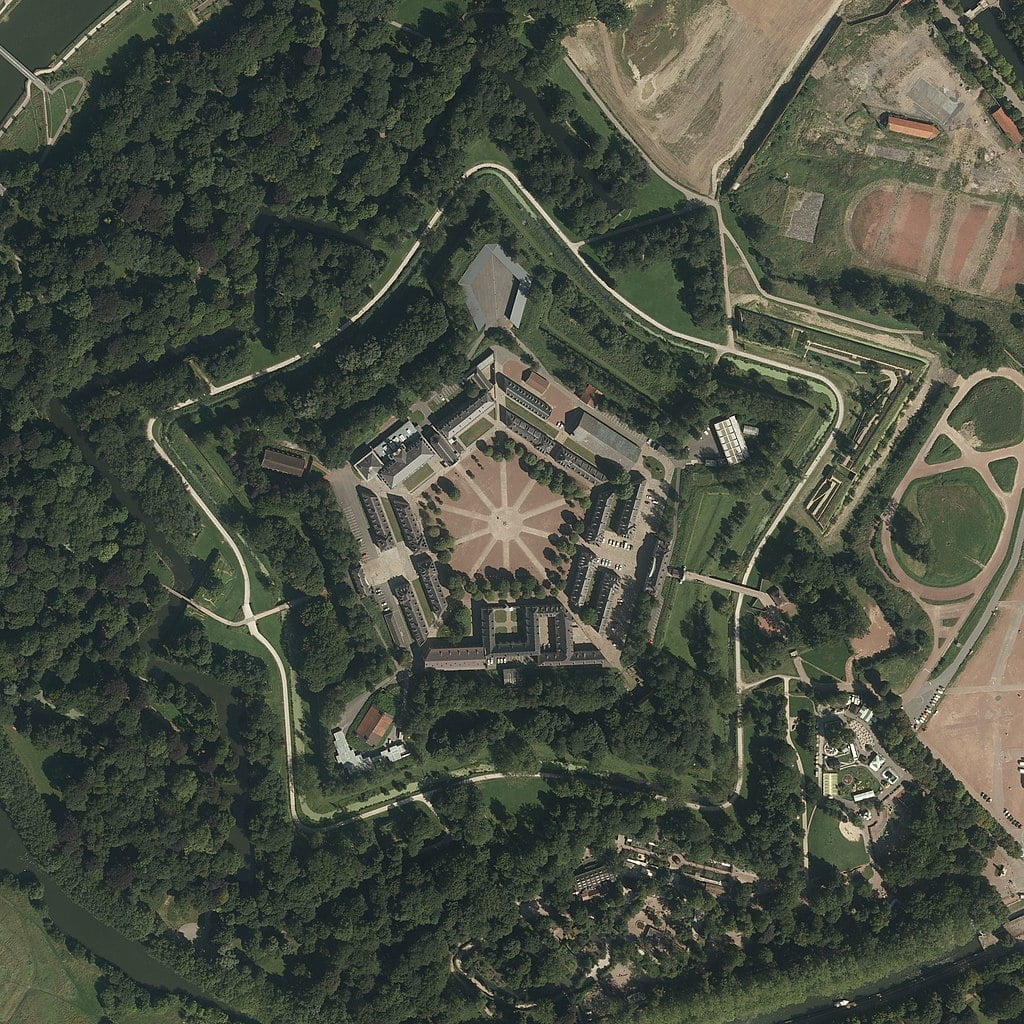
The Italian Wars beginning in 1494 accelerated this process. French armies brought a powerful siege train into Italy, and Italian states responded with new combinations of lower profiles, broad earthen ramparts, ditches, and angular projections. These experiments developed into what historians commonly call the trace italienne. This was an evolution from earlier castle architecture, not an instant replacement for every medieval fortress.
Fun fact: Michelangelo really did work on Florence’s fortifications. In 1529 he was appointed to oversee the city’s defenses and produced designs for bastioned works during the conflict with imperial forces. He was one contributor to a much broader Italian tradition of military engineering, rather than the inventor of the star fort.
By the 16th and 17th centuries, bastioned systems had spread widely. Engineers refined the geometry so that neighboring bastions could support one another and reduce areas that attackers could approach without being exposed to defensive fire. Later designers, most famously Sébastien Le Prestre de Vauban in France, developed elaborate systems of outworks and layered defenses.
Fun fact: Star-fort geometry also influenced planned towns. Palmanova in northeastern Italy, founded by the Venetian Republic in 1593, is one of the clearest surviving examples: its radial street plan sits inside successive rings of fortifications and today forms part of UNESCO’s Venetian Works of Defence World Heritage property.
Why the Star Shape Worked
The star-like appearance came primarily from projecting bastions and the outworks surrounding them. A bastion allowed defenders to fire along the face of adjacent walls, helping eliminate the dead ground that could exist at the foot of a simple straight curtain wall. Meanwhile, thick earth behind masonry facings absorbed artillery impacts better than a tall, relatively thin medieval wall.
This did not make a fortress invulnerable. Attackers developed systematic siege techniques using trenches, batteries, mines, and gradual approaches. Fortification and siegecraft evolved together in an arms race that could make a properly conducted siege lengthy and expensive.
Architecture of Star Forts
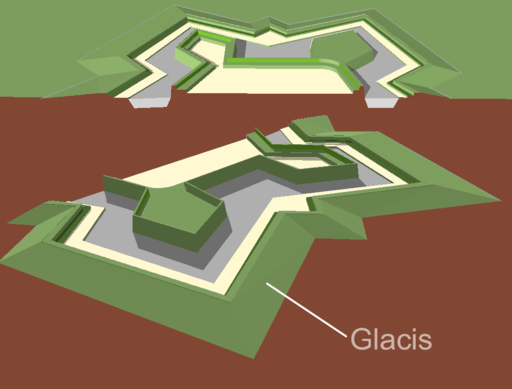
Glacis
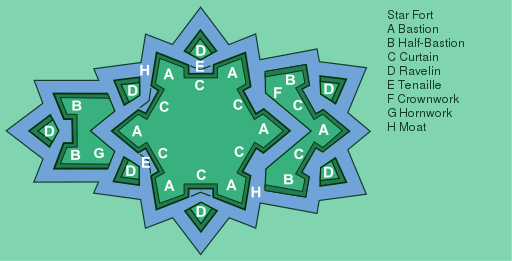
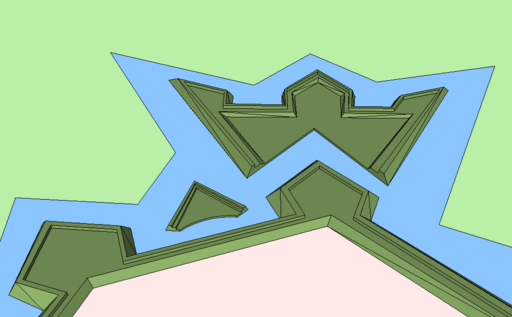
A glacis is the long, gently sloping bank of earth outside the main ditch. Its geometry helped shield lower parts of the defenses from direct fire while leaving attacking troops exposed as they advanced. It was one element in a carefully calculated defensive landscape, not simply a retaining wall.
Bastions
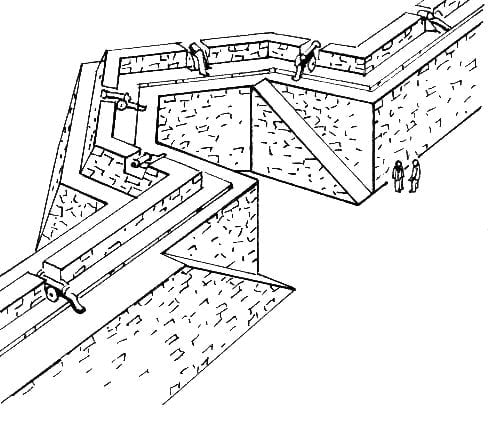
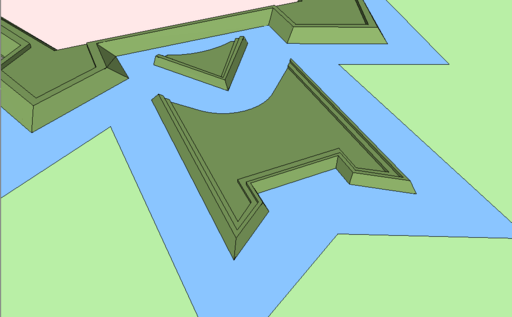
Bastions project outward from the main enceinte and typically have two faces and two flanks. Their key purpose was not simply observation: they created firing positions from which defenders could cover neighboring sections of wall and the ditch. This interlocking field of fire is one of the defining principles of bastioned fortification.
Ditches and Moats
Like the moats and ditches used in medieval castle defense, the ditch around a bastioned fortress made a direct assault harder and helped expose attackers to defensive fire. Depending on the site, these defenses could be wet or dry; there was no universal rule that star-fort ditches were dry.
Tenaille
A tenaille was a low outwork placed in the ditch in front of a curtain wall, usually between two bastions. It helped shield the curtain and could complicate an attack on the main wall.
Ravelin
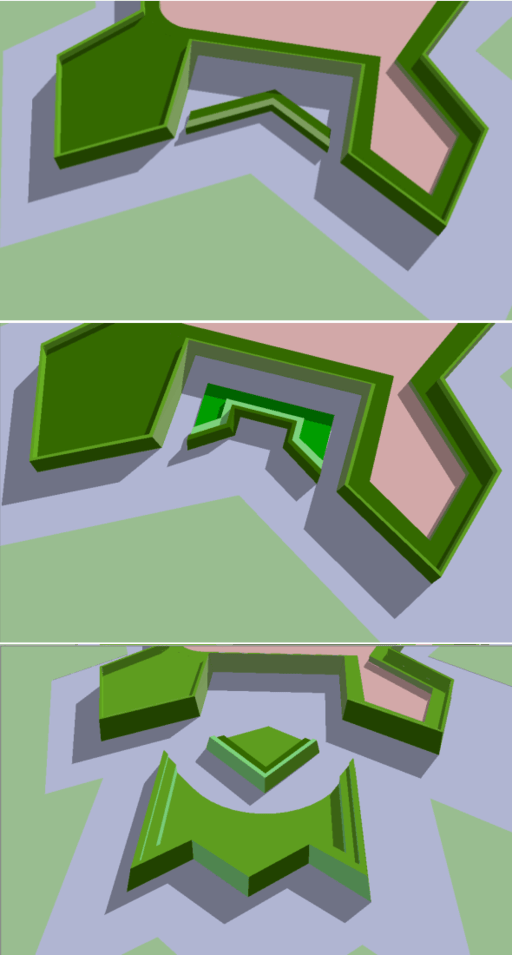
A ravelin is a detached, usually triangular outwork placed beyond the main ditch or in front of a curtain. It forced attackers to deal with another defended position before reaching the main enceinte and helped protect important approaches and curtain walls.
Crownwork and Hornwork
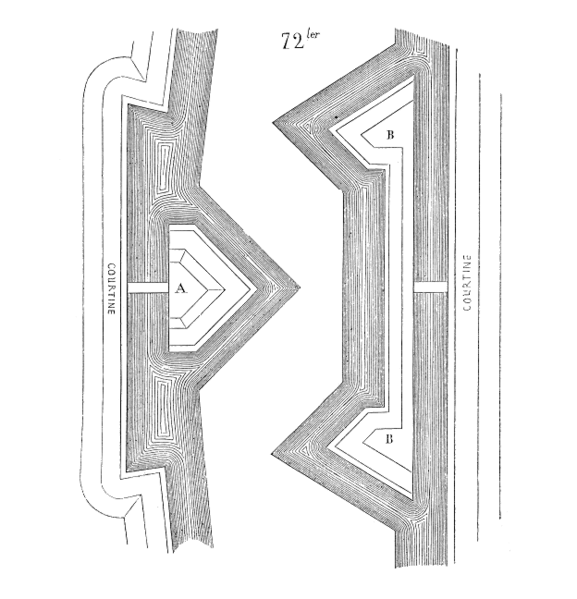
Crownworks and hornworks extended defenses beyond the main fortress. A crownwork normally combined a central full bastion with two half-bastions, while a hornwork typically used two half-bastions joined by a curtain. Such works could protect vulnerable approaches, high ground, bridgeheads, or other strategically important areas.
Did Every Star Fort Have a Citadel?
No. A citadel is a fortified strongpoint, often positioned within or beside a town, but it was not a mandatory central component of every star fort. Bastioned fortifications could surround cities, ports, isolated forts, or citadels themselves. Their internal buildings varied greatly and might include barracks, magazines, arsenals, guardhouses, chapels, stores, and officers’ quarters. It is therefore misleading to treat the citadel as a direct universal successor to the medieval castle keep.
Why Star Forts Declined
Bastioned fortifications did not suddenly disappear after three centuries. During the 19th century, rifled artillery, explosive shells, longer ranges, and greater accuracy made traditional exposed masonry and fixed geometric systems increasingly vulnerable. Fort designers responded with lower profiles, detached forts, earth and concrete construction, armored gun positions, and polygonal systems. Later developments in high-explosive artillery and air power further reduced the value of many traditional permanent fortifications, although forts continued to serve military purposes well into the 20th century.
Famous Star Forts
Fort St Elmo, Malta
Fort St Elmo was constructed in 1552 at the tip of the Sciberras peninsula to command the approaches to Malta’s Grand Harbour and Marsamxett Harbour. During the Great Siege of 1565 it resisted Ottoman attacks for almost a month before falling on 23 June. The fort was later enlarged and modernized repeatedly and today houses Malta’s National War Museum, whose collections cover roughly 7,000 years of Maltese military history.
Tilbury Fort, England
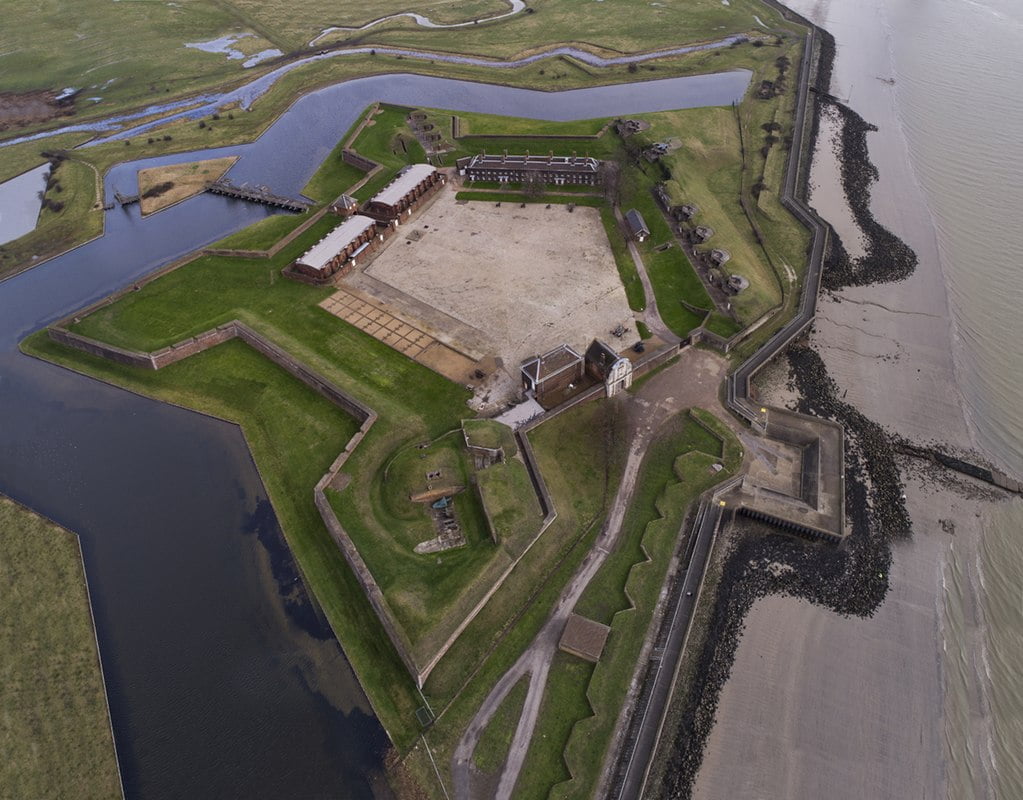
Tilbury guarded the Thames approach to London. The present bastioned fort was designed after the Dutch raid on the Medway in 1667, with Sir Bernard de Gomme preparing plans in 1668 and major construction beginning in 1670. English Heritage describes it as one of England’s finest surviving examples of 17th-century military engineering. Its defenses were never tested by an enemy, though the site remained in military use for centuries.
Fort Bourtange, Netherlands
Bourtange was established during the Dutch Revolt to control a strategic route through marshland near the German frontier. Its defenses changed repeatedly over the following centuries. After losing its military role in the 19th century, the settlement survived as a village; extensive 20th-century reconstruction restored much of its historic fortified appearance.
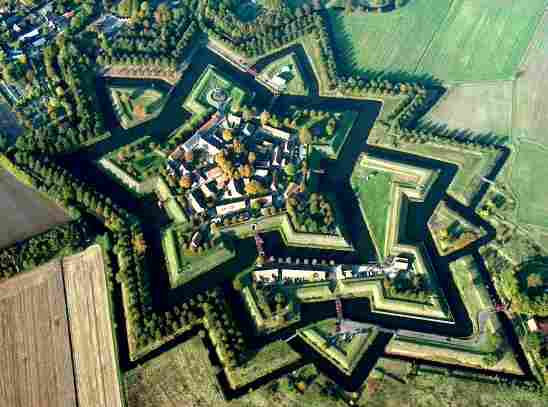
Rothenberg Fortress, Germany
Rothenberg Fortress in Bavaria occupies a commanding hilltop above Schnaittach. Its surviving ruins illustrate how bastioned fortification could be adapted to difficult terrain rather than following a perfect textbook star plan.
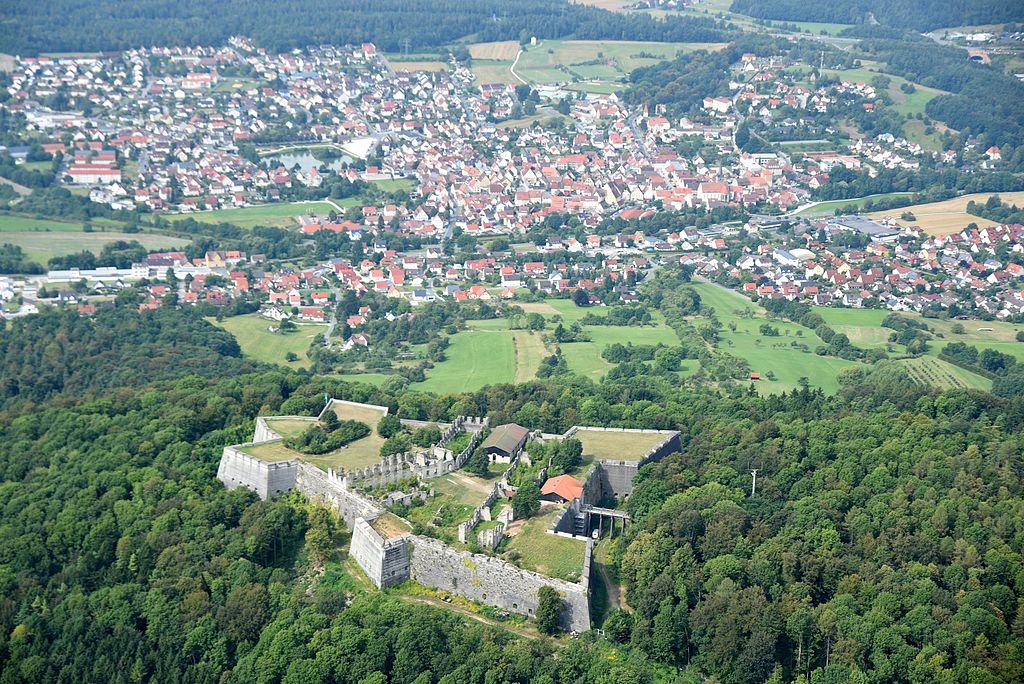
Forte da Graça, Portugal
Forte da Graça, also known as Forte Conde de Lippe, overlooks Elvas in Portugal. Built in the 18th century, it belongs to the extensive frontier fortifications of Elvas, now recognized by UNESCO. Its layered bastions and outworks show how sophisticated the bastioned system had become by the early modern period.
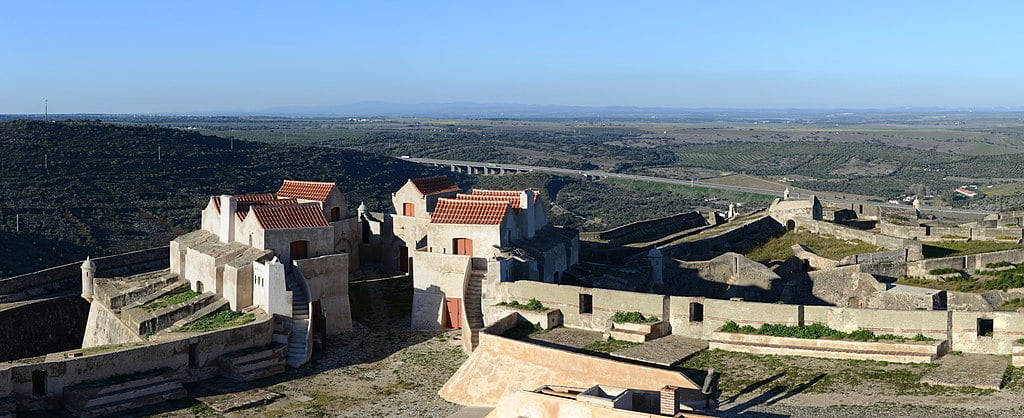
Jaca Citadel, Spain
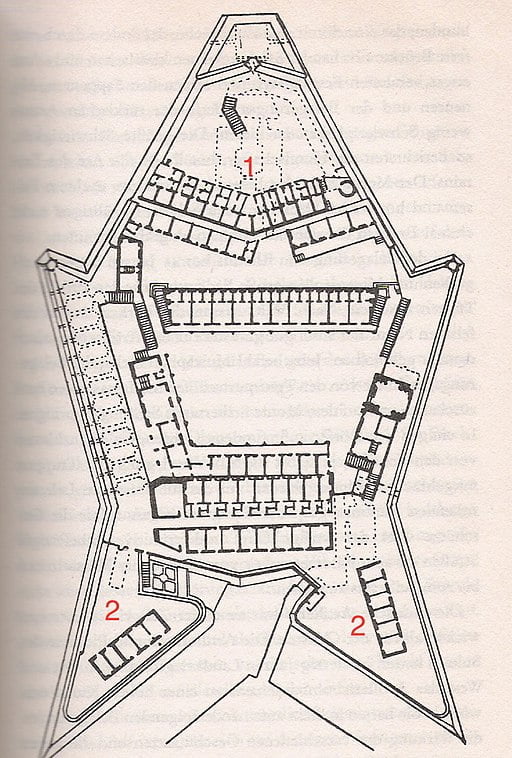
Jaca Citadel was begun in the late 16th century under Philip II as part of the defenses of the Pyrenean frontier. Its regular pentagonal form, bastions, ditch, and preserved internal buildings make it an especially clear example of early modern bastioned fortification in Spain. It is better described as a particularly well-preserved example than as Spain’s only surviving star fort.
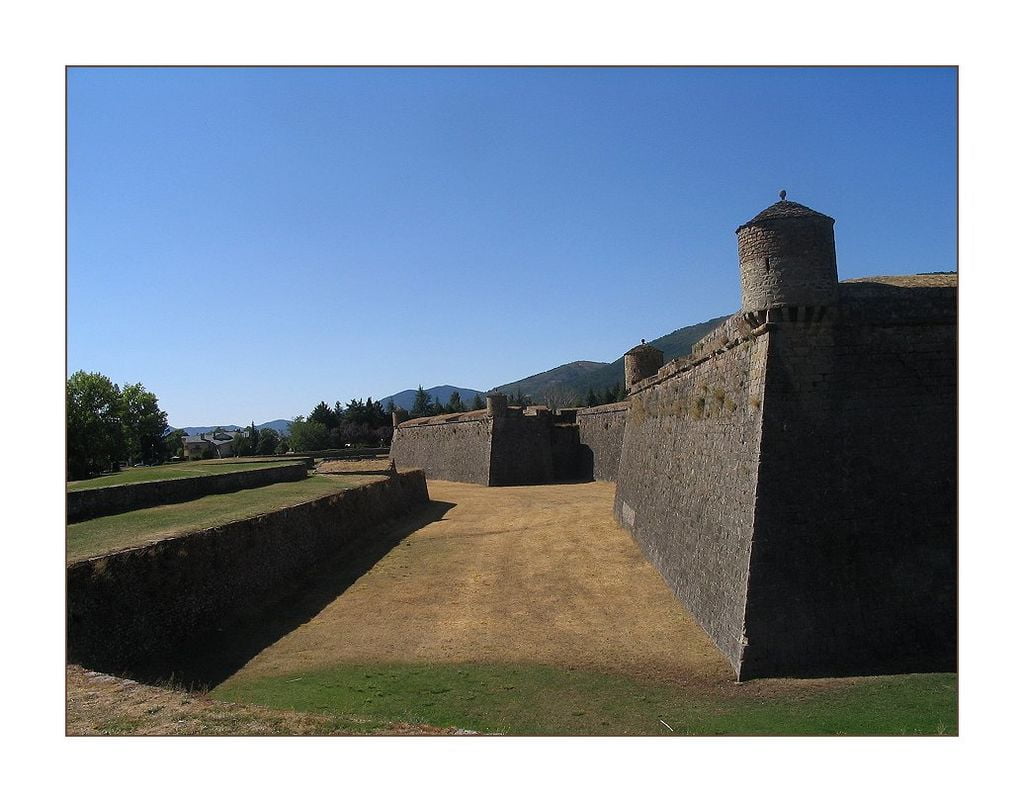
Star Castle, Isles of Scilly
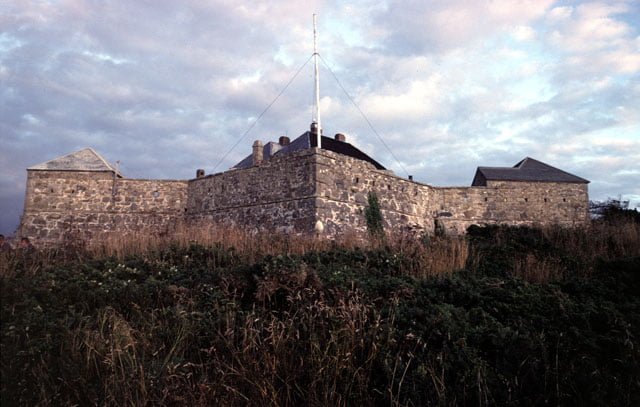
Star Castle stands on St Mary’s in the Isles of Scilly—not the “Isles of Sicily.” It was built in the 1590s during the reign of Elizabeth I as part of the defenses of the islands. Its compact eight-pointed form is unusual compared with the much larger urban and frontier fortresses elsewhere in Europe. The building is now used as a hotel.
Kronborg Castle, Denmark
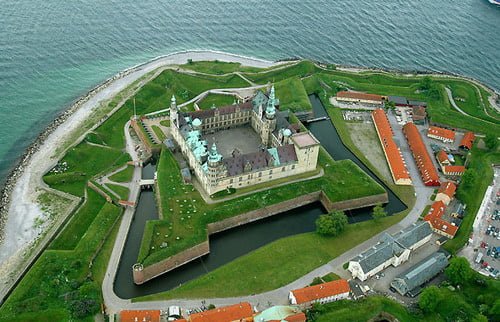
Kronborg occupies a strategically important position at Helsingør, where the Øresund narrows between Denmark and Sweden. The Renaissance castle is surrounded by substantial bastioned defenses and is a UNESCO World Heritage Site. It is also internationally famous as “Elsinore,” the setting Shakespeare chose for Hamlet. Whether Shakespeare personally visited Kronborg is unknown.
Star forts were not merely decorative geometric curiosities. They were a practical response to changing artillery and siegecraft, and their surviving earthworks, bastions, ditches, and outworks reveal centuries of military experimentation. For the earlier defensive systems from which they evolved, see our guides to castle walls, castle towers, and medieval castle defense.