Medieval Food: A Deep Dive into the Diet & Cuisine of the Middle Ages
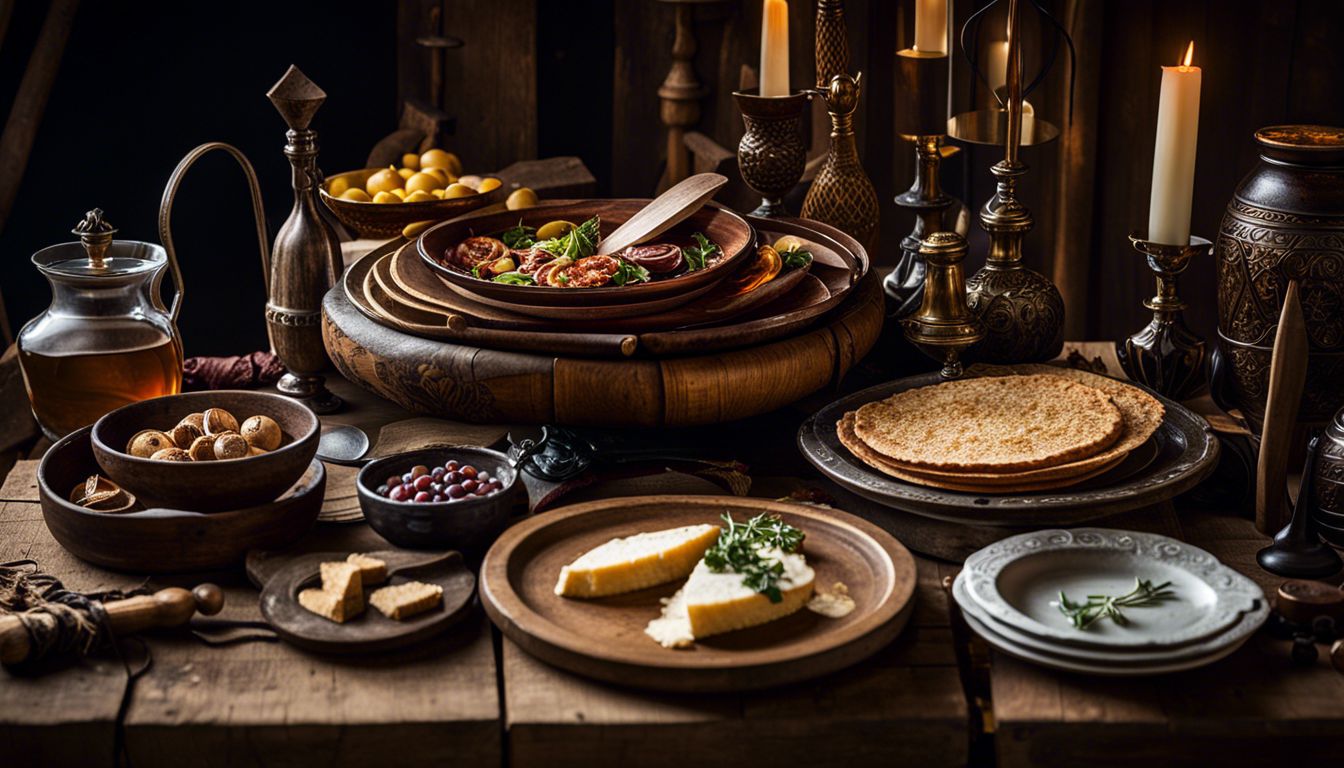
What did people actually eat in the Middle Ages? There was no single medieval diet. Food varied by region, century, season, religion, wealth, and whether someone lived in a town, monastery, castle household, or farming village. Across much of medieval Europe, grains formed the everyday foundation of the diet, supplemented by legumes, vegetables, dairy, fish, meat, fruit, herbs, and — for those who could afford them — imported spices and sugar. This guide focuses mainly on medieval England and northern Europe and distinguishes everyday diets from the elite feast menus that dominate surviving cookery books.
Understanding the Medieval Diet
Cereals
Grain was one of the most important parts of the medieval diet. Wheat, rye, barley and oats were used in different proportions depending on local soils, climate, price and status. Bread was central, but grain also appeared in pottages, porridges and ale. Historical and archaeological research on later medieval Britain repeatedly describes a grain-based diet supplemented by other foods rather than a diet dominated by meat.
The exact grain mattered. Fine wheat bread could carry status, while mixed-grain, rye, barley or oat breads were common in many places. Pottage — a boiled dish that could combine grain or pulses with vegetables, herbs and sometimes meat — was particularly useful because it changed with the season and a household’s means. One old claim worth correcting is that rice only arrived in Europe after the Middle Ages: the late-14th-century English Forme of Cury includes rice, including a dish called “Ryse of Flesh.” Potatoes, by contrast, came to Europe after contact with the Americas and were not part of medieval European cuisine.
Fruit
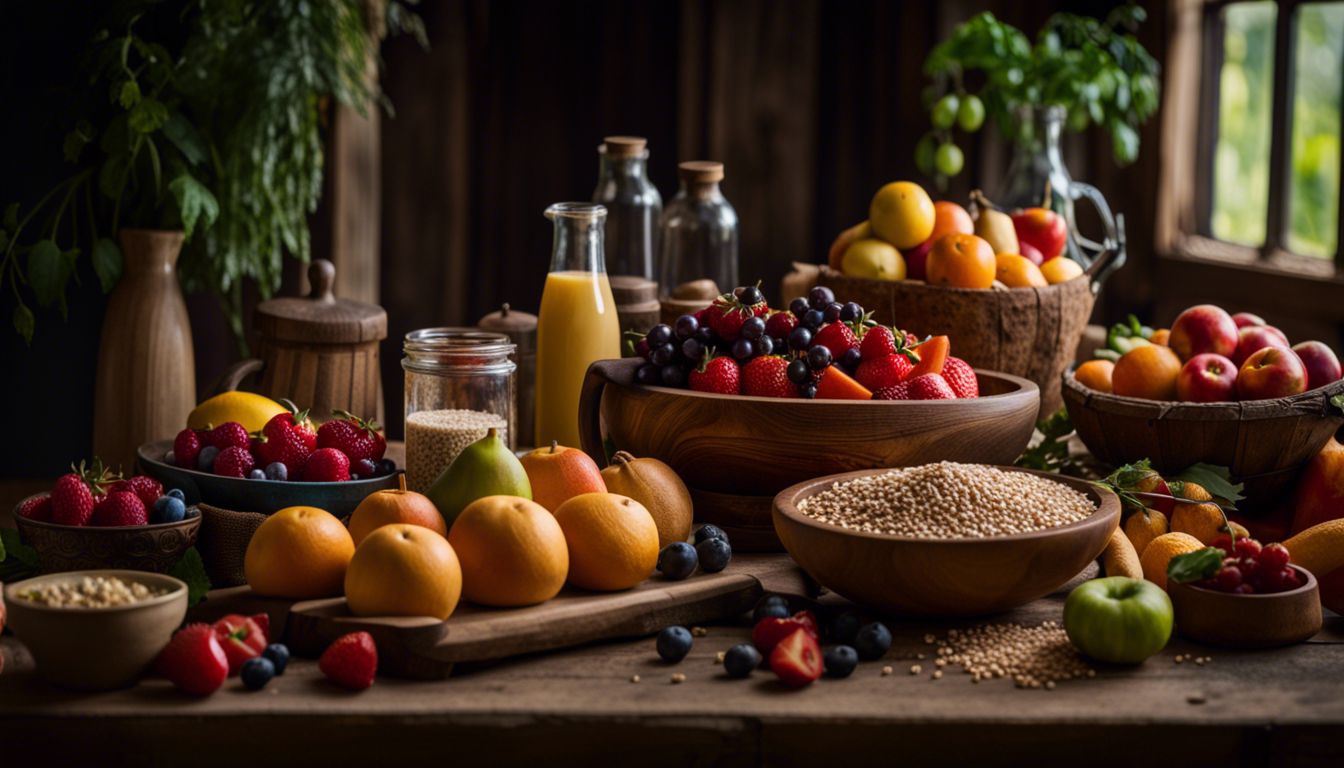
Fruit was not simply a luxury food. Apples, pears, berries, plums and other locally available fruits could be eaten fresh, cooked, dried or preserved, while imported dried fruits such as figs, dates and raisins were more strongly associated with trade and wealth. Archaeology can reveal foods that household accounts overlook: excavations at Denny Abbey, for example, recovered elderberry, blackberry, fig and grape seeds from a medieval latrine.
Medieval medical ideas also affected how educated cooks and diners thought about food. Dietary advice was often framed through humoral theory, which classified foods by qualities such as hot, cold, moist and dry. That does not mean everyone followed the same rules, but medical thinking appears in surviving manuscripts and helps explain why recipes sometimes combined ingredients in ways that seem unusual today. Cambridge University Library’s Curious Cures project gives a useful introduction to this connection between food and medieval medicine.
Vegetables
Vegetables and pulses were everyday foods for many medieval households. Cabbage, leeks, onions, garlic, turnips, peas and beans could be boiled, stewed, fried or added to pottage. Their importance varied with region and season, but surviving evidence makes clear that medieval diets included far more than bread and meat.
Local herbs such as parsley, sage, mint and other garden plants could add considerable flavor even when imported spices were beyond a household’s budget. Some modern vegetables were absent or looked different from their modern forms: New World crops such as potatoes, tomatoes and maize were unknown in medieval Europe.
Plants also crossed the boundary between food and medicine. Onions, garlic and herbs appear in medieval remedies as well as recipes, which is another reminder that medieval people did not always separate diet and health as sharply as we do today.
Fish and Seafood
Fish was important for practical, commercial and religious reasons. Herring and cod could be salted or dried and moved long distances, while rivers, ponds and coastal waters supplied species such as eel, pike, trout, bream and shellfish. Fish was not automatically a luxury: price and availability depended heavily on location, species, preservation and season.
Christian fasting rules also increased demand for fish. On many fast days, meat from land animals was restricted, making fish an especially important substitute. Records from medieval religious communities show how strongly the church calendar could shape what was served, while preserved fish also became an important long-distance trade commodity in northern Europe.
Meat
Beef, pork, mutton, poultry and game all appear in medieval sources, but it is misleading to describe meat as an everyday staple for everyone. Access depended on wealth, household resources, local agriculture, season and period. Recent bioarchaeological research from the University of Cambridge has challenged the idea that early medieval elites routinely ate huge quantities of meat: isotopic evidence suggests that lavish meat-heavy feasts were special occasions rather than a picture of daily diet.
Higher-status households could obtain meat more frequently and in greater variety, particularly for feasts, while hunting rights themselves were socially restricted in many places. More modest households still ate animal foods when circumstances allowed, so the difference was one of frequency, quantity and choice rather than an absolute divide between meat-eaters and non-meat-eaters.
Dairy products
Milk, butter, cheese, curds and whey were important foods, but medieval dairy did not come only from cows. Sheep and goats also supplied milk. Cheese was especially useful because it kept longer than fresh milk and could be transported or stored. Religious rules sometimes restricted dairy as well as meat, although practice varied and dispensations were possible.
The Influence of the Church on Medieval Cuisine
The medieval Christian calendar had a major effect on food. Lent, Advent, Fridays and other fast days could require abstinence from meat, and in some places or periods dairy and eggs were restricted too. The exact number and severity of fasting days varied, as did actual observance, so a single figure for how much of the year meat was forbidden can be misleading.
Fasting created strong demand for fish and encouraged alternative ingredients. Almond milk, for example, appears repeatedly in elite medieval cookery and could replace dairy in dishes prepared for fish days. Surviving versions of The Forme of Cury even distinguish recipes appropriate for such days.
Stories that medieval Europeans universally reclassified animals such as beavers or otters as “fish” should be treated cautiously. Such rulings belong to particular places and traditions rather than a universal medieval rule. Documentary evidence from religious communities nevertheless makes clear that the church calendar strongly shaped food choices throughout the year.
The Role of Social Class in Medieval Cuisine
Wealth mattered, but the contrast was more complicated than rich people eating meat while poor people ate grain. Aristocratic households could buy imported spices, refined sugar, high-status fish and larger quantities of fresh meat, while farming households relied more heavily on grain, legumes, garden produce and locally available animal foods.
Fine wheat bread could be prestigious, but wheat was not simply reserved for nobles. Grain choices depended on local agriculture, market prices and period as well as status. Geography mattered too: coastal and river communities had different fish supplies from inland areas, while pastoral regions had different access to dairy and livestock than grain-growing districts.
Imported pepper, ginger, saffron, cinnamon, cloves and sugar could be expensive and conspicuous markers of purchasing power, while local herbs, mustard, onions and garlic were more accessible. Access was a spectrum rather than a rigid rule: ordinary people also ate meat, cheese, fish and fruit when circumstances allowed, and elite everyday diets were not necessarily feast-like.
What Medieval Cookery Books Really Tell Us
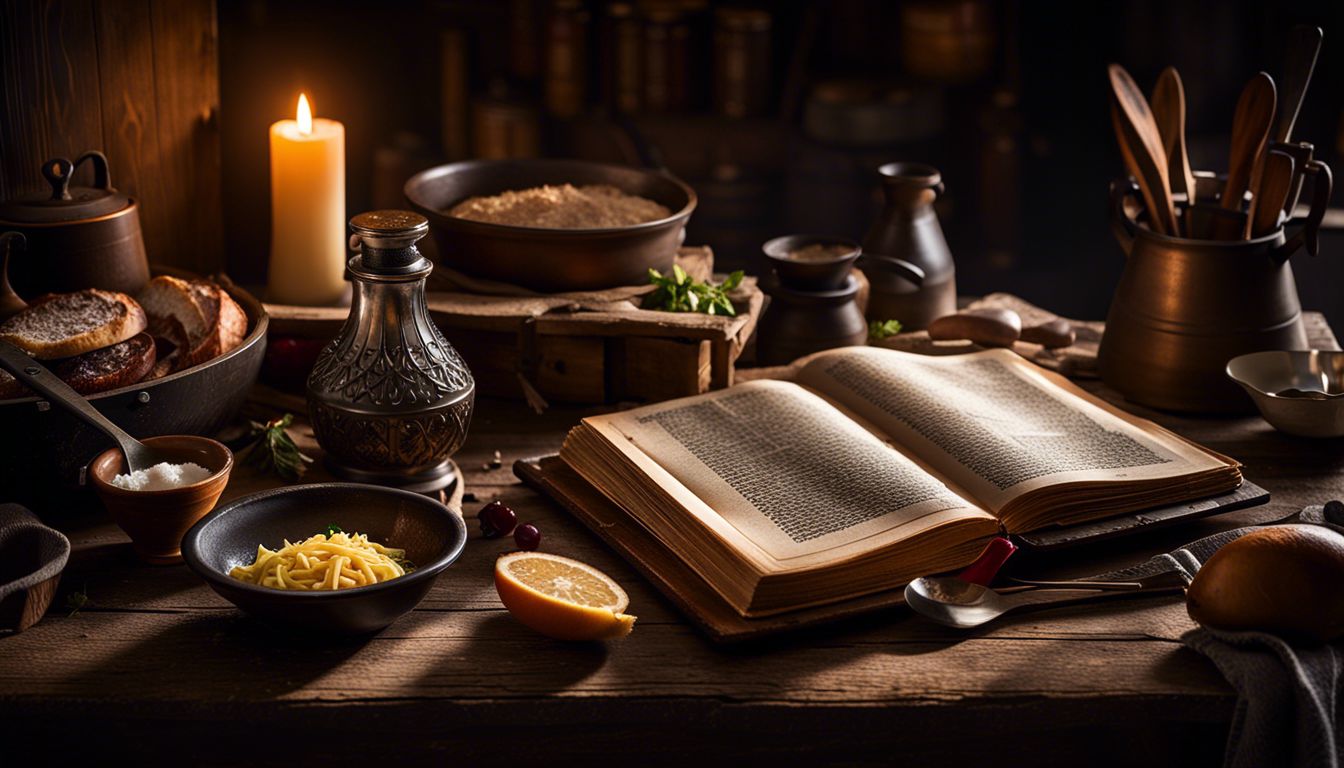
Medieval cookery manuscripts are among our best windows into historical cuisine, but they need to be read carefully. Most surviving recipe collections were written for professional cooks and wealthy households. They are excellent evidence for ingredients, techniques and elite dining, but they are not a census of what an average peasant ate every day.
The Forme of Cury
The Forme of Cury is one of the most important English medieval recipe collections. According to the British Library, it was composed around 1390 by the chief cooks of Richard II’s household and includes ordinary household dishes as well as elaborate preparations and subtleties for high-status dining.
Its ingredients are revealing: rice, almonds and almond milk, saffron, ginger, sugar, dried fruit, wine, vinegar, onions, leeks, beans, mushrooms, fish, poultry and many kinds of meat all appear. It is strong evidence for sophisticated late-medieval court cooking — but it should not be treated as a typical village cookbook.
Other Medieval Recipe Manuscripts
An earlier version of this article incorrectly treated Jean de Wavrin’s Chronicles of English History as a medieval cookbook. It is a historical chronicle, not a recipe collection. A better example is British Library Harley MS 2378, which contains medical and culinary recipes dated to around 1395.
The overlap between food and medicine is significant. Medieval culinary material often appears beside medical recipes, reflecting the period’s belief that diet was part of maintaining health. Cookery books, archaeology, household accounts and institutional records become much more useful when read together.
The Contrast between Wealthy and Poorer Diets in the Middle Ages
The difference in diet between the rich and the poor during the medieval period was vast, influenced by factors such as access to different types of food, the influence of foreign trade, and varying cooking methods.
| Food factor | Higher-status households | More modest households |
|---|---|---|
| Grain | Greater access to fine wheat bread and refined baked goods, although grain still remained important. | Bread and pottage were central; rye, barley, oats or mixed grains could be important depending on region and price. |
| Meat | More frequent access, wider choice, hunting privileges and elaborate feast dishes. | Often less frequent or smaller quantities, but not absent; pork, bacon, poultry and other meats varied by household. |
| Fish | Could include expensive fresh fish and prestigious species as well as preserved fish. | Salted, dried and locally caught fish could be important, especially on fast days. |
| Spices and sugar | Imported pepper, ginger, saffron, cinnamon and sugar were conspicuous markers of purchasing power. | Local herbs, mustard, onions and garlic were more accessible; some imported spices could still appear depending on place and period. |
| Fruit and vegetables | Estate gardens, markets and imported dried fruit expanded choice. | Seasonal garden produce, pulses, orchard fruit and gathered foods could form an important part of the diet. |
The Art of Food Preservation in the Medieval Era
Preservation was essential because most foods were seasonal and there was no mechanical refrigeration. Salting, drying and smoking were widely used for fish and meat. Grain could be stored when kept dry, fruit could be dried, and dairy could be transformed into longer-lasting cheese. Pickling and fermentation were also used, although the exact techniques and foods varied by region.
Salt was economically important precisely because it helped preserve food. Preserved herring, cod, bacon and other products could travel farther and last longer than fresh equivalents, helping towns, ships and households maintain supplies through winter or fasting periods.
Explore Medieval Times Deeper or Continue Reading…


Herbs, Spices and Medieval Flavor
Medieval food was not necessarily monotonous or poorly seasoned. Local herbs, onions, garlic and mustard could provide strong flavors, while wealthier households used imported pepper, ginger, cinnamon, cloves, saffron and other costly spices. Sugar, too, was expensive and could function more like a luxury seasoning or medicinal ingredient than the everyday sweetener it later became.
Imported spices demonstrate how connected medieval markets could be. Their presence in courtly recipes reflects long-distance trade as well as status: using costly ingredients visibly showed that a household could obtain them. Medieval medical practice also attributed dietary and medicinal qualities to herbs and spices, linking the kitchen with contemporary ideas about health.
That does not mean expensive imported spices were exclusive to nobles in every place and century. Access broadened in some urban markets, especially later in the Middle Ages, while local herbs and flavorings remained important across social groups.
Meals, Kitchens and Table Etiquette
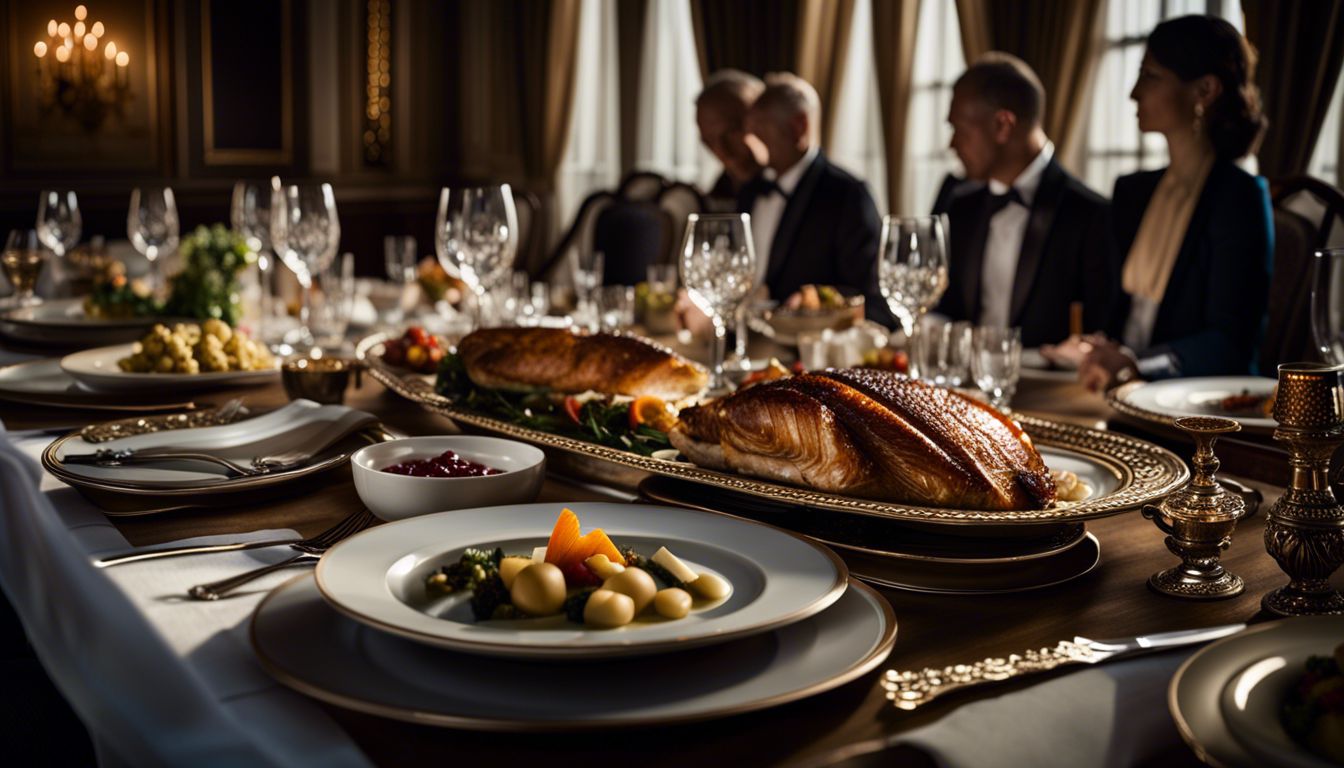
Dining customs depended heavily on setting. A peasant household, monastery, inn and royal hall did not eat in the same way. In elite households, meals could involve formal seating, service by household staff, multiple dishes and rules of precedence. Knives and spoons were common; diners also used their fingers. Forks existed in medieval Europe but were not yet the normal personal eating utensil in places such as England.
Large households required specialized spaces for cooking, storage and service. If you want to see how these functions fit into a fortified residence, our guide to rooms inside a medieval castle covers kitchens, pantries, butteries, undercrofts and great halls, while our castle parts and layouts guide explains how those spaces related to the rest of the complex.
The Life of a Medieval Cook
In a major noble or royal household, cooking could be a skilled profession rather than a single person standing over one hearth. Large kitchens employed hierarchies of workers responsible for roasting, boiling, baking, sauces, storage, washing and service. The heat, smoke, heavy vessels, open fires and pressure of serving large numbers of people made kitchen work physically demanding.
Surviving elite recipe manuscripts reveal considerable technical skill: cooks thickened sauces with bread, eggs or rice flour, produced almond milk, controlled colors with saffron or herbs, made pastry “coffins,” and balanced sweet, sour and savory flavors.
Smaller and poorer households operated very differently, often with far fewer specialized workers and simpler equipment. The evidence therefore tells us about many kinds of medieval cooks rather than one universal kitchen job.
Medieval Drinks and Their Importance
Ale, beer, wine, cider, mead and water all had places in medieval life, with strong regional differences. Ale was especially important in northern Europe, while wine was central in wine-producing regions and in religious practice.
The common claim that medieval people avoided water because beer was always safer is too simplistic. People did drink water when good sources were available, and towns and institutions invested in wells, springs, conduits and managed supplies. The University of Oxford School of Archaeology specifically highlights research challenging the familiar beer-was-safer-than-water cliché.
Ale and wine were nevertheless important for calories, taste, hospitality, wages and social custom. Their popularity does not require the assumption that all medieval water was undrinkable.
Dishes We Can Actually Trace to Medieval Recipes
Rather than labeling modern reconstructions as universally “popular medieval recipes,” it is safer to start with dishes that survive in period texts. A transcription of The Forme of Cury preserves examples such as:
- Ryse of Flesh: rice cooked in broth and finished with almond milk, saffron and salt.
- Funges: mushrooms with leeks cooked in broth and seasoned with saffron and a spice mixture.
- Benes Yfried: cooked beans combined with onions and garlic, then fried and seasoned.
- Daryols: a baked pastry filled with cream or almond milk, eggs, sugar, saffron and salt.
- Loseyns on a fish day: pasta-like sheets served with almond milk, saffron, sugar and seasonings in a fasting-day version.
These recipes show a combination of familiar ingredients and techniques that can seem surprisingly modern. They also reinforce an important point: “medieval food” was not one cuisine. A courtly English recipe book from around 1390 represents one place, period and social environment.
What Medieval Food Was Really Like
The safest summary is that medieval European diets were grain-centered but diverse. Bread, pottage, vegetables and pulses were fundamental; fish, dairy and meat varied with geography, wealth, season and religious rules; herbs were widely available, while imported spices and sugar marked purchasing power. Preservation made seasonal foods last, and elite kitchens produced dishes far more complex than the stereotype of endless roasted meat.
Most importantly, everyday diet should be distinguished from feast menus. A royal cookbook tells us a great deal about professional medieval cooking, but archaeology, household accounts and institutional records are needed to understand what broader populations actually ate.
Frequently Asked Questions
What were the main foods eaten in the Middle Ages?
Across much of medieval Europe, grain products such as bread and pottage formed the foundation of the diet. Vegetables, peas and beans, dairy, fish, meat, fruit and herbs supplemented them in different amounts depending on region, status, season and religious practice.
Were spices used in medieval cuisine?
Yes. Local herbs and flavorings were widely available, while imported spices such as pepper, ginger, saffron, cinnamon and cloves appear frequently in elite recipe collections. Imported spices were expensive, so their use varied strongly with wealth and access to trade.
Did medieval people drink water?
Yes. The idea that medieval people universally avoided water and drank beer because water was unsafe is a myth. Water quality varied, but people used wells, springs and managed water supplies and drank clean water when it was available. Ale, beer and wine were also important for nutritional, social, economic and cultural reasons.
Wealth increased access to fresh meat, high-status fish, fine wheat bread, imported spices, sugar and elaborate prepared dishes. More modest households relied more heavily on grains, pulses and local produce, but the categories overlapped: ordinary people also ate animal foods, and elite everyday diets were not necessarily as extravagant as feast records suggest.
Sources and Further Reading
- British Library — Forme of Cury, Add MS 5016
- British Library — Harley MS 2378, medieval medical and culinary recipes
- University of Cambridge — bioarchaeological research on early medieval English diet
- Jesus College, Cambridge — archaeological and documentary evidence for monastic meals
- Cambridge University Library Special Collections — medieval food, health and humoral theory
- University of Oxford School of Archaeology — brewing, beer and the medieval water myth