Schwerin Castle – Romantic Historicist Palace (History & Travel Tips)
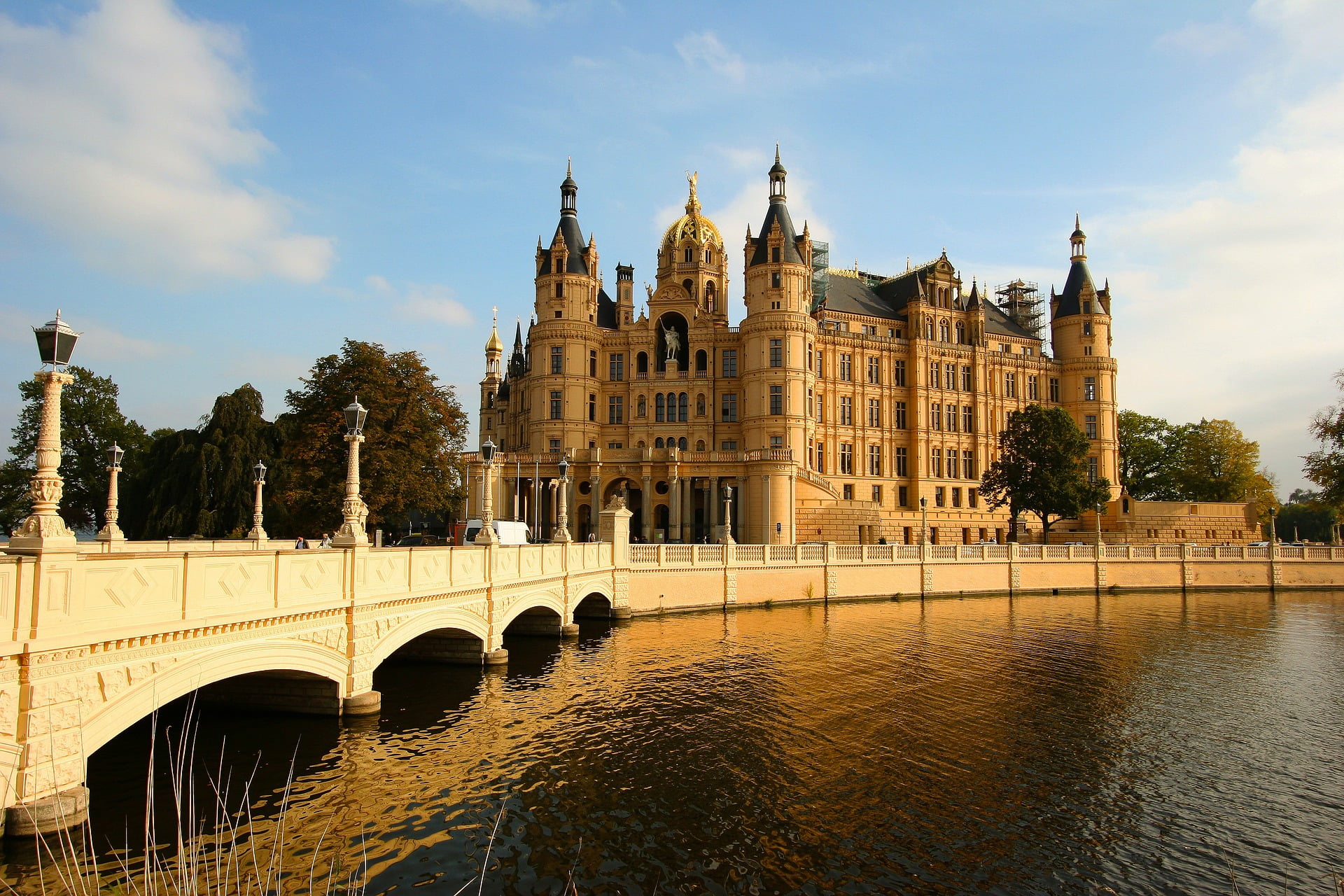
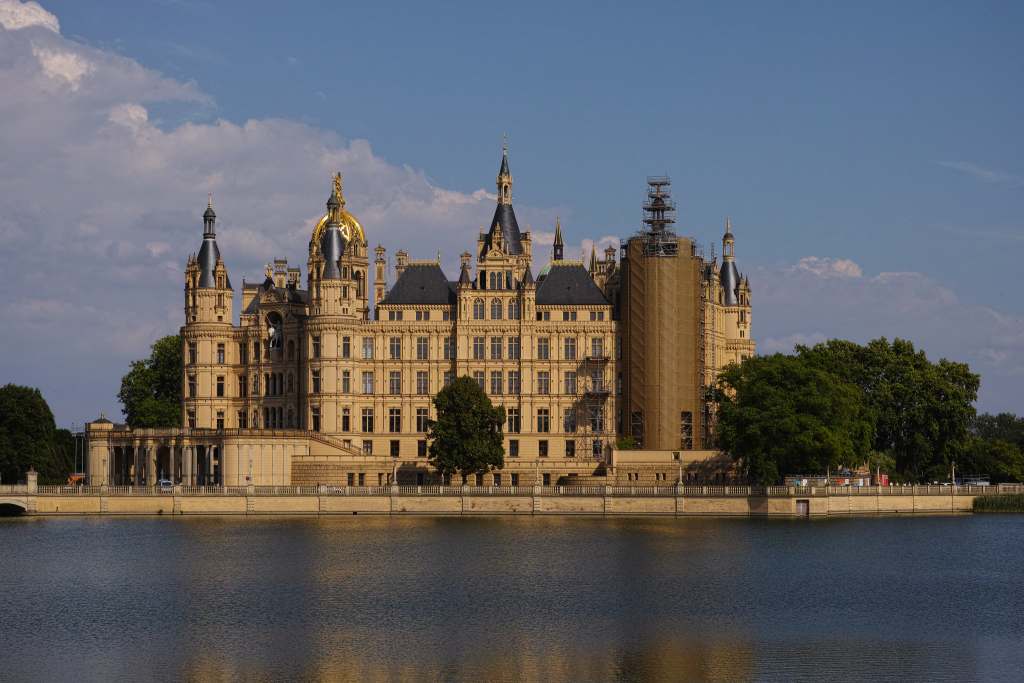
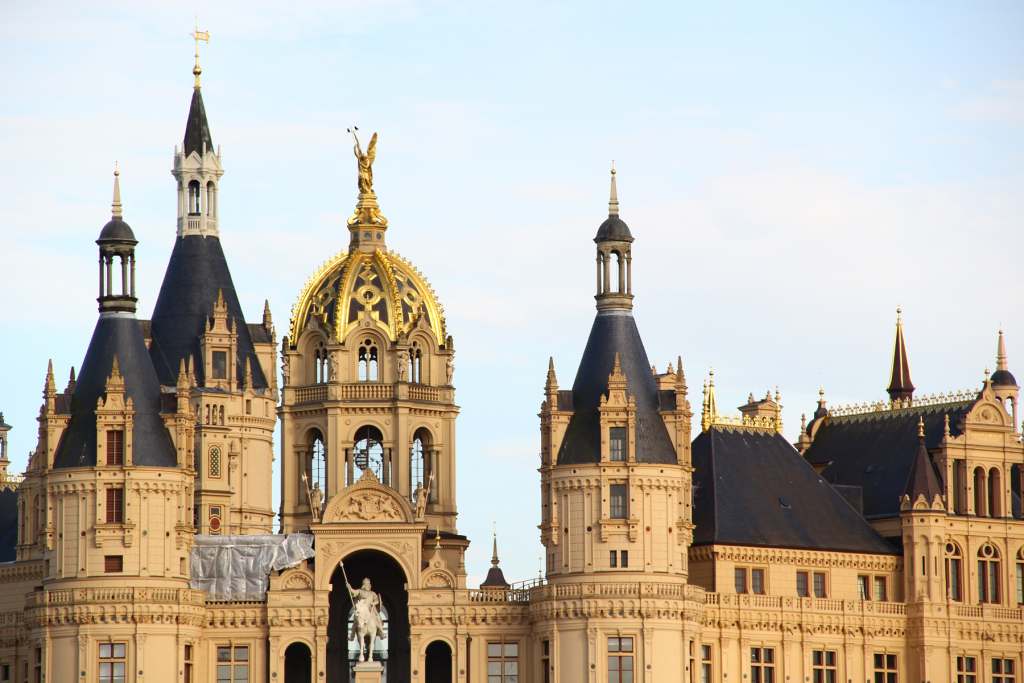
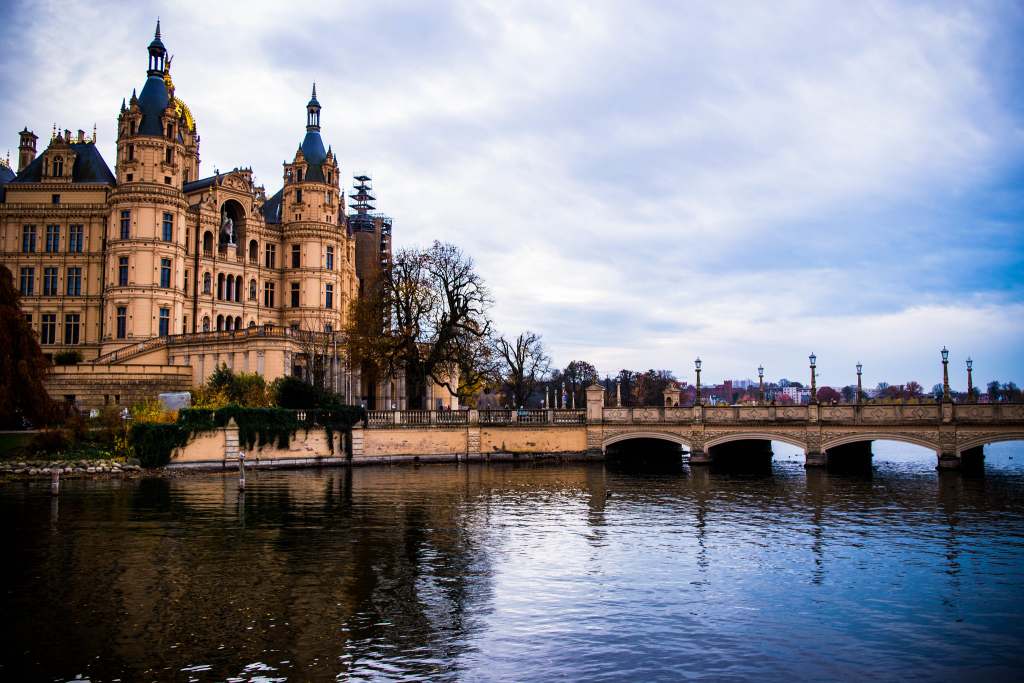
Schwerin Castle rises from an island in Lake Schwerin at the heart of Mecklenburg-Vorpommern’s capital. With its towers, golden dome, ornate façades and lakeside gardens, it is one of Germany’s most striking 19th-century residence palaces and the centerpiece of the UNESCO-listed Schwerin Residence Ensemble.
The castle seen today was largely created between 1847 and 1857 for Grand Duke Friedrich Franz II, but the island had been fortified for centuries before that. Older medieval and Renaissance structures were incorporated into the rebuilding, creating a palace that combines history, courtly symbolism and the Romantic taste for architecture reflected in water and landscape.
Schwerin Castle is not a medieval castle frozen in time: its present form is a carefully designed 19th-century residence that deliberately incorporated traces of the older fortress and Renaissance palace.
Frequently Asked Questions
FOR HISTORY | BEAUTIFUL IMAGES | INTERESTING FACTS | TRAVEL TIPS
History of Schwerin Castle
From Slavic Fortress to Medieval Residence
The castle island’s story begins long before the present palace. Archaeological evidence and written records point to a fortified settlement here by the 10th century, with the oldest documented traces dating to 942. The island was occupied by the Slavic Obotrites, whose stronghold guarded an important position in the lake landscape.
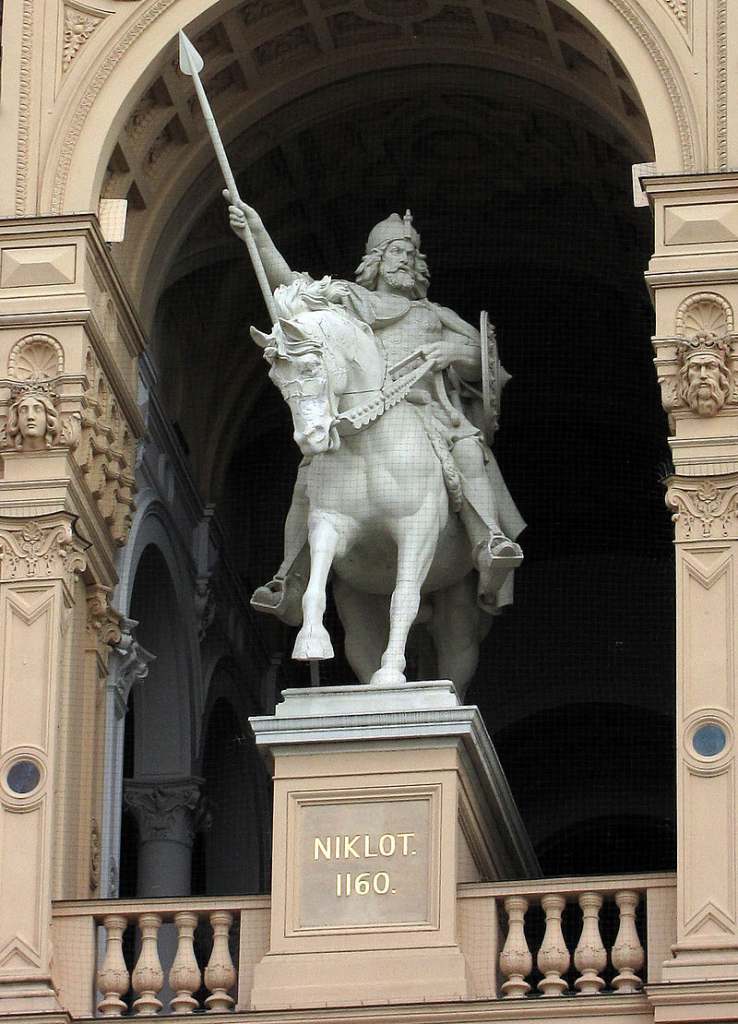
In 1160 Henry the Lion, Duke of Saxony and Bavaria, advanced into the region. Obotrite ruler Niklot destroyed the fortress before retreating, and Henry’s forces subsequently rebuilt the stronghold. The same year became Schwerin’s official founding date and marked the beginning of the German medieval town around the castle.
In 1358 Duke Albrecht II acquired the castle and established the Mecklenburg rulers on the island. Over the following centuries the old defensive complex gradually became a princely residence rather than a purely military fortress.
Renaissance Schwerin
The 16th century left some of the most important older elements still incorporated into the palace. Duke Johann Albrecht I added the New Long House between 1553 and 1555, decorated with distinctive red terracotta. In 1562 he commissioned the castle chapel, an early Protestant church building in Mecklenburg.
More ambitious rebuilding plans appeared in the early 17th century, but the Thirty Years’ War brought them to an end. Unlike many European courts, Mecklenburg did not later create a completely new Baroque palace on the site. In 1764 the ducal court moved to Ludwigslust, leaving Schwerin’s older residence with a mixture of buildings from different periods.
The Grand 19th-Century Rebuilding
The court returned to Schwerin in the 1830s, but the old castle was in poor condition and unsuitable for a modern grand-ducal residence. Friedrich Franz II became Grand Duke in 1842 at just 19 years old and ultimately chose to rebuild on the historic castle island rather than abandon the ancestral site.
The transformation was one of Germany’s major historicist building projects. Georg Adolf Demmler played the leading role in the early design, while Hermann Willebrand, Gottfried Semper and Friedrich August Stüler also contributed. The palace was completed for the court’s move in May 1857. Its architecture combines French Renaissance-inspired forms, especially references to Château de Chambord, with Neo-Renaissance, Neo-Gothic and other historicist elements.
The interiors were equally important. The ceremonial sequence culminated in the Throne Hall, while the residential apartments, ancestral gallery, decorative floors, paintings and sculpture created an elaborate statement of dynastic legitimacy at a time when monarchy was increasingly being challenged across Europe.
Fire, Revolution and State Ownership
A major fire struck Schwerin Castle in December 1913 and destroyed important interiors, including the Golden Hall. Five years later the German Revolution ended the rule of the Grand Dukes of Mecklenburg-Schwerin. The castle passed into state ownership and subsequently served several purposes, including museum, educational and hospital functions.
State rooms were opened to museum visitors in the early 20th century, and the modern castle museum has been open since 1974. After German reunification in 1990, Schwerin Castle became the seat of the Parliament of Mecklenburg-Vorpommern, returning political government to the historic island residence in a completely new democratic form.
Revisit More Historic Places Below or Read Further
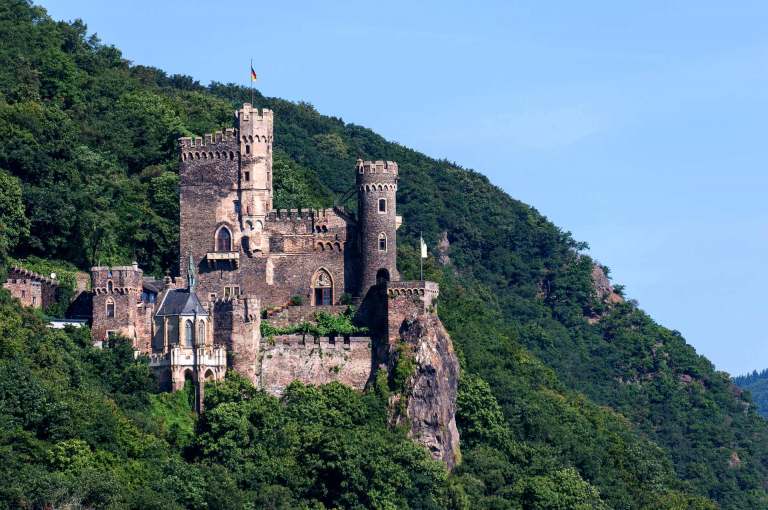
Schwerin Castle Today
Schwerin Castle now performs two roles at once. Part of the building houses the state parliament, while the historic apartments and ceremonial rooms form the Schlossmuseum Schwerin. Visitors can explore grand-ducal living rooms, reception spaces, the Throne Hall, ancestor gallery and displays of painting, sculpture, porcelain, silver and historic weapons.
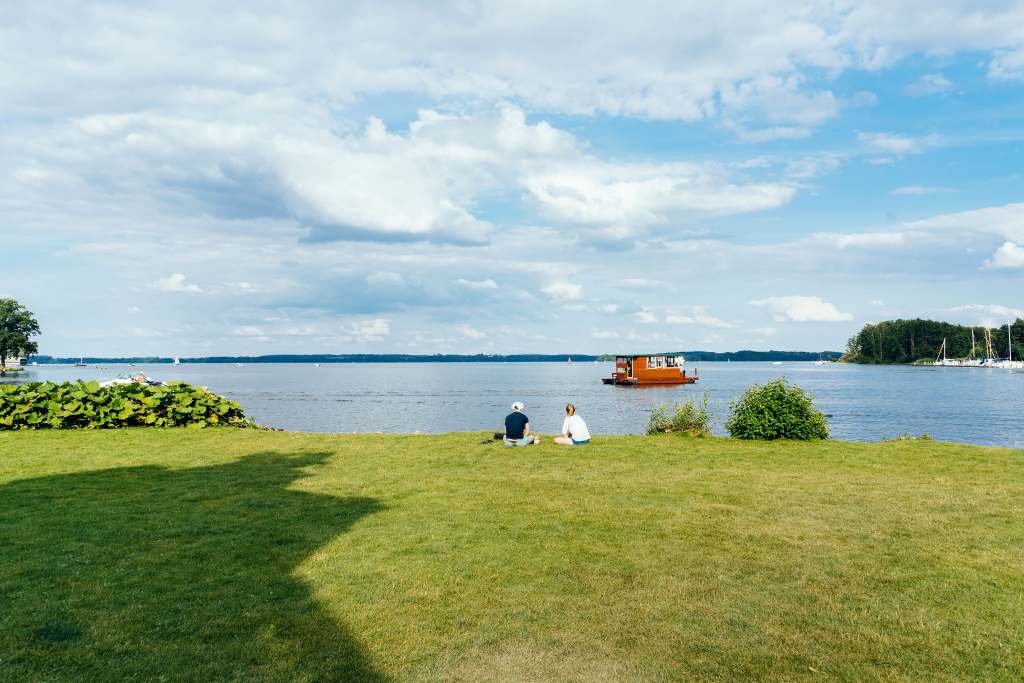
UNESCO World Heritage Status
In July 2024 UNESCO inscribed the Schwerin Residence Ensemble on the World Heritage List. The designation is broader than the castle alone: it includes 38 components such as government and cultural buildings, churches, manor houses, gardens, lakes and public spaces created to serve the 19th-century grand-ducal capital.
UNESCO highlighted the ensemble as an outstanding example of European historicism, with architecture ranging from Neo-Renaissance and Neo-Baroque to Neo-Classical and Neo-Gothic styles. The relationship between the buildings, gardens and reflective lakes is an important part of its significance.
The Throne Rooms and Museum
One of the strongest reasons to enter the museum is the survival of the ceremonial interiors. The Throne Hall was the political and symbolic centre of the 1857 residence. Schwerin’s heritage authorities also describe its sequence of throne apartments as exceptionally rare in Europe, preserving a type of court ceremonial arrangement that has disappeared elsewhere.
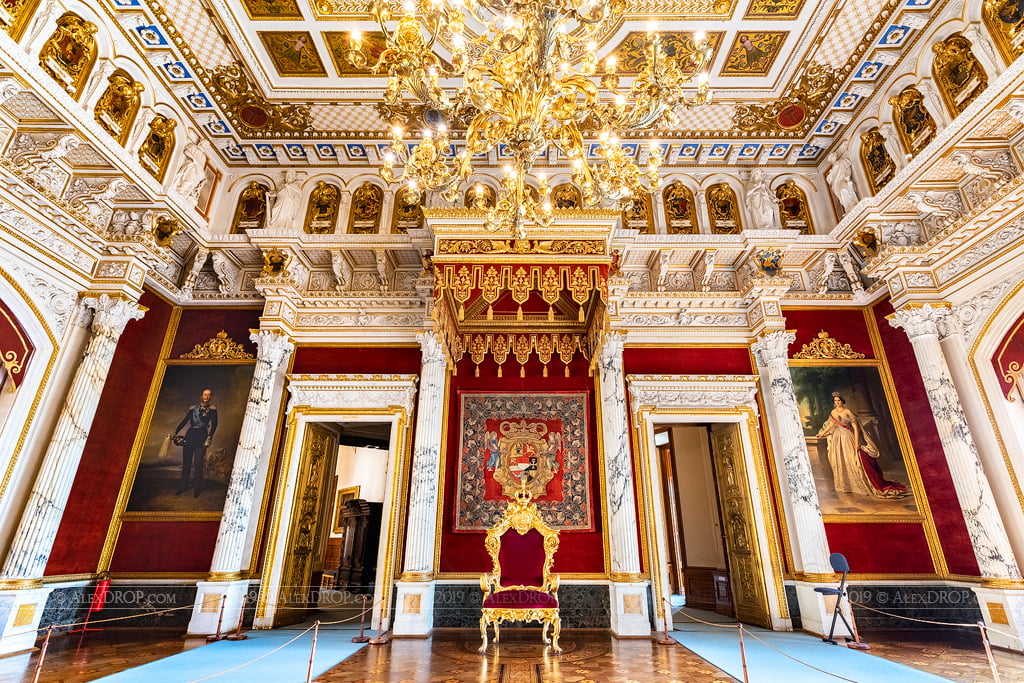
Castle Gardens
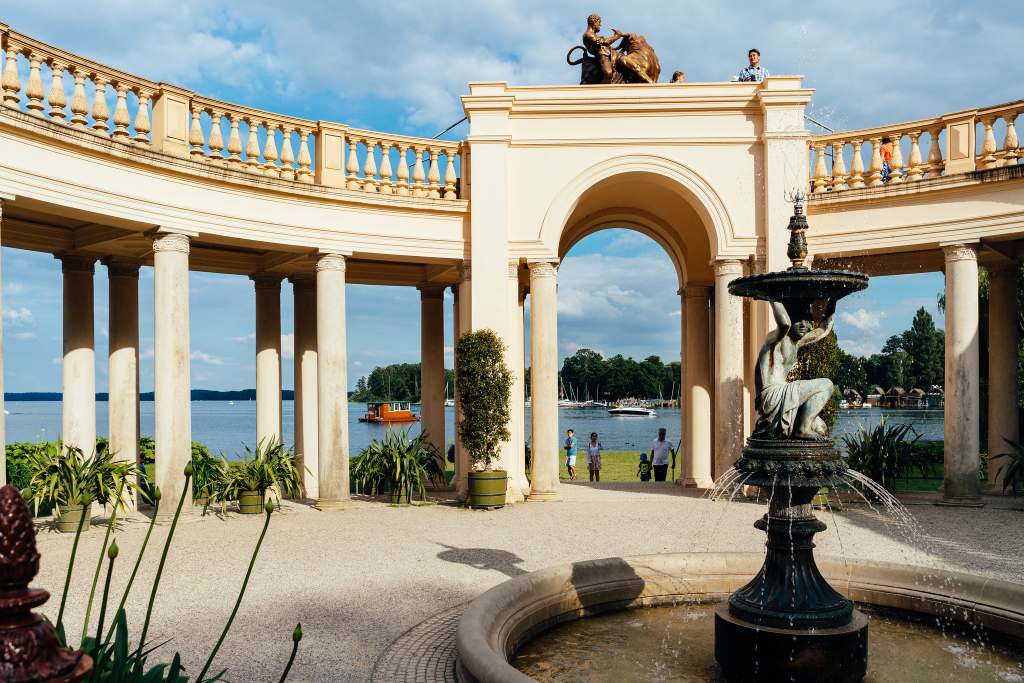
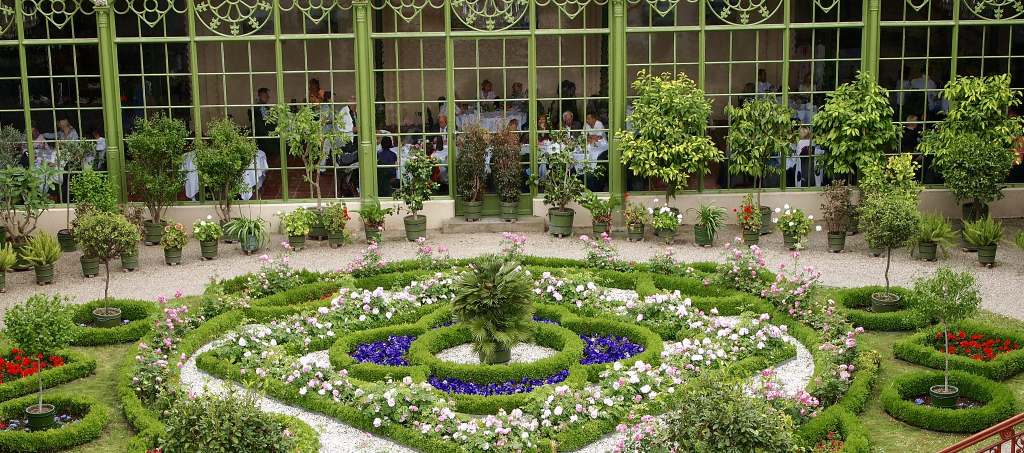
The grounds are not just a backdrop to the palace. The formal garden retains Baroque geometry, while Peter Joseph Lenné reshaped parts of the wider landscape in the 19th century. Around the island are the Orangerie, grotto, colonnades and paths with views across the lakes.
For more German castles, see our guide to the best castles in Germany. You can also compare Schwerin’s 19th-century historicism with the Baroque world of Moritzburg Castle and the ruined Renaissance character of Heidelberg Castle.
Interesting Schwerin Castle Facts
- The castle island has documented traces of fortification dating back to 942.
- Schwerin’s official founding date is 1160, when Henry the Lion’s forces conquered the Obotrite stronghold.
- The present palace was largely built between 1847 and 1857 for Grand Duke Friedrich Franz II.
- The castle contains 635 rooms, not the often-repeated figure of 653.
- Part of Schwerin Castle has housed the Parliament of Mecklenburg-Vorpommern since 1990.
- The Schwerin Residence Ensemble, including the palace, became a UNESCO World Heritage Site in 2024.
- The legendary castle spirit, the Petermännchen or “Little Peter,” appears in hundreds of local stories.
- Schwerin Castle appeared as an exterior location in the 2017 film Kingsman: The Golden Circle.
Visiting Schwerin Castle – Tips and Practical Information
Schwerin Castle is in the city centre and is straightforward to reach without a car. From Schwerin Hauptbahnhof, the walk takes roughly 20 minutes. Bus line 10 also connects the main station area with the castle, while several paid car parks are available around the historic centre.
2026 Opening Hours and Admission
Information reviewed in September 2026.
The Schlossmuseum is currently open Tuesday to Sunday from 10:00 to 18:00 between April 15 and October 14. From October 15 to April 14, it is open Tuesday to Sunday from 10:00 to 17:00. Last admission is 30 minutes before closing. The museum is normally closed on Mondays, although holiday arrangements can differ.
Current admission is €13 for adults and €9 reduced. Children and young people under 18 enter free. Audioguides are included free of charge. Public guided tours cost €5 in addition to admission, or €4 reduced.
The Schlosspark is open year-round, while the Burggarten closes at dusk. You do not need a museum ticket simply to walk around the exterior, gardens and lakeside viewpoints.
How Long to Spend at Schwerin
Allow approximately 1–1.5 hours for the museum itself. Add at least another hour for the gardens and exterior viewpoints. If you enjoy architecture, photography or lakeside walks, half a day is a more comfortable amount of time.
Accessibility and Visiting Tips
- The museum entrance is step-free, and lifts serve the first and second floors.
- The third-floor ceremonial rooms, including the Throne Hall, have limited accessibility; a stair lift is available but is not suitable for heavy electric wheelchairs.
- Visit early in the day if you want quieter museum rooms and easier photographs inside.
- Do not skip the gardens: many of the classic views of Schwerin Castle depend on seeing the palace reflected across the surrounding water.
- If you are visiting several castles in the country, compare Schwerin with the other best castles in Germany.