Lichtenstein Castle – Germany’s Gothic Revival Fairytale
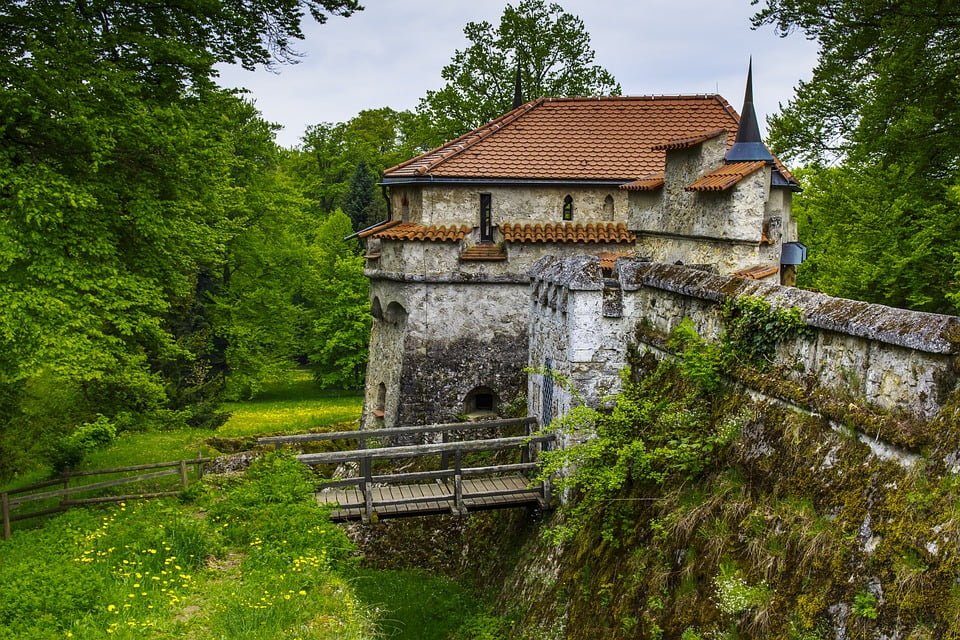
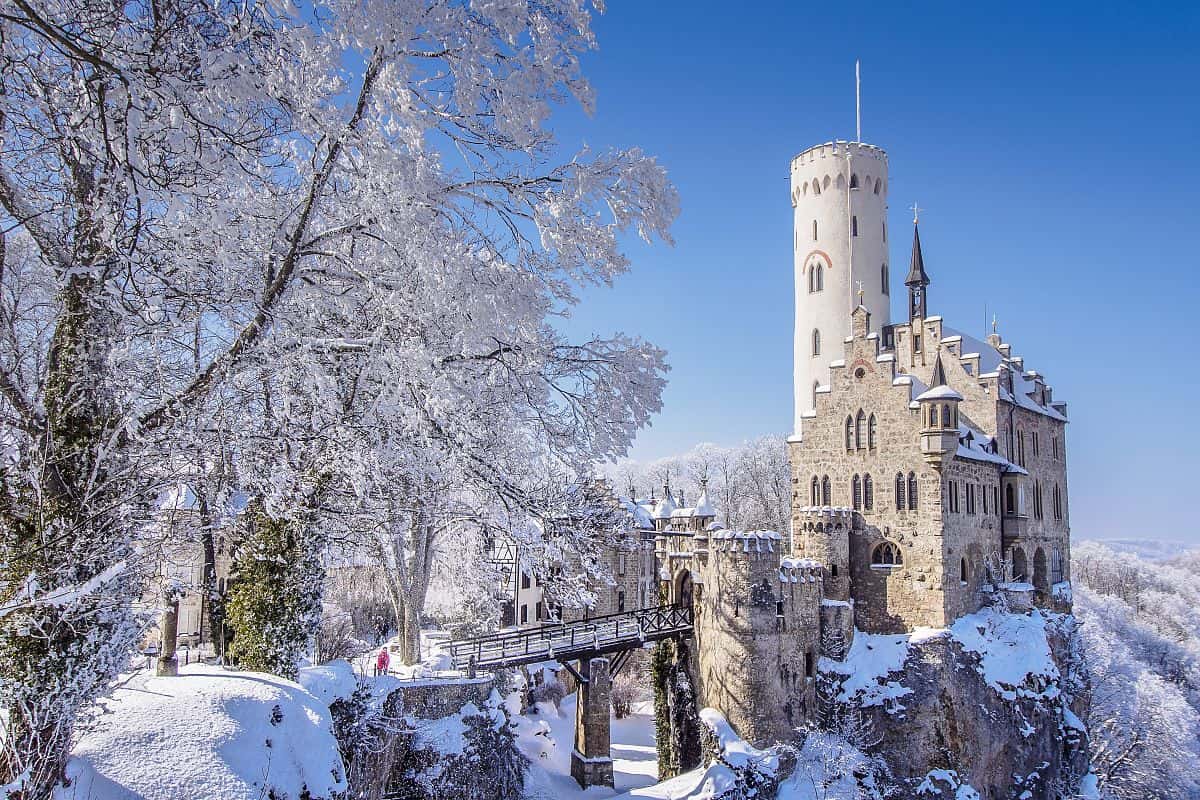
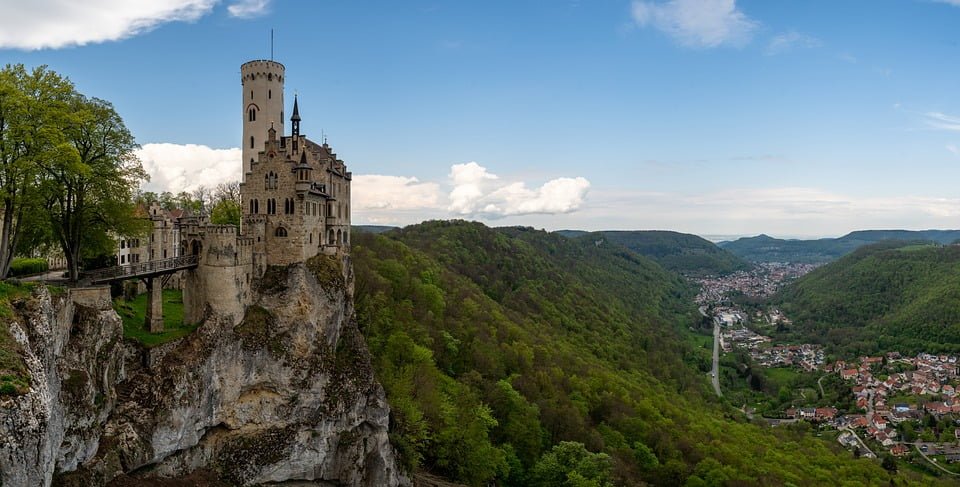
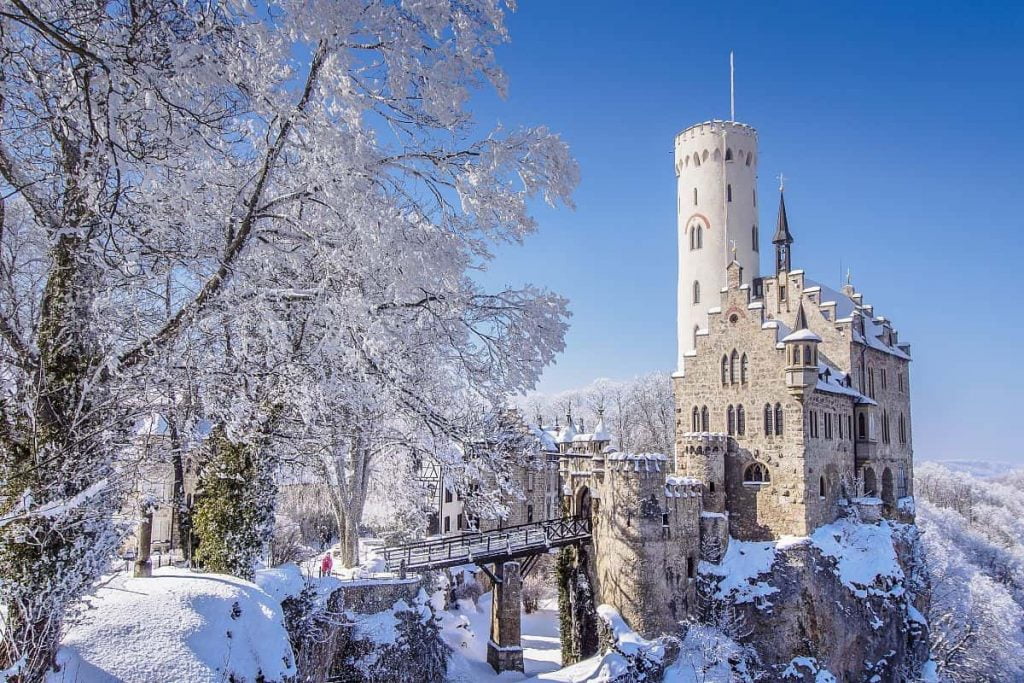
Lichtenstein Castle clings to a limestone cliff above Germany’s Echaz valley, its tower and walls creating one of the Swabian Jura’s most recognisable views. Although it appears medieval, the castle visitors see today belongs to the Gothic Revival.
Count Wilhelm of Württemberg commissioned the building after reading Wilhelm Hauff’s 1826 historical novel Lichtenstein. From 1840 to 1842, architect Carl Alexander Heideloff turned the count’s romantic vision into a residence on the foundations of an older fortress.
Earlier castles did exist in the area, and some medieval fabric underlies the present building. The dramatic exterior, however, is a carefully designed 19th-century interpretation rather than an untouched stronghold.
Lichtenstein Castle is medieval romance made stone: a 19th-century Gothic Revival residence inspired by a historical novel.
Frequently Asked Questions
FOR HISTORY | BEAUTIFUL IMAGES | INTERESTING FACTS | TRAVEL TIPS
History of Lichtenstein Castle
The Medieval Lichtenstein Castles
A fortified seat associated with the Lords of Lichtenstein stood in the area by the High Middle Ages. Conflict with the nearby imperial city of Reutlingen led to repeated destruction. Around 1390, a new castle was built on the site occupied by the present complex.
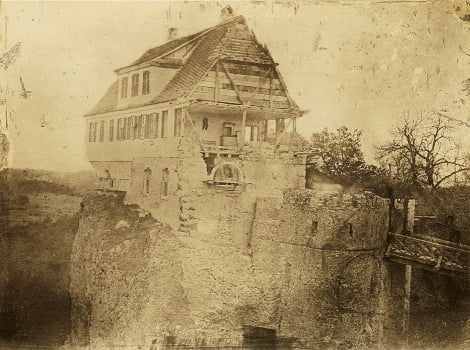
The late-medieval fortress eventually lost its residential importance and declined. In 1802, Frederick of Württemberg had the remaining structures dismantled and replaced with a comparatively modest hunting lodge.
Hauff’s Novel and Count Wilhelm’s Vision
Wilhelm Hauff published Lichtenstein in 1826, using Württemberg’s past as the setting for a romantic historical story. Count Wilhelm of Württemberg admired the novel and acquired the estate in 1837.
He wanted more than a repair of the hunting lodge. The new building would serve as a summer residence, display his collection of arms and art, and embody the chivalric Middle Ages imagined by Romantic-era writers and artists.
Construction from 1840 to 1842
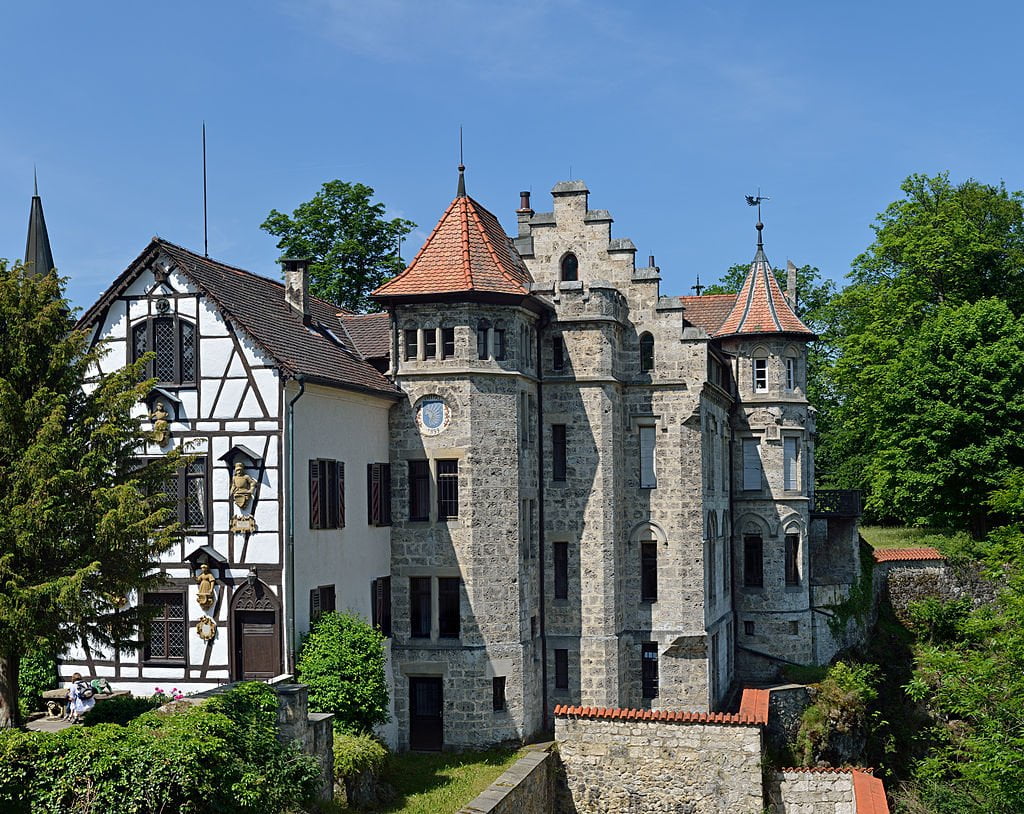
Carl Alexander Heideloff, an architect and specialist in medievalising design, produced the definitive plans. Construction began in 1840 and retained the ancient foundation walls of the castle built around 1390.
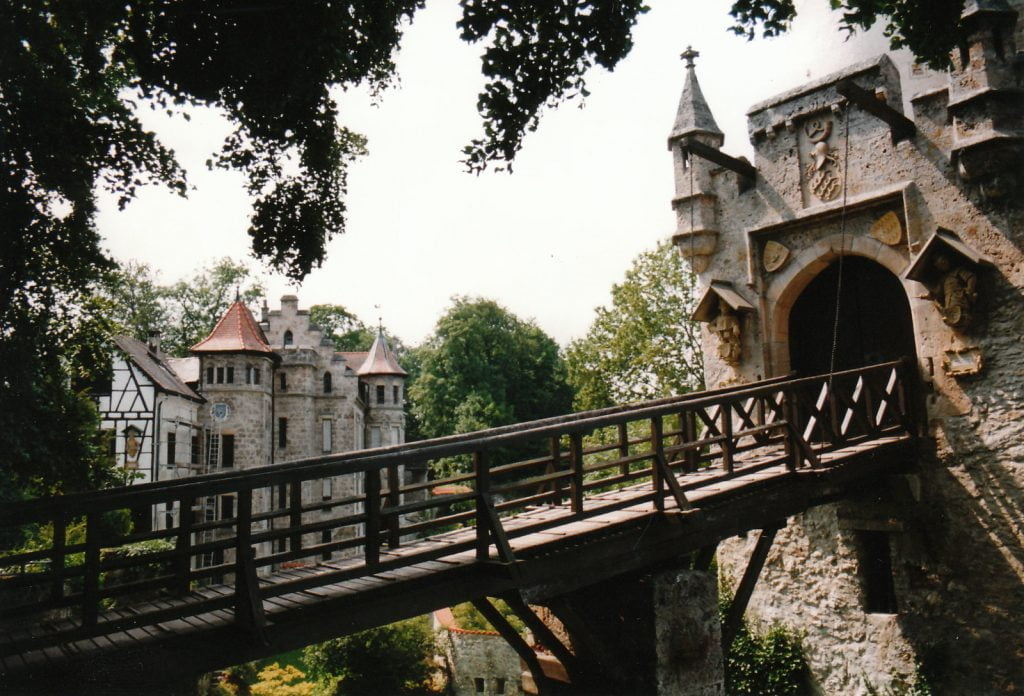
The compact residence rose in three main storeys beside a walled courtyard. Later additions strengthened the picturesque ensemble: a barbican, outer bailey, bastions and turrets followed in the 1850s, while service and residential buildings evolved around the gate.
Collections, Family and Restoration
The interiors combine richly painted walls, timber panelling, heraldry, weapons, armour and historic furniture. They express Count Wilhelm’s collecting interests as much as the life of a genuine medieval court.
The castle remained connected to Wilhelm’s descendants, the Dukes of Urach. Damage during the Second World War and later structural problems prompted a series of repairs and restorations, supported by the family, preservation organisations and visitors.
Revisit More Historic Places Below or Read Further
Lichtenstein Castle Today
Lichtenstein is privately maintained but open seasonally. Visitors can enter the romantic courtyard and join guided tours through the compact furnished interiors, including the armoury, painted rooms and Knights’ Hall.
The experience is best approached as a meeting of authentic site history and 19th-century medievalism. The foundations and location connect it to an older fortress, while the celebrated silhouette is the product of Romantic imagination.
Interesting Facts About Lichtenstein Castle
- The current castle was constructed between 1840 and 1842.
- Its patron was Count Wilhelm of Württemberg, who became the first Duke of Urach.
- Wilhelm Hauff’s 1826 novel Lichtenstein inspired the project.
- Carl Alexander Heideloff designed the castle in the Gothic Revival style.
- The building incorporates foundations from a castle erected around 1390.
- A still earlier site, now called Old Lichtenstein, survives as ruins nearby.
- The castle remains associated with the ducal family of Urach and relies on visitors to support upkeep and restoration.
Visiting Lichtenstein Castle: Practical Information
Getting to Lichtenstein Castle
The castle lies south of Reutlingen above Honau. Drivers approach via regional roads through the Swabian Jura and use the visitor parking near the grounds. Public-transport journeys usually combine a train to Reutlingen with a regional bus toward Honau, followed by an uphill walk; verify current connections before departure.
Courtyard and Interior Tours
Information was checked & updated on September 7, 2026.
The castle is open daily in March from 10:00 to 16:00, from April through October from 09:00 to 18:00, and in November and December from 10:00 to 16:00. Last admission is 30 minutes before closing. It is closed throughout January and February and on December 24–26.
Courtyard admission costs €6.00 (approximately $7.00 USD) for adults, €5.00 (approximately $5.80 USD) for reduced admission and €4.00 (approximately $4.60 USD) for children aged 6–16. The approximately 30-minute guided interior tour, including courtyard admission, costs €16.00 (approximately $18.60 USD) for adults, €14.00 (approximately $16.30 USD) reduced and €10.00 (approximately $11.60 USD) for children aged 6–16.
Interior rooms can only be visited on a guided German-language tour. English tours are available for groups of at least 15 people, Monday to Friday by appointment. Regular tours normally depart about every 20 minutes.
How Long Should You Spend Here?
Allow one to two hours for the courtyard, guided interior and viewpoints. Add more time for nearby walking routes or the ruins of Old Lichtenstein.
Practical Tips
- Confirm seasonal opening before making the journey; the castle normally hibernates in January and February.
- Arrive early on busy summer weekends because tours can fill.
- Wear sturdy shoes for paths, slopes and the surrounding woodland.
- Photography rules inside may differ from the courtyard, so follow staff instructions.
- Do not confuse Schloss Lichtenstein in Württemberg with Liechtenstein Castle near Vienna or the principality of Liechtenstein.